
 2 months ago
65
2 months ago
65
When the cull of feral animals in the Snowy Mountains draws to a close on Saturday, it will not be a moment too soon for anyone involved.
Brumby lovers outraged by the aerial shooting campaign and photos of dead horses circulating on social media will be no doubt relieved to see the killing end, at least for now. Pro-brumby activists failed in their bid to stop the cull in the NSW Land and Environment Court on Thursday, but the end was coming anyway.
If the conclusion of the operation takes the heat out of a fraught issue, it will also be a relief for those publicly identified with the cull, including NSW Environment Minister Penny Sharpe and her advisers, national parks staff, and environmental advocates who have received a torrent of abuse and even death threats over the past month.
There is something about the place of brumbies in our national imagination that invokes strong passions. This is particularly true in the High Country on both sides of the NSW-Victorian border, though the issues play out differently in each state.
“Brumbies are an avatar for a mythical and, to some extent, lost way of life. They evoke the days of Banjo Paterson’s characters, when people could sort of roam the mountains freely, when there was no such thing as a national park,” says Anthony Sharwood, a Walkley award-winning journalist and author of The Brumby Wars.
Invasive Species Council chief executive Jack Gough says the tone of the public debate is the worst that he has ever seen it.
“Every hour there’s abuse, every day there’s death threats,” Gough says. “Between the 2024 cull and this cull, there seems to be quite a shift in the permission environment for people to be awful online … certainly the scale of invective is more than there was a couple of years ago.”
The NSW government announced in May that it intended to restart feral animal control, including shooting horses from helicopters, in Kosciuszko National Park after a surge in numbers. The brumby cull started in the northern and central sections of the park on June 9 and wrapped up on June 30. A second campaign in the southern part of the park ran from June 28 and is expected to end on July 11. National Parks and Wildlife Service staff have also been targeting feral deer, foxes, pigs and cats.
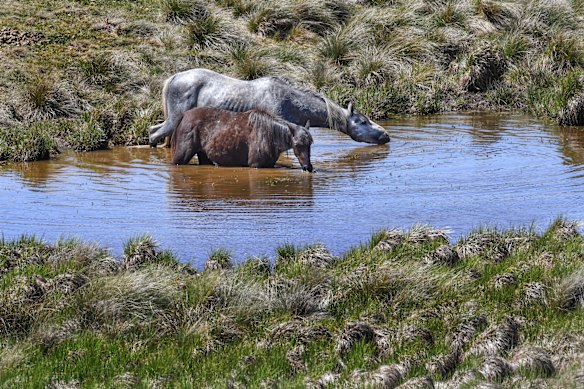
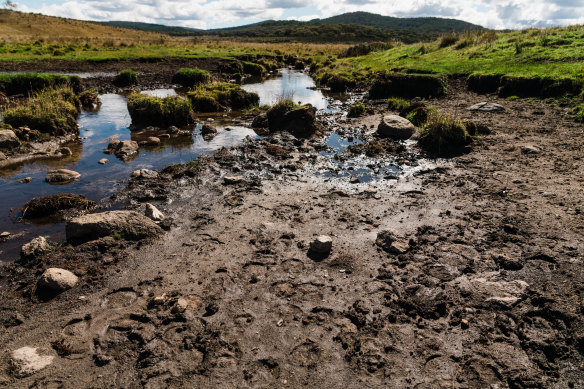
They are doing this because they say the population of feral horses exploded after there was no cull last year, and in November last year there were estimated to be at least 6476 and up to 16,411. Scientific studies show the hard hoofs of the horses and their rolling behaviour destroys the delicate alpine ecosystem and trashes the mountain streams that form the headwaters of the Snowy River.
So far, no one has dumped a severed horse’s head in a national park office as they did in 2023, but the month has been eventful. It’s included protests, a police investigation, a failed court case, an American filmmaker being kicked out of the park, and interventions from politicians.
The volume and vitriol of the posts on social media is at fever pitch. One post, all in red, brands Sharpe as “sadistic”, a “brumby killer” and “national disgrace”. A typical comment might call Gough a “feral pig” and say he’s “the one who needs a bullet” or should be “hung from a very tall tree”. A post by Shooters, Fishers and Farmers MP Robert Borsak depicts a demonic, green-skinned Gough with fire blasting out of his ears.
And that’s the public comments. The state of the email in-boxes at the Invasive Species Council, Sharpe’s office, and NPWS is understood to be worse.
Social media is also spreading misinformation and conspiracy theories to discredit the environmental research or falsely allege that the Invasive Species Council is somehow corruptly benefiting from the policies it promotes.
Of course, not all brumby lovers are expressing themselves with violence or abuse. Many are gathering online to express their grief or in person at rallies in Sydney and regional centres such as Albury. A typical post reads: “The brumbies represent the Australian spirit and freedom that our Anzacs fought for, and they carry the blood of those brave souls we have lost. We must defend them. Stop the culling!”
US-based filmmaker and journalist Ashley Avis wrote and directed Black Beauty, starring Kate Winslet and Mackenzie Foy, and then spent five years making a documentary feature, Wild Beauty: Mustang Spirit of the West, about the wild horses of the American West. She heard about the brumby cull and jumped on a plane to try to document it.
There are differences in the debate – horses evolved in North America before becoming extinct and then being reintroduced, and the ecosystems there have other hard-hoofed animals such as deer. But Avis is drawn by the parallels and believes both the mustangs of the American West and the brumbies of Australia are being scapegoated.
“We call them wild horses, we call them mustangs, they’re icons of the west, just like the brumbies in Australia,” Avis says. “They helped to build our country on their backs. They fought beside us in battle, and they’re still very relevant today as a fixture on the landscape to inspire people to come visit the western United States to get to see all of that incredible beauty.”
In the US, mustangs are rounded up and held in holding pens, which Avis says is a brutal practice but seems benign in comparison to the aerial culling in Australia. She says a lot of the pressure in the US comes from cattle graziers who are still allowed access to American national parks and don’t want competition for the grass from horses.
Avis won’t comment on whether she has gone into parts of Kosciuszko National Park that were closed for the feral animal control, but says she was filming with an iPhone beside a public road when she was approached by national park rangers and given a seven-day ban because she did not have a commercial filming licence. She thought the punishment was harsh, though says the rangers were polite.
Avis says the issue can be deeply polarised, and abuse, violence and hate speech should have no role on either side of the debate.
Photographer Kiki Sjoberg who posts on Instagram as @brumby_strong has lived in Jindabyne since 2018 and photographs the horses because she is fascinated by their family dynamics and emotions that seem very human.
Sjoberg also condemns the abuse, but says it cuts both ways. She says she has felt intimidated because of her brumby advocacy and also copped “vile comments” from pro-cull supporters on social media platforms.
One of the galvanising incidents for outrage among brumby supporters was the discovery that a locally famous palomino stallion known as Matagi and a black mare believed to be his daughter had been shot dead and found lying near a bushwalking track. This was in an area of the national park where the culling was not meant to occur. The NSW National Parks and Wildlife Service says it was not its doing and referred it to NSW Police, which is still making inquiries.
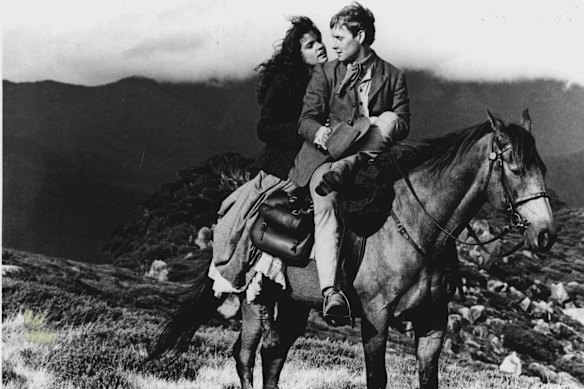
Gough says there are three main groups involved in brumby advocacy. First, there are those concerned about animal cruelty, who are equally concerned with other species besides horses. Second, there are people who have a romantic notion of the image of the horse in the park, stemming from cultural touchstones such as The Man from Snowy River and The Silver Brumby – a myth that Gough says is even stronger in Victoria than NSW.
Then there are cattle grazing families who resent the fact they no longer have access to the national parks in the alpine regions. Opposition Leader Angus Taylor, who attended a protest against the cull in Kiandra last month, posted about the issue on social media, and used it as a comedic bit at the Midwinter Ball, says he wants “to see the locals back in control”.
The Mountain Cattlemen’s Association of Victoria, in a position statement published on its website, advocates for a “return to traditional brumby control methods”, by which it means using mountain cattlemen and other bushmen to trap, run and muster brumby herds. The Victorian High Country is a patchwork of national park and state forest, and private cattle grazing is still permitted in the state forest. In a legal quirk, Gough says, horses are legally classified as cattle in state forest and cannot be removed.
The grievance is fresher in Victoria. Cattle grazing in the alpine national parks was banned in NSW in the 1960s and in Victoria progressively between 2005 and 2015. Brumby running was banned on grounds of animal cruelty in NSW in 1982 and in Victoria in 2005.
But the horse numbers are much higher in NSW because of the topography of the High Country, Sharwood says. NSW has bigger alpine plains that the horses have made their own, while the Victorian side is much steeper terrain.
Richard Swain, a Wiradjuri man who works for the Invasive Species Council, says he routinely cops racist abuse over the brumby issue, but this time Gough has borne the brunt of it. Born and bred in Cooma, Swain has been around the brumby issue his whole life, and he believes the root of the issue is “Australia’s fragile identity with this country”.
“When you don’t identify well with the country – and there’s not a square inch of this country that’s been respected – to have an avatar of belonging, like a feral horse, suits the narrative that we belong and the horse belongs,” Swain says.
“Everyone from two and a half years old up knows that you wouldn’t keep a horse on a spring. You wouldn’t keep one in your vegie patch, and you wouldn’t let one in Grandma’s rose garden. It’s not like we don’t know what horses do. We all know that. So where this hatred and denial comes from is a lot deeper.”
When Swain was at school in the 1980s, the locals considered the brumbies to be vermin, and were still doing brumby running, where they would chase down and capture wild horses and bring them in for the Jindabyne Rodeo using wire snares. “The brumby people now are carrying on like they managed them – well, they just shot them or rounded them up, and actually that was crueller than what’s happening now,” Swain says.
Gough says, “the best way to manage feral animals is to get the numbers down quickly and keep them down” to avoid the need for large culls. That is what happens in other NSW national parks such as the Blue Mountains and Barrington Tops, he says, without a big public outcry.
Get to the heart of what’s happening with climate change and the environment. Sign up for our fortnightly Environment newsletter.

















































