3 months ago
35
3 months ago
35
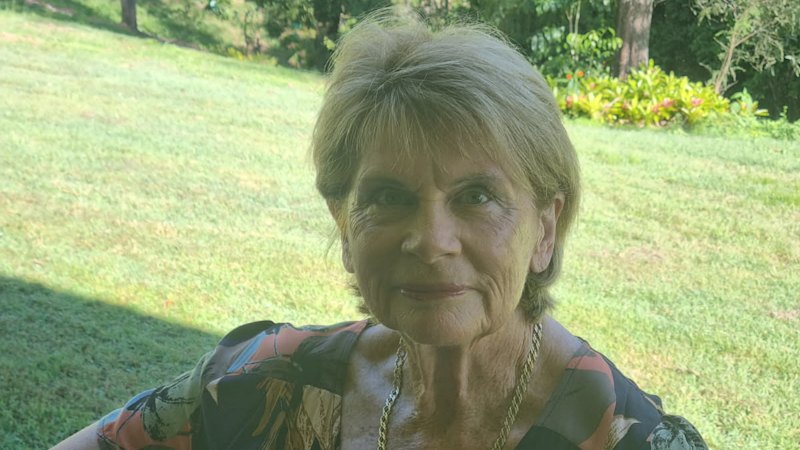
Grace Binns was on a night out with friends, “blowing off some steam” ahead of her first law exams, when she was sexually assaulted.
The arts/law Monash University student was sexually assaulted by a French exchange student as she was dancing with friends at a pub close to her home on campus in 2023, derailing her mental health and affecting her in the years that followed.

Grace Binns says her university’s reaction to her sexual assault was “confronting because Monash had been an institution I’d idealise; I was thrilled to be part of it”.
“I lost it,” she said of the incident, two and a half years on. “I ended up throwing a jug of ice over his head. I went home, was crying, sobbing, I called my mum in the middle of the night. I woke my college head up in the middle of the night, wanting to know what I could do to report it.”
Concluding she would suffer more than the perpetrator if she reported the incident to the police, the then-19-year-old instead turned to Monash University for help.
Her college head and case officer were both supportive, she said, but the university said it could not take any “direct disciplinary action” because the incident took place off campus, and provided what she called an underwhelming set of options. She was offered a “motivational interview” with the other student, and ended up receiving a “second-hand apology, which is more than some victim-survivors get”.
In a statement, Monash said motivational interviews are educational, give warnings about unacceptable behaviour and its consequences, and provide referrals to appropriate resources.
‘It is something that is not just going to change lives, it will save lives.’
Sharna Bremner, End Rape on Campus founderBinns remains angry. “It feels like David versus Goliath, when you’re one victim-survivor trying to get an institution as vast and well-resourced as Monash to listen and respect what you have to say.”
Binns welcomes legislation coming into effect on Thursday which is designed to force universities to “prevent and respond to” gender-based violence and enforce compliance with the national standards and requirements.
The far-reaching laws will require all job applicants to disclose whether they have been investigated for any allegations – whether proven or not – of gender-based violence, and force institutions to consider proven allegations when hiring.
The mandatory National Higher Education Code to Prevent and Respond to Gender-based Violence also prohibits non-disclosure agreements (unless requested by a complainant), requires universities provide both the victim and the accused with support plans, and mandates multiple channels through which to make a complaint.
“It is something that is not just going to change lives, it will save lives,” said Sharna Bremner, the founder of advocacy group End Rape on Campus.
The National Student Safety Survey (NSSS) from 2021 found 16 per cent of Australian university students had experienced sexual harassment. One in 20 have been sexually assaulted in a university context, and universities’ responses were lacking in the majority of cases, the study found.
“What we know from students who have experienced sexual violence is that they often experience mental health issues. A poor university response compounds their experience,” she said.
Not all universities disclose incidents of sexual misconduct. In 2024, the University of Sydney received 231 reports of sexual assault and harassment with 119 of those being university-related. The University of NSW had 332 total reports with 175 being connected to the university.
Loading
“What we’ve seen is deliberate indifference right through to actively harmful denials,” Bremner said.
University of Sydney Professor Salvatore Babones lauds the aims of the new laws, but questions the underlying research.
“The [NSSS] reached out to 10,000 students from 38 universities and had a response rate of 11.6 per cent. As a result, the responses reflect the experiences only of the one-eighth of students who were highly motivated to answer a sexual harassment survey,” he said.
“This study was conducted in ways that were obviously designed to produce the highest possible reportable rates of sexual harassment and assault,” he said.
He questioned whether the code would bring about any substantive improvement, noting that while private colleges and other non-university higher education providers will likely benefit from the code, “I strongly suspect that universities can be trusted to govern themselves in this area.”
Binns says otherwise. “It just got put in the too-hard basket.”
National Sexual Assault, Domestic and Family Violence Counselling Service 1800RESPECT (1800 737 732); Kids Helpline 1800 55 1800; Lifeline 131 114; Beyond Blue 1300 224 636
Start the day with a summary of the day’s most important and interesting stories, analysis and insights. Sign up for our Morning Edition newsletter.
Most Viewed in National
Loading