
 2 months ago
78
2 months ago
78
Breakfast TV presenter turned right-wing podcaster Karl Stefanovic is betting the farm on his quest to become Australia’s answer to Joe Rogan.
TV Karl has given way to “real” Karl, a man comfortable enough with Tommy Robinson, a leading figure of British fascism, to say “I love you”. Gone is the blue suit, replaced by a black T-shirt, jeans, sneakers.
In a brazen act of chutzpah, he is painting the mainstream media that paid him about $2 million a year (and as much as $2.8 million at his peak) – a salary that helped him amass a property portfolio recently valued at more than $20 million – as a kind of prison from which he has finally extricated himself.
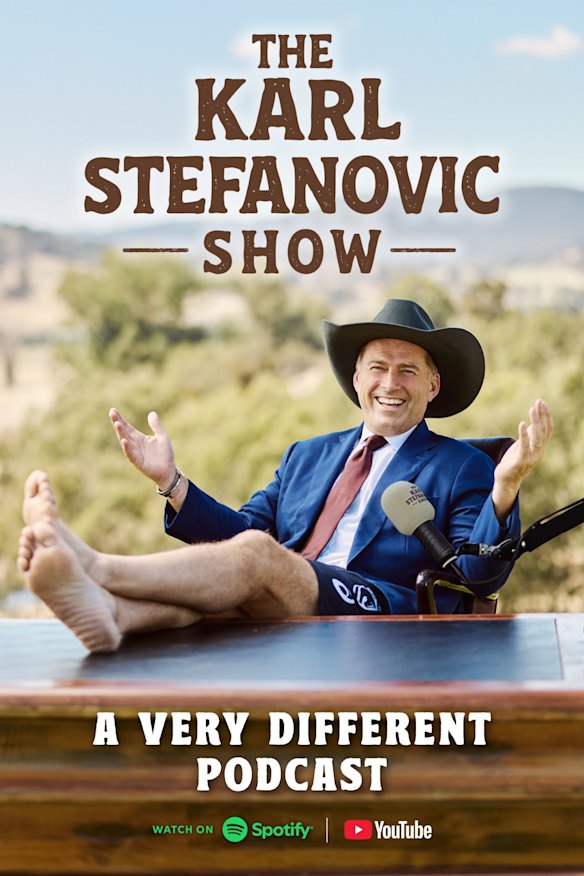
A man who has spent 21 years as an affable and slightly naughty presence in the homes of Australian breakfast TV viewers – who was rewarded with a Gold Logie as most popular person on Australian television – is on a charm offensive, only now he’s deploying that same skill set in service of his own brand rather than his employer.
More to the point, he is on a campaign to make the previously offensive seem, if not quite charming, then at the very least harmless. In short, Karl Stefanovic is mate-washing the right – including some of its most extreme elements.
He is leaning heavily into his Queenslander identity, speaking directly to his audience, and portraying himself as authentic and unfiltered … at last.
The ad for clothing brand Ringers Western that opened the YouTube stream of his eponymous podcast, The Karl Stefanovic Show, on Wednesday said it all.
“I’ve spent 20 years living in the city, but these Ringers Western boots, they bring me back to my roots,” said the Darlinghurst-born, Brisbane-raised Stefanovic as he embarked on a bit of cowboy-themed cosplay. “Years on the back of horses and out in the fields north of Cairns. You know, this brand means a lot to me. Built by patriotic Aussies for Aussies who love this country. It’s more than clothing. It’s a lifestyle. Built for hard work on the farm and even harder work in the studio.”
Never mind that the boots are made in Mexico and much of the clothing sold by the WA-based label is made in factories in South-East Asia, this is the image he is busily spruiking (and monetising) as he moves from mainstream media personality to, as Stefanovic jokingly called himself, Joe Bogan, Australia’s answer to the world’s most successful podcaster.
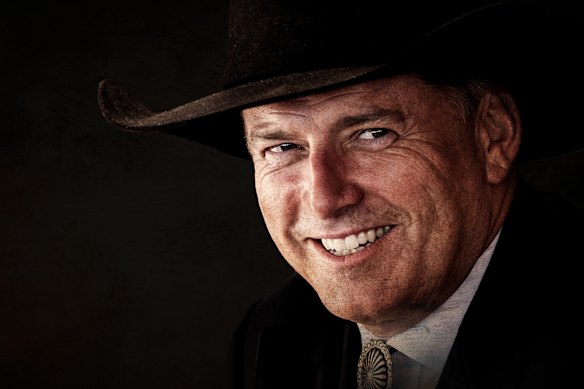
“Some week, huh,” he said on Friday morning in a short video message posted to the YouTube home of his podcast after he was axed by Nine (the owner of this masthead) amid the fallout from a disastrous interview with Robinson. “So, I’m free. Truly independent.”
He was delivering the message from a park bench in the French resort city of Cannes, unshaven and a little emotional, but ever smiling in the way seasoned TV presenters are. And everything about the short clip was calculated to enhance the impression of a man just being authentic, speaking what’s on his mind, to people just like him.
Since launching in January, The Karl Stefanovic Show has racked up 67 episodes, including weekly wraps, and it has grown from two episodes a week to five. And when it comes to grabbing attention, the right has might.
In late May, 50 episodes in, Mumbrella’s James Manning did a tally of the best and worst-performing instalments. Topping the list were Queensland businessman John Wagner talking about Australia’s fuel risk, manosphere figure Big Chocky, and Pauline Hanson, all with more than 300,000 views on YouTube.
The show is available across multiple social media channels – Apple Podcasts, Spotify, Facebook, Instagram, TikTok – with each episode sliced and diced into multiple shorter clips, often packaged up with all-caps tabloid-style headlines rendered in Clive Palmer yellow, all designed to tap into a sense of deep-seated grievance. The general tone can be summed up in a favourite Stefanovic question: “What is wrong with this country?”
Whatever else it may be, The Karl Stefanovic Show is a business. As many a social media enterprise has discovered, stoking a sense of panic and disaffection drives engagement, and engagement drives revenue. And the people behind the podcast have that squarely in mind.
The show is produced by 123 Podcast Pty Ltd, which was registered in February 2026 with the shares held by companies associated with Stefanovic, marketer Keshnee Kemp and accountant Anthony Bell. Bell owns 10 per cent, Stefanovic 45 per cent, and Kemp 45 per cent.
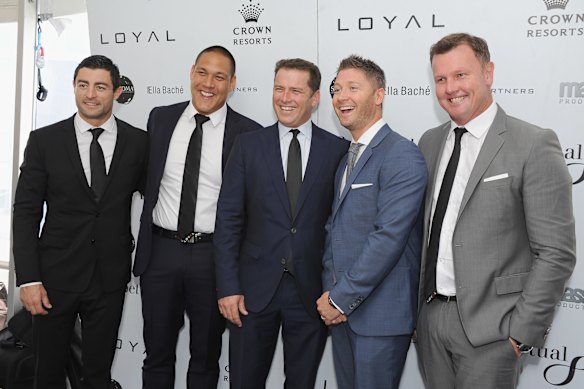
Bell, an accomplished sailor and winner of the Sydney to Hobart yacht race, has managed the business affairs of Stefanovic for years. He was also caught on video in January 2023 trying to mediate between former cricketer Michael Clarke and his girlfriend Jade Yarbrough – Stefanovic’s sister-in-law – during a messy, drunken argument in Noosa.
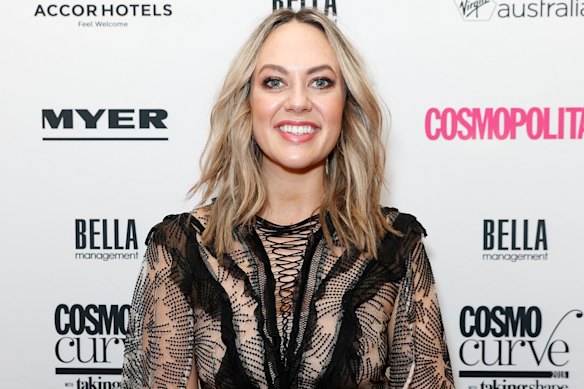
Kemp is an experienced media professional who was a mornings producer at Nine, and later editor of Cosmopolitan magazine, who moved into the social media marketing space around a decade ago. She launched her own marketing and PR company, August One, in 2025; among other things, it handles the marketing and content for the podcast, which now has a team of three, looking for a fourth employee – “a weapon of a partnerships lead who loves the show, believes in what we’re building, and can see our vision”.
Translating that vision into a viable and reliable revenue stream capable of replacing a $2 million a year salary for Stefanovic, the team that helps make the show and its spin-off content, and the shareholders of the company will be no easy task.
Nathan Powell, co-founder of influencer marketing platform Fabulate, estimates that with the show’s current following on Instagram (circa 260,000), “for the right advertiser, he could be earning between $4000 and $6000 per sponsored post”. For the best-performing clips on YouTube, he observes, “you’d be looking at hundreds, not thousands, of dollars, per post”.
For most of us, that might not be too bad. But when you’ve been pulling a couple of mill a year, it’s merely a start.
“You’d almost have to do a brand deal a day in order to reach that,” says Powell. “There are more than 1.2 million creators in Australia and they’re competing for the $1.2 billion that brands are forecast to spend this year. There would be very, very, very few that are earning more than $2 million a year.”
Still, Kemp’s posts on LinkedIn paint a rosy story of unstoppable momentum. “Month on month, our shows continue to grow and so does our community,” she wrote this week. “In the last 28 days alone, we’ve had over a million views on our YouTube podcast episodes, another 2.5 million views on clips and segments, and more than a million Spotify streams.”
That audience growth has been driven by an ever more willing embrace of the right. The first guest, in an episode published with typical calculation on the eve of Australia Day, was Pauline Hanson. She has been on the show twice since. Her One Nation colleague, former Nationals leader Barnaby Joyce, has been on four times, and a litany of other One Nation members have been guests too. The Gina Rinehart-backed anti-immigrant, anti-union, monoculturalist political party that is now apparently the most popular in the country is not officially a sponsor of the show, but it is certainly a preferred supplier of talking points.
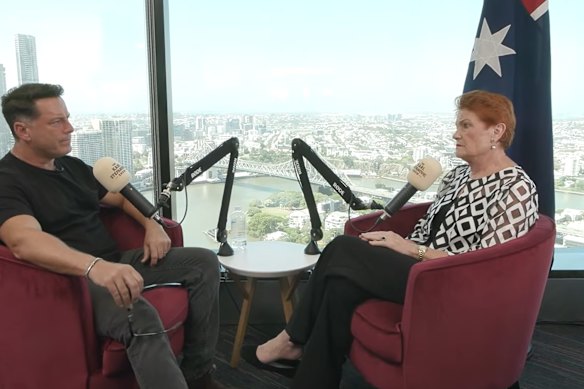
Conservative MPs Matt Canavan and Jacinta Nampijinpa Price have been on, as have Clive Palmer, Tony Abbott and John Howard. Stefanovic has welcomed back anti-vaxxer and conspiracy theorist Pete Evans, grovellingly apologising for having taken the “wrong” stance on COVID-19 vaccines, and Kyle Sandilands, who took the opportunity to dump on his former radio co-host Jackie Henderson yet again. He’s vigorously defended Ben Roberts-Smith, insisting the man accused (and found guilty to the civil standard) of war crimes should still be considered a hero.
The roll-call of the Australian right, and in some cases the far right, was a long way from what Stefanovic’s former employers at Nine had anticipated when he sought and gained their permission to do a little side project in which he would interview interesting people from all walks of life.
It didn’t sit well with the day job, in which their highest-paid presenter was meant to be able to sit face to face with the nation’s political leaders and assume the position of unbiased interviewer. But it wasn’t until this week’s podcast episode with far-right extremist Robinson, which was removed from YouTube, that they finally acted.
From London this week, Robinson, Ant Middleton and Holly Valance, a former Neighbours star (and ex-wife of an English property billionaire) all appeared in rapid succession, all pushing the same anti-immigration and fear-stoking rhetoric. All were met by Stefanovic’s hail-fellow-well-met charm while they chatted amiably on an off-white, soft-cushioned lounge suite. It was a conspiracy of conspiracists, and a bridge too far for Nine. On Friday morning, the company finally issued an official statement clarifying the parting of the ways.
In his video message on Friday morning, Stefanovic persisted in the fiction that his show has been an exercise in curiosity rather than a mouthpiece for the views of an ascendant right that has the backing of some of the wealthiest, whitest and most anti-worker people in the world, Rinehart, Palmer and Elon Musk included.
“On my show I’ve spoken to people who have different perspectives,” Free Karl told his viewers. “Sometimes I agree with everything a guest says, sometimes I don’t. But, importantly, you get to make up your mind. Freedom of speech, here and around the world, is what this show is about. You have the power. To make. Up. Your. Own. Mind.”
That phrase, delivered with a knowing smirk, was the verbal equivalent of the OK hand signal, a dog whistle to voyagers down the rabbit hole of right-wing conspiracy theories in which a cabal of shady liberals rules the world (rather than the shady mining and tech billionaires who seek to).
Everyone – well, almost everyone – is “mate” in the blokey realm of the Stefanovic studio. Anthony Albanese used the word three times when he was on the show in February, though his host did not; it was an interview with the prime minister, and he treated it as such.
By contrast, the exchanges with right-wing figures are notably bereft of interrogation. In the chat with controversial former television chef Pete Evans there are 17 “mates”. Ant Middleton – the tough-love expert from the reality TV competition SAS: Who Dares Wins and now an outspoken anti-immigration agitator in Britain, got a “brother” from Karl, then went on to claim that “the majority” of immigrants to Britain weren’t legitimate, and had ulterior motives. Robinson, a former member of the fascist British National Party and the founder of the far-right English Defence League, whose appearance was the straw that broke the camel’s back, even got an “I love you”, while recently departed British PM Keir Starmer was deemed a “wanker”.
There is a whiff of opportunism in all this, a sense that the right is where the market is. But the market still needs some massaging.
In his video message on Friday morning, one-time NIDA applicant Stefanovic delivered some of his finest acting to date. “Honestly, I don’t know what I’m going to do,” he said, managing to look briefly bewildered, at a loss, alone in the world. “But I’ll figure it out.”
He directly appealed to potential advertisers and sponsors who might join the list that to date includes a handful: R5 Supplements, Tanda workforce/hiring management, Bishop Outdoor Advertising, AG1 Athletic Greens and the aforementioned Ringers. The betting company Neds had reportedly decided not to renew its association with the show even before the events of the past week.
”All brands have their own definition of brand safety, everything from the clothes the creators wear to the language they use to the political leanings they have,” says Fabulate’s Nathan Powell. “So, [Stefanovic’s move to the right] is absolutely going to have an effect. But there’s going to be particular advertisers that see value in that audience, and they will go after it.”
Now, that he’s out on his own, he has no choice but to commit to the project of positioning himself as Australia’s Rogan.
So far, it’s resonating, with men, at least. Audience data from Fabulate suggests almost 60 per cent of the audience for the podcast is male; on Today, it was roughly two-thirds female. More than a third of his new following is aged 45 to 64, significantly up from his social following in his TV guise.
Stefanovic is no doubt hoping the benefits will flow both ways. He’s effectively made a $2 million bet that the wind will keep blowing in the same direction. To the right.

















































