3 months ago
40
3 months ago
40
By Gretchen Shirm
January 16, 2026 — 4.00pm
FICTION
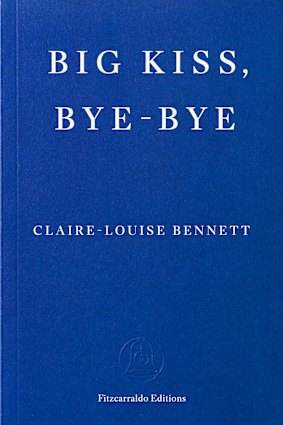
Big Kiss, Bye-Bye
Claire-Louise Bennett
Fitzcarraldo, $26.99
In her previous two novels, Pond and Checkout 19, Claire-Louise Bennett built a reputation for herself as a popular avant-garde novelist, focusing on the domestic lives of solitary women. Big Kiss, Bye-Bye similarly tracks a short period in the life of an unnamed woman, who is undergoing a psychological adjustment in response to upheaval in her life.
Perhaps even more so than her earlier outings, Big Kiss, Bye-Bye is an extremely interior affair, as the first-person narrator reflects on the ending of her relationship with Xavier. Though their relationship was never consummated, it was intense and intimate. Bennett writes, “We didn’t have sex. We’ve never had sex. We will never have sex.” This type of sentence patterning runs throughout the novel – it’s a novel very much concerned with language and how language regulates our interactions with others.
At times, Xavier comes across as controlling and manipulative. At one point, he sends €50 a week to a florist near the narrator’s home and insists that she spends at least that much on flowers, though her preference is for small bunches. At other times, he is extremely charming, while towards the end of their relationship he is quite vulnerable – confined to a wheelchair and beset with illness. Xavier cut off contact with the narrator after reading her first novel, which he described as “some sort of HELL”, yet the narrator still finds herself experiencing a strong impulse to contact him.
Bennett describes one of their interactions as follows: “He would look at her and she would look at him. I wonder, she said, I wonder what it is you see when you look at me. I don’t see you as your friends see you, he said. I see you as you really are.”
Though the narrator is apparently aware of Xavier’s flaws, the entanglement between them runs both ways. In some essential way, she feels seen in Xavier’s presence, even though she expresses genuine bafflement at his more narcissistic behaviours.
The only other significant event in the novel is that the narrator receives an emailed letter from her former English teacher, Terence Stone, who discovered her book at a local library and with whom she enters an email exchange. Stone in turn reminds her of a relationship she had with Robert Turner, her philosophy teacher, whom she learnt recently died, and with whom “she had dealings”.

Irish author Claire-Louise Bennett.
At one point, she reflects that Stone “has become a kind of stand-in because of his proximity to” Robert Turner. In these sequences, Bennett captures the slippages from the rational to the irrational beautifully – because she must wait for emailed responses from Stone, an older man who doesn’t respond to emails immediately, much of her interactions with him take the form of speculations about what might be said. Bennett is the master of dilation, as small interactions blossom and distort in the narrator’s thoughts. This is partly what Bennett is exploring: how easy it is to become lost in the solitary spiral of our own thoughts; how hard it is to stay connected with our true selves in the presence of others.
The novel, though short, is extremely dense. None of the dialogue is indented, and long, run-on sentences abound, making paragraphs frequently extend over several pages. As a result, the novel mirrors the narrator’s own experience of feeling discombobulated, but it does sometimes require great effort to follow the narrative thread.
In a brilliant reading of Michael Haneke’s film The Piano Teacher towards the end of the novel, the narrator offers this critique of Erika, a music professor who has never had a sexual relationship and continues to live with her mother: “It is perfectly clear that Erika has not had the liberty and independence to experience intimate relations and thereby gradually develop a mature and unashamed sexual self.”
This struck me as enlightening on Bennett’s overall point in the novel, which has to do with the development of the many strands of self. A person can be mature in some respects and extremely limited in other ways.
Though perhaps not quite as virtuosic as her two previous novels, Big Kiss, Bye-Bye is still a fascinating journey into selfhood.
Gretchen Shirm is a Sydney novelist and critic. Her most recent novel is Out of the Woods.
Most Viewed in Culture
Loading