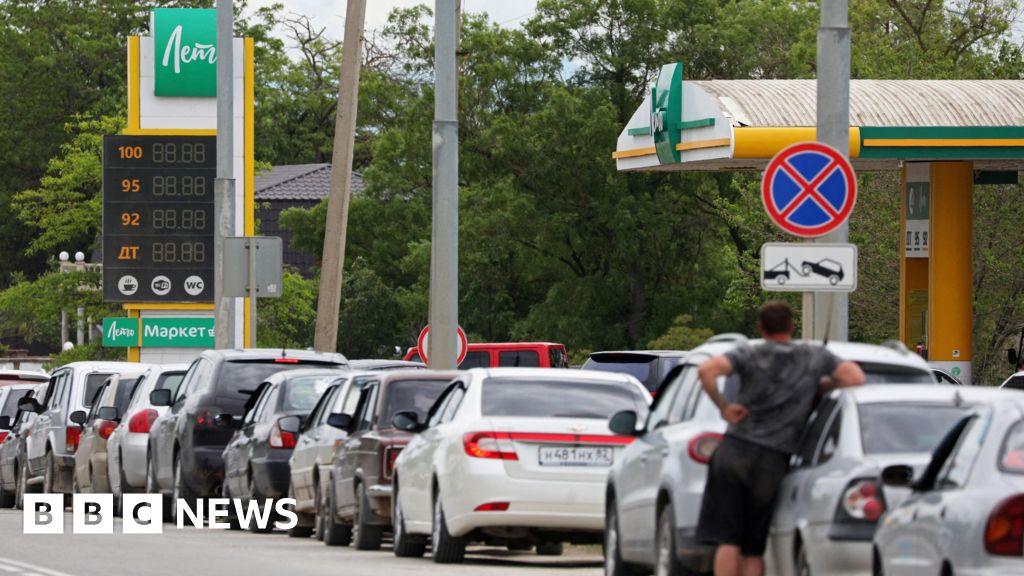
President Trump is weighing several options to lower oil prices, which have surged about 20% since the U.S. war with Iran began on Feb. 28, driving up fuel costs higher across the country. But his options for reining in energy costs are limited, especially if the conflict continues for months, experts said.
"There's not a whole lot of levers that are going to be influential at this point," Patrick De Haan, petroleum analyst at GasBuddy, told CBS News. "The biggest thing he could do is work towards is getting and boosting confidence in the Strait of Hormuz."
Indeed, energy and security experts agree that the most effective means of reducing oil and gas prices would be to end the Iran conflict or, less ambitiously, militarily secure the Strait of Hormuz — the vital waterway that handles 20% of the world's oil supply. Yet securing the channel could become harder if Iran deploys naval mines in the strait.
In the short-term, jawboning oil traders and other energy investors may be Mr. Trump's most effective tool. Oil prices fell sharply on Monday after he told CBS News that the war with Iran is "very complete," at least temporarily allaying concerns about a drawn-out conflict.
Here are other measures the Trump administration could use to reel in gas prices and other energy costs.
Tap the Strategic Petroleum Reserve
The Strategic Petroleum Reserve was formed in the 1970s to act as an oil emergency fund with the idea of cushioning the economy from the kind of shockwaves caused by the 1973-74 oil embargo. The SPR is intended to be tapped when oil supplies are disrupted, such as in a natural disaster.
The president and the U.S. energy secretary can both authorize releases from the SPR, according to the Department of Energy. On Monday, finance ministers from the G7 nations met to discuss a coordinated release of petroleum through the International Energy Agency's (IEA) reserves, the Financial Times reported.
Together, the SPR and the IEA could release about 1.2 million barrels a day, according to JPMorgan commodity analysts. But, they added, "it would not offset potential losses" from halted shipments through the Strait of Hormuz, which they estimate could soon reach 12 million barrels per day.
Tapping the SPR could at least further cool markets, De Haan noted. But without securing the Strait of Hormuz, the strategy is unlikely to bring oil back down to their prices before the U.S. and Israel attacked Iran late last month, he said.
During the pandemic, the Biden administration in 2022 released a total of roughly 200 million barrels of crude from the SPR to curb skyrocketing gas prices — the largest such release in U.S. history. According to the Treasury Department, the move — in coordination with oil releases by other countries at the time — reduced gas prices in the U.S. by 17 to 42 cents per gallon.
The U.S. also tapped the reserve during the 1991 Gulf War, Hurricane Katrina in 2005 and the war in Libya in 2011.
Restrict U.S. oil exports
The U.S. has become a major oil exporter, sending an average of about 10.2 million barrels of petroleum per day across the globe, according to the U.S. Energy Information Administration. That outpaces the amount of oil it imports, making the U.S. a net oil exporter.
President Trump has the legal authority to restrict exports of crude oil during a national emergency, according to JPMorgan. In the short term, that could help reduce domestic oil prices by keeping U.S.-produced crude within its borders.
Over the longer term, however, that approach could backfire by weakening the economic incentives behind domestic oil production, the analysts said. That would lead to tighter global supplies and renew pressure on global and U.S. fuel costs.
Pause federal and state taxes
The federal government currently levies a tax of 18.4 cents per gallon on gas and 24.4 cents for diesel, revenue that's used to finance the Highway Trust Fund. Temporarily suspending those taxes could ease fuel prices.
But because these taxes are part of the IRS tax code, Congress would have to pass a law suspending them — a high hurdle given the partisan divide in Washington, D.C.
A more plausible option would be for individual U.S. states to suspend or cut fuel taxes, according to JPMorgan. Because state fuel taxes range from 15 cents to more than 50 cents per gallon, state suspensions would "provide short-term relief for consumers," they noted.
The downside: less tax revenue to maintain roads.
Waive the Jones Act
The Jones Act requires goods shipped between U.S. ports to be moved on ships that are U.S.-built, U.S.-flagged and U.S.-crewed.
The Trump administration could suspend the law if it's deemed necessary for national defense or due to emergencies.
"Combining a release from the SPR with a temporary waiver of the Jones Act would make the policy more effective," the JPMorgan analysts said.
Relax summer gas rules
Federal rules require gas stations to stop selling a blend called E15 from June 1 to Sept. 15 because its higher ethanol content means it evaporates more easily in hot weather, which can contribute to air pollution.
Because E15 is cheaper than other blends, the Trump administration could temporarily relax the regulation. That's been done before. The Environmental Protection Agency last summer issued an emergency waiver allowing E15 to be sold in the warmer months.
"Such waivers effectively increase the available gasoline pool by allowing higher ethanol blending, which can modestly expand supply and help ease pressure on pump prices during periods of tight fuel markets," JP Morgan noted.
However, the overall impact on gas prices would be "limited," they added.
—With reporting by Mary Cunningham.
Edited by Alain Sherter
In:
The economic cost of war in Iran so far
The economic cost of war in Iran so far
(03:35)