3 months ago
29
3 months ago
29
Opinion

February 6, 2026 — 5:00am
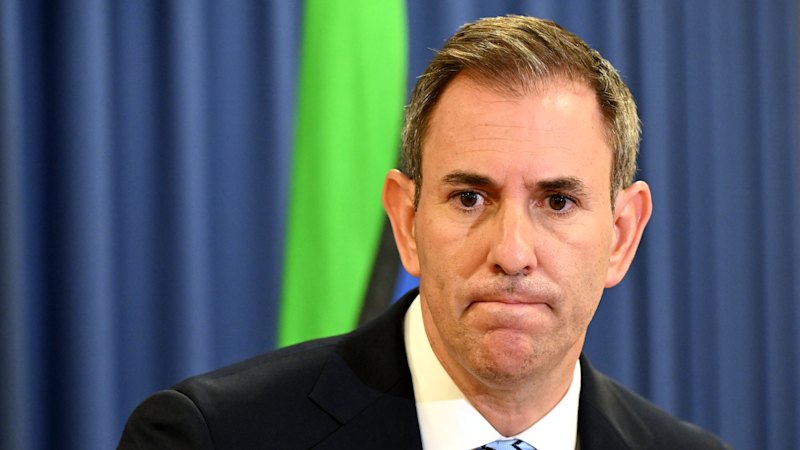
In three months, Treasurer Jim Chalmers will hand down his fifth federal budget. And though there is plenty of time for the government to get cold feet and change its mind, at this stage the signals are that it might finally attempt a truly difficult economic reform. As this masthead reported on Thursday, the federal government is considering changes to the 50 per cent capital gains tax discount on investments, making it slightly less generous.
At present, the 50 per cent discount means that if a person sells an investment property or parcel of shares (for example) for a $200,000 profit, they will pay tax on only $100,000 of that profit. Reducing that discount to 33 per cent would raise an extra $4 billion per year by 2035-36, according to Deloitte Access Economics, a sizeable figure but hardly one to wipe out the federal deficit.
Chalmers, 47, has delivered two surpluses and two deficits so far. Most economists will tell you that a surplus or deficit is largely irrelevant to whether a budget is “good” or “bad” for the economy or households, but much of the political class has adopted surplus or deficit as code for whether a government is a competent manager of the economy.
Many economists will also tell you that Chalmers’ first four budgets lacked ambition, a claim the treasurer resents. It causes him to reach for a long list of changes and micro-economic reforms, from tweaks to superannuation, personal income tax cuts, the harmonisation of laws across states to remove red tape, and more.
Chalmers wants to be remembered in the history books as a reformer in the mould of Labor’s greatest treasurer, Paul Keating – the subject of Chalmers’ PhD thesis. The Queenslander has long downplayed his interest in being prime minister one day and has declared that if being treasurer is as high as he rises in federal politics, that’s fine with him.
Leadership questions aside, the question confronting the Albanese government now is whether it can hold its nerve and implement a cut to the capital gains tax discount. At this stage, Prime Minister Anthony Albanese is open to the idea, which means it is four-fifths of the way there.
Cautious by nature, Albanese has already reeled in his ambitious treasurer several times when he pursued, for example, winding back negative gearing tax concessions. Chalmers and Albanese have been at loggerheads about the pace of reform on more than one occasion, such as when Chalmers had to wind back proposed changes to superannuation last October. This time they appear to be on the same page.
If changes to the CGT discount go ahead, it isn’t hard to imagine what the next three months of political debate will look like. Business groups will warn that any change will deny investors certainty and be a disaster for both the economy and the investment climate in Australia. The Coalition – if it can ever manage to stop talking about itself – will launch a giant scare campaign about how the CGT changes (no matter how modest they might be) will end civilisation as we know it. The attack began in question time on Thursday, though Albanese parried by pointing out the Liberals and Nationals had teamed up with the Greens last year to back a Senate inquiry into the CGT discount.
Certain newspapers and a television news channel will deftly switch from bemoaning the government’s lack of ambition for economic reform to smashing Albanese and Chalmers for being too ambitious. But before all that kicks off in earnest – as it surely will – a request: can Australia’s media-business-political class stop having a panic attack every time serious reform is contemplated?
This is not to make case for or against a CGT tax change. Rather, it is a request for sensible debate about tax policy and the state of the federal budget, which does need structural repair and which is forecast to be in the red for years to come.
Australians expect more from the federal government, especially since the pandemic, but it has to be paid for and, for too long, both sides of politics have mostly ducked this difficult conversation.
A modest capital gains tax was introduced by the Hawke-Keating government in 1985 and altered by then-treasurer Peter Costello in 1999, with a view to encouraging more people to invest in the share market.
Instead, and as the Australian Council of Social Services warned correctly at the time, it drove more people to become property investors (in part because of how favourably it works in conjunction with negative gearing) and helped kick-start Australia’s real estate boom.
As independent economist Saul Eslake has written, when the CGT concession was introduced, about 50 per cent of landlords declared a loss on their rental property. By 2008, it had risen to 70 per cent. This confirms Costello’s CGT changes made investing in property more desirable. Not only would investors get a tax deduction by declaring a loss on rental properties, but they would reap the CGT discount when they sold up.
Ken Henry’s 2010 tax review recommended reducing the CGT discount from 50 to 40 per cent, along with some other changes. The Rudd government sidestepped that change.
Bill Shorten took proposed changes to wind back the generous negative gearing and CGT concessions to two elections, in 2016 and 2019. He failed both times, but there are many Labor MPs who attribute Shorten’s better-than-expected result in 2016 to those proposals and the 2019 loss to the fact that the opposition leader was, by then, personally unpopular and burdened by too many other tax proposals.
Winding back the CGT discount is not a panacea. It will not fix the housing crisis in Australia. A massive increase in housing supply is the primary solution, and something the government is working on, with a target of building 1.2 million homes by 2029. But tweaking the rules will make some difference, as it will make property investment slightly less lucrative.
Senior government sources have assured me that any CGT changes would be part of a broader reform package, to deflect accusations it is just making a cash grab. It will also send a much-needed signal to younger Australians that Labor has heard their concern that they will never be able to afford to buy a home.
This budget could well be Chalmers’ and Albanese’s last chance this term to attempt major tax reform because, by May 2027, Albanese will have one eye on the next federal election. He may wish to leave open the option of an early poll in late 2027, which means next year’s budget would be heavy on sweeteners with (likely) no major tax changes.
The next three months will be a test of whether Chalmers and Albanese can hold their nerve and deliver now they’re in government. It will also test whether Australia can have a grown-up conversation about tax reform.
James Massola is chief political commentator.
Get a weekly wrap of views that will challenge, champion and inform your own. Sign up for our Opinion newsletter.