3 months ago
24
3 months ago
24
Opinion

February 6, 2026 — 5:00am
Let’s survey the terrain. An interest rate rise lands a mere six months after rates were last cut, confirming that Australia’s inflation problem is stubborn, and persisting. That means our cost-of-living pain similarly persists. Meanwhile, the populist right-wing insurgency has finally arrived in Australia in the familiar form of One Nation taking an unfamiliar position in some polls ahead of the official opposition. These things are surely related.
That’s because economic insecurity and populist politics go together. Donald Trump famously built a winning coalition beginning with working-class voters who’d lost out from globalisation. Nigel Farage’s Reform in the UK can tell a similar story.
But we’ve been seeing more and less extreme versions of this in Western democracies ever since the global financial crisis: Golden Dawn in Greece, the National Front (now National Rally) in France, Viktor Orban’s Fidesz party in Hungary, the AfD in Germany, with its neo-Nazi echoes. One Nation’s rise puts us about 15 years behind.
Amid this, the Albanese government occupies a political position I’ve never seen before. In parliamentary terms, it appears impregnable. It holds 94 seats. Its nearest rival, after the Coalition split, holds 28 – and it was only 42 before.
But Labor also achieved this in the most fragile way: winning less than 35 per cent of the primary vote. Its parliamentary army is therefore the result of a night of its wildest dreams, where everything went right; where every swing against Labor fell short of costing seats; where every coin toss went its way. It’s a genuine victory, but the extent of the conquest gives a false reading. Labor dominates the parliament in a way it doesn’t dominate voters’ hearts. And a populist revolt tells you those voters are getting angrier and more disillusioned.
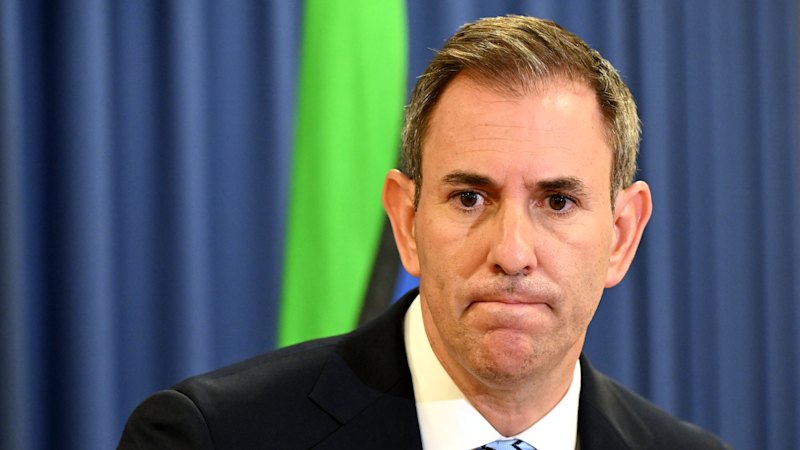
All of which means the Albanese government is under enormous pressure and none at all. No pressure because there is simply no functional opposition to threaten it in electoral terms at the moment. Enormous pressure because few things are worse to throw at an increasingly disillusioned electorate than inflation and a consequent rate rise. This is why Treasurer Jim Chalmers spent considerable energy this week arguing that none of this was the government’s fault.
Labor dominates the parliament in a way it doesn’t dominate voters’ hearts
Here, he can genuinely point out that the big recent shifts in our economy have come from private sector investment and increased households spending, not government largesse. That’s different from last year, when the government pumping money into things like childcare and health was decisive. But really, it’s a false dichotomy. Many of those households that increased their spending will have been beneficiaries of government spending in turn, including in the form of increased wages.
My guess is most voters couldn’t care less about the argument anyway. Just as government often basks in the glow of private-sector achievements, so too is the burden of government to be blamed for what goes wrong, whether or not it’s under its control. And that’s especially so in a time of populist discontent, where anxieties are boiled down to an oversimplified cause. Right now, this is destroying the opposition. But that doesn’t stop it being the government’s problem.
We’re starting to see the first signs that some of One Nation’s support is coming at Labor’s expense, and is hitting outer-suburban seats rather than just rural ones. More profoundly, though, the government now oversees the perfect conditions for whatever growth One Nation still has to be realised.
And those conditions are fiendish. There is a reason economics is called “the dismal science”: its whole world is trade-offs, where every silver cloud has a lead lining. So, low interest rates reduce mortgage payments, but hurt people who rely on returns on the savings in their bank accounts, and suggest a moribund economy. Or, low unemployment (and ours is currently very low) usually means higher inflation, as do wage increases.
That is what makes inflation such an insidious problem, economically, socially, and therefore politically. It makes people poorer, but so do most of the solutions to it. It also hits poorer people harder, which creates the very worst social equation: the wealthy can continue to spend, further stoking inflation, making life harder again for the poor, and widening inequality. Now you really do have a populist recipe, left and right.
The trouble is we expect governments to reduce unemployment, increase wages, and lower inflation all at once. These are, by and large, economic opposites. So, we’re asking government to square a circle, with precious few ways to do it. The most commonly cited is to boost productivity – our ability to produce more with less – which is why we’re talking relentlessly about it. That includes the treasurer, who declared on the morning after last year’s election that the “productivity agenda” would define this government’s second term.
Even after a much-hyped productivity roundtable, we still don’t really know what that looks like. But the government’s levers probably are relatively limited. Productivity is, after all, a global problem, especially for developed economies. Its great leaps throughout history been overwhelmingly the result of some transformative technology: stone tools, the plough, electricity, the steam engine. That’s why the government has taken such a bullish stance on AI, betting on its transformative promise, downplaying its potential ravages.
But whatever the government does will be complex, take time, and probably not move things drastically. Meanwhile, populist politics can protest louder and instantly. And to the extent the government’s productivity agenda requires serious reform, it will be controversial. That’s a highwire act while the electorate is offering only thin support, and is currently primed for a full-throated politics of grievance.
But it’s possible for a government whose parliamentary dominance is so large it can take the hits, and which thinks it can cool some of the anger by having a forthright plan. We’re about to learn which of these the Albanese government thinks describes it best.
Waleed Aly is a broadcaster, author, academic and regular columnist.
The Opinion newsletter is a weekly wrap of views that will challenge, champion and inform your own. Sign up here.