3 months ago
23
3 months ago
23
Opinion
December 25, 2025 — 9.50am
December 25, 2025 — 9.50am
Apparently Ben Stokes asked his teammates to run 12 kilometres with him in Noosa National Park, and apparently they decided to sit in a bar all day instead.
Too scared to fall short of his standards, at least one of them, Ben Duckett, was not too scared to get too drunk to find his way back to the hotel.
The fracturing of Stokes’ leadership is the major theme of this tour, and the Melbourne and Sydney Tests, already presenting as ghoulish spectacles, will clarify whether it has cracked or fully shattered.
Stokes is still England’s best cricketer, even in his decline, and he is being protected for now by the diversionary attacks on his off-field higher-ups, but cricket is a captain’s game and nowhere has it been more so than in the cultish atmosphere around Stokes.
Too much blame has been placed on England’s batting shortfalls in these Ashes. At the outset of the series, you knew that their attacking approach would be hit-and-miss against an experienced Australian attack that would adapt its tactics and apply control on home pitches.
But England still scored enough runs to win the Perth, Brisbane and Adelaide Tests. Even with two of their top three not up to this level, they reined in their excesses and accumulated 575 total runs in Brisbane and 638 in Adelaide. Their batting is not as good as they thought it was, but it’s not as bad as some of their dismissals have implied.
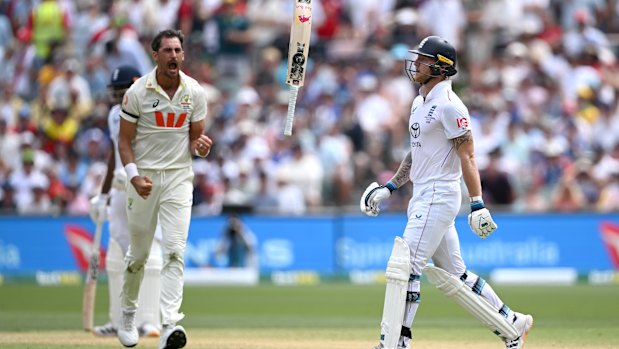
Ben Stokes shows his disappointment after his long vigil in Adelaide comes to an end.Credit: Getty Images
The observers who gurgled approval about Jamie Smith’s four consecutive boundaries in Adelaide were the same ones who wagged their fingers when he tried for a fifth, as if four (or three, or two, or one) were thrilling counter-attack, but five was the arbitrary line, drawn by hindsight, to separate luminous brilliance from reckless stupidity.
This has been the pattern with all of England’s batting – live and die by the sword – and the results have been in line with realistic expectations.
The mystery box, the deciding half of the contest, was how England’s bowling would go against Australia’s batting (or, as it looked in the first innings in Perth, vice versa).
England’s eschewal of spin was not a bad plan. Muttiah Muralitharan was ineffective on Australian pitches, as were Ravi Ashwin, Rangana Herath and Yasir Shah. Anil Kumble, Graeme Swann and Saqlain Mushtaq did passably well.
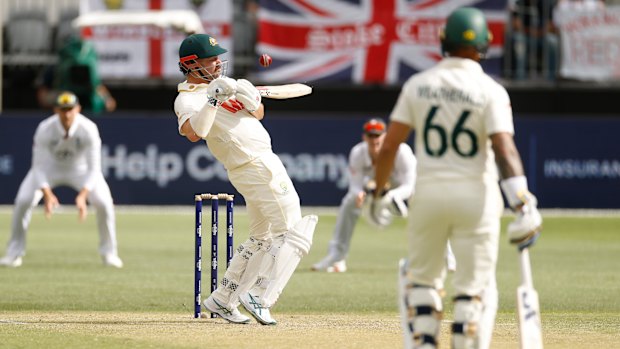
Much has been made of Travis Head’s batting in Perth, but he had plenty of luck, and England’s bowling was awful.Credit: Getty Images
Year after year we see that it takes a lifetime of patience and spin bowling smarts in Australian conditions to eke out success. Lacking the required talent, England sensibly opted for pace. The promise was that Jofra Archer, Mark Wood, Brydon Carse, Gus Atkinson, Josh Tongue, Matthew Potts and Stokes would batter Australia’s brittle top order with speed.
They haven’t been good enough or fit enough, and Australia have winkled out winning totals by osmosis. Much has been made, rightly, of Travis Head’s second innings in Perth. He was also streaky and lucky. But England’s bowling was horrible, and if Head hadn’t played that winning knock it’s likely that Steve Smith and the middle order would have found 200 runs between them.
Archer’s lines, as much as his fall in pace, were woeful. Wood was gone. Carse and Atkinson were either confused by poor instructions, tired due to their lack of practice, or too easily discouraged by the counter-attack from Head and Jake Weatherald.
In Brisbane and Adelaide, England wilted in the heat and again bowled inconsistent lengths. Archer picked up some wickets through Australian inattention, and bowled fast at times, but the home batsmen were able to see him off, knowing he could not return for good spells.
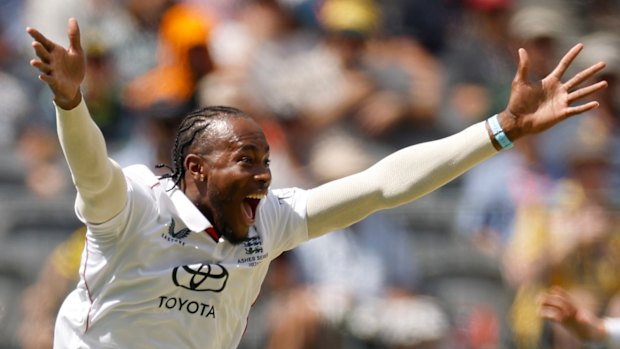
Jofra Archer’s performances have been mixed, at best.Credit: Getty Images
They eventually managed it against Jasprit Bumrah last season, and Archer is no Bumrah. The other bowlers were pedestrian. When Alex Carey steadied his partners in Brisbane and Adelaide – those sequences of play where the Ashes were decided – England’s bowling did not challenge them consistently.
Big Test series are usually won at the margins: dry spells of bowling, tail-end runs and basic fielding.
Australia’s bottom five partnerships contributed 219 runs in Brisbane and 186 in the first innings in Adelaide. In the field, for every screamer snatched by the Australians, there have been two catches dropped by England.
Loading
On the third afternoon in Adelaide, when the Ashes were there to be won or lost, Stokes did not bowl, and he gave Archer the ball belatedly and cautiously. He set fields that enabled Head and Carey to rotate the strike at their leisure. When Head was losing concentration, Carey calmed him down, but the task was made easier by England’s sloppy bowling and slackness in the field.
What was in Stokes’ mind? He said his body was breaking after his defensive vigil with the bat, and evidently two and a half hours of batting had done Archer in. Yes, it was hot, but try telling Greg Matthews that. In the tied Test in Chennai in 1986, in 50-degree heat, Matthews batted for three hours across both innings and bowled 78 overs, some of them in a vest. Ravi Shastri bowled 61 overs and batted for four hours. The late Dean Jones’ feats have gone down in cricketing folklore and medical literature.
Not to say they built them tougher in those days, but still, Stokes’ actions in Adelaide looked very much like a disappointed man throwing a tantrum, or a sulk, against his own teammates.
When there is such a difference in outcricket (the basics of bowling and fielding) the one key factor separating Australia and England in these Ashes – the problem is nearly always leadership. Leadership can’t produce talent from nowhere, but it can set a productive frame of mind, keep spirits high, sustain concentration and control the controllables.
Stokes’ brand of leadership has been top-down, bloody-minded and bullying. Whatever speeches he has given, the messages from his performances have been to challenge teammates to follow him and deride them as “weak” if they can’t; to stonewall and take no risks in preserving his own wicket, heaping pressure on the others; and to let his passions override his composure in the field, leading to self-evidently poor tactics, fields that don’t suit his bowlers and emotional decision-making.
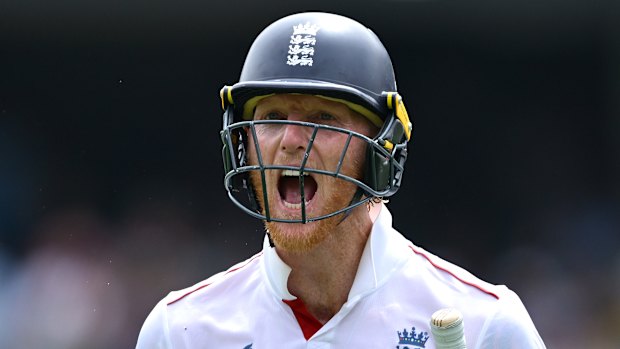
Ben Stokes’ actions in Adelaide looked very much like a disappointed man throwing a tantrum.Credit: Getty Images
Stokes’ personal contributions with bat and ball have been strong, and he is capable of more highlights in Melbourne and Sydney. But runs and wickets are only part of the picture, and when time has passed and players produce their memoirs of this tour, don’t be surprised if there are stories of Stokes going a bit Colonel Kurtz from Apocalypse Now on his team in 2025.
His batting, in the series, has been pure Kurtz: “Out there on his own, operating without any decent restraint”. This is not a criticism of the way he has batted per se, but it can only have been read, in his team, as a criticism of them and a withdrawal of the paternal blessings and encouragements he had heaped on them since 2022.
It is probably a burden of the past.
Loading
Stokes has been England’s best cricketer and dominant personality, but by now his warrior-exemplar model of captaincy appears to have trapped him. He’s trying to play that Headingley 2019 innings every time: block everything for three hours and demand that someone stays with him.
The outrageous luck he received on the field at Headingley and in the 2019 World Cup final left him with a messianic status in English cricket. When he has lived up to it, he has had the attributes of a magical leader who requires from his team only the simple donation of their absolute faith. Whatever trouble they get in, Stokes will save them.
It’s been called a cult of personality even by media who have knowingly aided and abetted it. When cults of personality collapse, they do so suddenly and in the most undignified manner.
In Melbourne and Sydney, there are alternative scenarios for England.
One is that, relieved of the pressure of winning the Ashes, facing an Australian attack stretched to the limit of its resources, England will relax and improve. The other is that they will continue as they have played, competitive in patches before subsiding under pressure.
Each is possible, but each is a kind of aftermath. Absolute belief in the cult was probably shaky before Noosa – on the outside, we’re always off the pace – but it’s gone. Now we get to see what happens in a cricket team as it is being deprogrammed.
Most Viewed in Sport
Loading