3 months ago
27
3 months ago
27

January 23, 2026 — 11:35am
Branxholme is a tiny, peaceful place, population 350, perched 25 kilometres down the highway from the city of Hamilton in far south-west Victoria.
The village is surrounded by fine grazing land, and every year, it hosts a rodeo.
And yet, it hovers at the far edges of a history that could keep you up at night if you knew of it. Why, Branxholme’s very founding was visited by unthinkable tragedy.
In the mid-winter of 1843, Abraham Ward and his wife, Harriett, opened what is thought to be the first European building in Branxholme, which was then called Arrandoovong. Their business was the Travellers Rest hotel.
It was poor timing. Squatters had taken to occupying the traditional hunting grounds of the Aboriginal people, the Gunditjmara, who in 1843 were fighting back. It was the height of south-west Victoria’s frontier war.
Within a month of the hotel opening, the Wards’ two-year-old daughter, Martha, went missing for reasons that have never been explained. The Melbourne Times of Friday, August 5, 1843, reported “it has been supposed [the child] was carried off by the blacks who frequent [Ward’s] residence”.
The newly appointed Native Police Corps, under the command of a pitiless man named Henry Dana, having been sent west from Melbourne to “pacify the wild blacks”, according to the language of the time, swung into action.
Dana’s mounted troopers – Aboriginal men from distant parts with no kinship to the Gunditjmara – eventually found the body of little Martha in bushland.
Dana reported that he’d interviewed several Aboriginal women, and said he had learnt the child had been killed by a blow from a waddy because she wouldn’t stop crying.
Soon after, Dana and his men shot and killed at least nine Aboriginal men after escalating their expedition into retribution for the spearing of a grazier, Christopher Barrett, at the nearby Crawford River station.
Dana, his work done, reported that he had “decently interred” the remains of little Martha Ward, but the place he chose remains unknown – there was no Branxholme cemetery until 1850.
On Sunday, however, people of the district will gather at Branxholme’s cemetery to remember the hideously violent and much more recent fate of a girl named Rosalyn Nolte.
Her remains have lain in the cemetery for 55 years. So far as anyone can remember, there has never been a community gathering to commemorate her short life.
The cemetery sits on a rise a few kilometres out of the old village. When Rosalyn was buried there in 1971, before the view was blocked by a plantation of bluegums, it was possible to gaze east to the horizon, 20 kilometres away, dominated by the cone of an old volcano, Mount Napier.
Rosalyn died, aged 15, in bushland at the foot of Mount Napier.
“Died” does not adequately explain what happened to her. She was beaten, tortured and murdered by two young Hamilton men, Christopher Lowery and Charles King.
It was Australia’s first recorded “thrill killing” – a crime still rare, where the only motive is sadistic pleasure, and rarer still to involve two murderers acting together.
It emerged that while drinking beer at a motorcycle race meeting in Mount Gambier a few weeks previously, Lowery and King began discussing what it would feel like, in their own words, to “kill a chick”.
On a drowsy summer Sunday afternoon, January 31, 1971, cruising in Lowery’s Holden panel van, they spied Rosalyn taking her much-loved pet corgi for a walk along Hamilton’s main street.
They offered her a lift, claiming they were going to a party where one of Rosalyn’s friends would be. Instead, they drove her 20 kilometres south to Mount Napier and acted out the evil fantasy they had been discussing for weeks.
Rosalyn lived in Hamilton with her mother, June. They moved to Hamilton from the farming district of Wallacedale, a few minutes from Branxholme, after June and her husband, Ivan Nolte, divorced.
Rosalyn was a pretty girl who was crowned Junior Miss Showgirl at the Coleraine show in 1970. Her greatest pleasure was walking her corgi and showing him at kennel club meetings.
Lowery and King were both 18, born and bred in Hamilton.
Lowery, apprenticed as a bricklayer, was married to 17-year-old Hazel, who was pregnant. King had recently failed the exams required to become a technician at the Postmaster-General’s Department in Melbourne, and had returned to Hamilton to live with his parents.
They were nobodies who were about to become famous for the worst reasons.
They became the last people sentenced in Australia to hang.
Their death sentences were commuted to 60 years in prison, with a minimum of 50 years. Rosalyn’s mother expressed some relief that the sentences meant the two killers had no chance of freedom, at least until they were very old men.
But as the years passed, sentencing laws in Victoria were modified. In 1992, the Supreme Court imposed new minimum terms of 20 years.
Lowery and King were back on the streets by the time they were 40 years of age.
Their early release caused anger across Australia. It still rankles with Gary Storer.
A week before Rosalyn Nolte was murdered, Storer was just a Hamilton boy mucking around on a swing at a playground in his home town.
Rosalyn, something of a loner, came by with her corgi, named Jodie. She asked if she could join Storer on the two-person boat swing. Showing off, Storer pushed the swing so high Rosalyn asked to get off.
It was the last time Storer saw her. The following week, he saw her picture in the local paper, The Hamilton Spectator. Her body had been found at the foot of Mount Napier.
All these years later I can recall the disbelief and despair seeping through the community at the news, for I was part of that world.
I attended school in Hamilton until 1970, and was, at the time of Rosalyn Nolte’s murder, a cadet journalist employed by the Portland Observer-Hamilton Spectator Partnership.
Australia, and particularly rural Australia, was a more innocent place in 1971 than the fast, interconnected world we now inhabit, where news reports of violence and mayhem are commonplace.
Shock turned to revulsion when Lowery and King were charged and later tried before a jury in Ballarat, the details of their sadism laid out in graphic detail.
It was as if some alien horror had crept from a place we had never imagined and infected our limited understanding of human behaviour.
The first trial was aborted when one of the jurors was so overcome by the evidence and photographs of the crime scene that he suffered a nervous and physical breakdown and doctors advised the judge he could no longer serve on the jury.
The evidence added up to this: Lowery and King, having taken Rosalyn to an isolated spot in the scrub at the foot of Mount Napier, where there was no one to hear her cries, stripped her naked except for her socks, and cruelly beat and stomped on her. Ignoring her pleas for mercy, they placed a noose of electrical flex around her neck. The other end of the flex tied her legs in a manner that meant she slowly asphyxiated, struggling as they watched.
Gary Storer, the boy on the swing, never forgot Rosalyn Nolte. He joined the Victoria Police – a decision he says was partly driven by the memory of her suffering – and served for 20 years.
When he retired, Police Life magazine profiled him and declared his tenure was “marked by his fearlessness”, adding “he was known for his ability to handle armed offenders and his commitment to assisting others”.
Not long ago, Storer decided Rosalyn should be properly remembered. Her grave site at Branxholme needed cleaning up, for starters.
In fact, she was buried without a headstone. There was no money. Her mother had vowed to train as a receptionist to earn enough for a headstone. But June Nolte lived less than three years after her daughter’s death.
She died of a brain tumour, though most people in the district said it was from a broken heart. The only mercy, perhaps, is that she didn’t live to see her daughter’s killers released from prison.
June Nolte was buried in the same grave as her daughter. A headstone memorialising them appeared later.
Storer set up a GoFundMe appeal for funds to renew the old headstone in the Branxholme cemetery. He also established a Facebook page promoting the idea of a graveside memorial service at the cemetery on Sunday, January 25 – almost exactly 55 years since Rosalyn was killed.
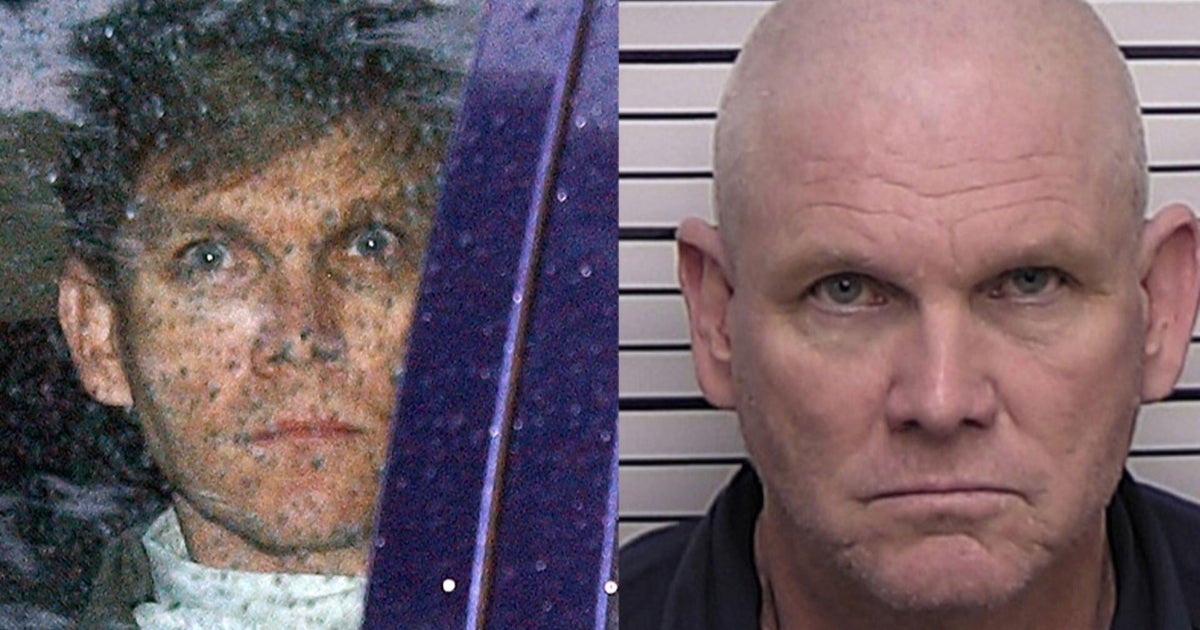
Those attending might reflect that Christopher Lowery squandered his freedom. He dealt heroin, threatened to kill a woman at a refuge, became a petty thief and eventually took his own life.
Charlie King went straight, married, fathered children and worked for years as a maintenance man at a church property in Melbourne. He lives on.
Which is more than either Lowery or King allowed Rosalyn Nolte, aged 15.