3 months ago
23
3 months ago
23
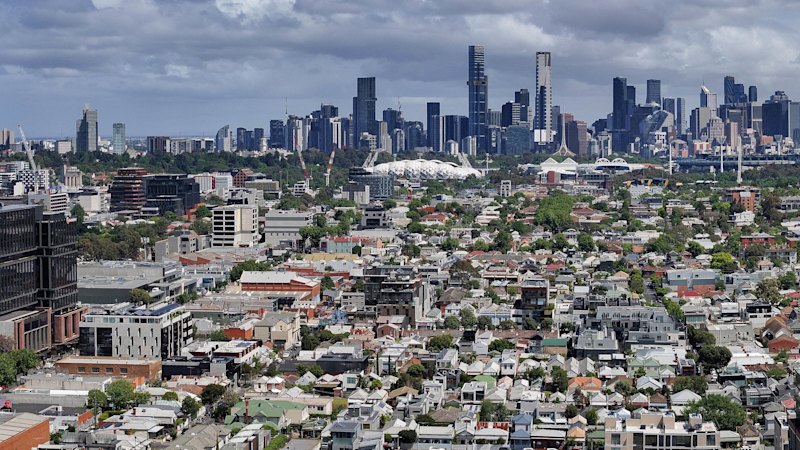
A large Hindu temple precinct – possibly the largest in Australia – is proposed for Cranbourne South, sparking environmental concerns and fears that thousands of daily visitors will overburden local infrastructure.
BAPS Swaminarayan Sanstha Australia has planned the $250 million project across 44 hectares off the Western Port Highway as it seeks space for devotees of the country’s fastest-growing religion.
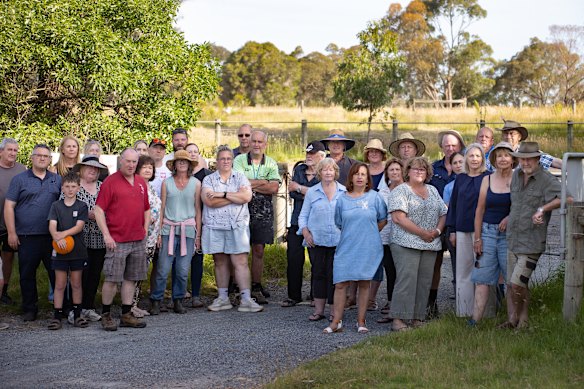
Residents concerned about a $250 million Hindu temple proposed on land behind them in Cranbourne South.Credit: Simon Schluter
However, six glossy grass skinks were found at the site, triggering a referral to the federal government as the tiny reptile is likely to soon be listed as a vulnerable species.
The application for environmental approval advertised this month revealed early designs for the BAPS Hindu Maha-Mandir, including estimates that the temple would attract up to 10,500 people on holidays, 5000 on weekends, and 2800 on weekdays.
The precinct is also slated to include gardens, a welcome centre, a religious service complex, a gift shop, cafe and 1500-space carpark.
The Western Port Green Wedge Protection Group was alarmed by the development’s scale when it discovered the plans by chance on December 12.
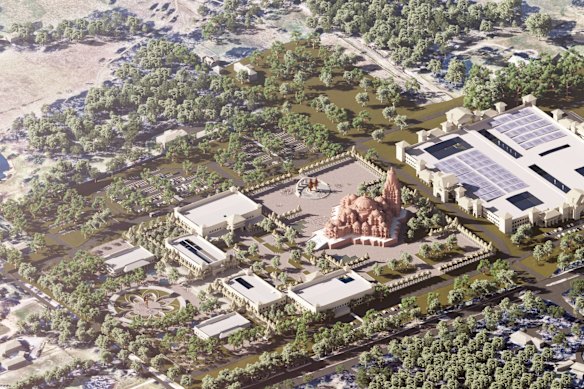
An early render of a Hindu temple proposed in Cranbourne South by BAPS Swaminarayan Sanstha Australia.Credit: Environment Protection and Biodiversity Conservation Act Portal
“Our community is shocked and angered by what appears to be an attempt to progress the proposal through the EPBC process with minimal public comment,” spokesman David Cole said.
The environmental group worries the temple would further erode the green wedge in Melbourne’s south-east, possibly harming other native plants and animals like the southern brown bandicoot.
Jenny Dalgleish, another green wedge group member, said large places of worship should be built in urban parts of Melbourne instead, such as better-serviced industrial precincts with sufficient space closer to where people live.
“The infrastructure here just can’t support it,” she said.
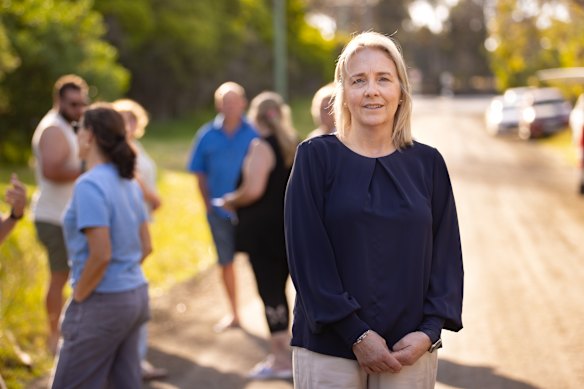
Jenny Dalgleish, a member of the Western Port Green Wedge Protection Group.Credit: Simon Schluter
BAPS volunteer project co-ordinator Kalpesh Makwana said temple designs were still preliminary, and no planning application had been submitted.
“The congregation is growing at a fast pace, and the community is looking for a purpose-built facility,” he said. “We are still in the pre-application phase. As part of this process, there will be a community consultation.”
The significant economic investment means that if a planning application is submitted, it is likely to be assessed by the planning minister – rather than Casey Council – under the fast-tracked Development Facilitation Program.
Kunal Patel, a BAPS spokesman, confirmed the temple precinct would be the Hindu sect’s biggest in Australia if realised, but said the design may change.
“We’re not taking this lightly,” he said. “As an organisation, we want to obviously do the right thing – making sure that vision becomes a reality, but also not take people for a ride as well.”
According to planning documents, the major place of worship would host events and community services, which are said to foster social cohesion.
The BAPS project team also created a website earlier this month to share information and allow locals to submit questions.
Loading
However, the Casey Residents and Ratepayers Association has already lodged a submission against the temple proposal to the federal Department of Climate Change, Energy, the Environment and Water (DCCEEW).
Association president Anthony Tassone said he appreciated the value of religious institutions, but believed the BAPS proposal for Cranbourne South was too large, particularly with forecasts of up to 10,500 people on peak days.
“Those visitation levels are comparable to a major metropolitan destination,” Tassone said.
“Local residents are understandably concerned about what that means for traffic, noise, lighting, environmental disturbance and the gradual urbanisation of land that is meant to remain non-urban.”
The BAPS community has two other centres in Melbourne: a temple in Mill Park and a small converted house in Cranbourne South near their proposed development.
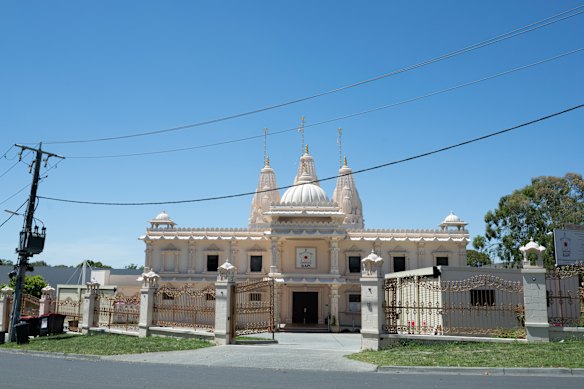
The Hindu temple in Mill Park.Credit: Chris Hopkins
Hindu Council of Australia president Sai Paravastu said devotees across the country were looking for room to practise rituals in purpose-built facilities, such as Hindu crematoriums.
“It’s so we can self-sustain and there’s no need for us to go overseas to do this,” he said.
Before a planning application for the Cranbourne South temple can be submitted, DCCEEW must decide whether the proposal is likely to “significantly impact” a protected species.
Public submissions on an initial referral close on Friday before the department issues a preliminary assessment next year.
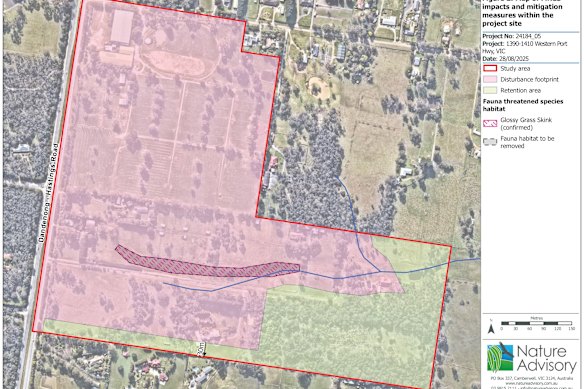
A map of a Hindu temple development site in Cranbourne South that shows where the threatened Glossy Grass Skink has been discovered.Credit: Nature Advisory
If the temple proposal is approved, the next step may be a formal planning application to the state government, when further different issues like sewerage and road safety would be assessed.
“Any future proposal would be considered on its merits,” they said.
Most Viewed in National
Loading