3 months ago
24
3 months ago
24

Australia will deploy a surveillance aircraft, weapons and 85 Australian troops to the Middle East after a plea for help from the United Arab Emirates as the Gulf state endures strikes from Iran.
Anthony Albanese said on Tuesday that the E-7A Wedgetail and advanced medium-range air-to-air missiles would be used to defend the Emirates at the request of Abu Dhabi.
“The Wedgetail will provide long-range reconnaissance capability, which will help to protect and secure the airspace above the Gulf,” Albanese told reporters in Canberra, adding it would be deployed for “an initial four weeks”.
“Iran’s reprisal attacks continue to escalate, already at a scale and depth we haven’t seen before,” he said.
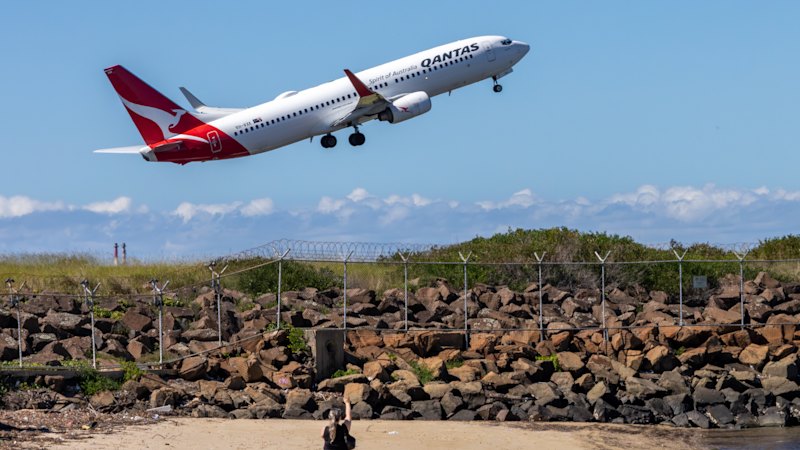
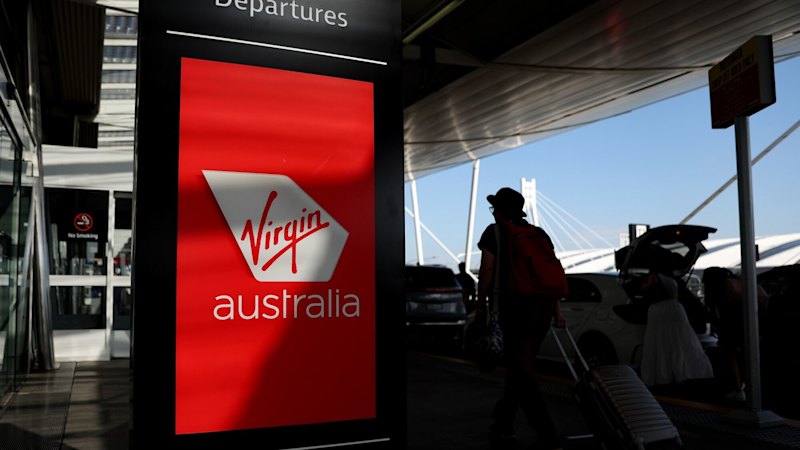
Albanese said 24,000 Australians remained in the UAE – many of whom will rely on departures from Dubai airport to return. The airport has been repeatedly targeted since the conflict began, forcing the cancellation of flights and what Foreign Minister Penny Wong has labelled as Australia’s worst-ever consular crisis.
The prime minister swiftly offered rhetorical support for the sweeping US-Israeli strikes on Iran last month, but has since insisted Australia had played no role. Tuesday’s move directly embroils Australia as the conflict widens, with Iran’s furious response to the killing of its supreme leader widening to attacking 12 neighbouring nations that house US bases or embassies.
Albanese again ruled out deploying troops to Iran, but refused to say whether he was considering any further intervention as the conflict continued to spiral.
“My government has been clear that we’re not taking offensive action against Iran, and we’ve been clear that we are not deploying Australian troops on the ground in Iran,” he said.
“We are not protagonists. What we are doing is providing for the defence of the UAE and of Australian citizens.”
Defence Minister Richard Marles said the plane would depart today and be operational in the Middle East by the end of the week, and would perform a similar function to aircraft deployed in Poland to protect Ukraine.
“We are one of the leading nations in the use of the E7 and it is one of the most high-tech airborne and reconnaissance platforms,” he said.
Marles, speaking alongside Albanese, said the UAE had one of the largest populations of Australian expats, making its defence in the national interest.
Albanese said crisis response teams were already on the ground providing consular support, and that more than 2600 Australians have safely returned of the more than 11,000 that had indicated they wanted to depart. He urged anyone offered a seat on a plane to take it.
“Significant challenges remain, and further work is underway to support those still seeking to leave.”
Albanese said he had spoken to US President Donald Trump overnight, “primarily about the Iranian soccer team, but obviously we also discussed world events”.
“It was a warm conversation between myself and President Trump,” Albanese said, but refused to elaborate on what they said about the conflict, including whether Trump believed the conflict was coming to an end.
Wong said the situation was unprecedented.
“Iran has attacked 12 countries, and overnight, we have seen that these attacks are escalating,” she said.
“In recent days, Dubai Airport has been under fire from Iranian missiles and drones, and since the 28th of February, more than 27,000 flights to and from the Middle East have been cancelled, with an estimated 4.4 million airline seats removed from schedules.”
More to follow