3 months ago
25
3 months ago
25
Australia’s trade and agriculture ministers have condemned China’s shock decision to impose new tariffs that could cost the beef industry $1 billion a year.
China, the world’s biggest importer of beef, overnight set the new import duties of 55 per cent above a certain quota to protect its local farmers from international competition of major export nations including Argentina, Brazil and Australia.
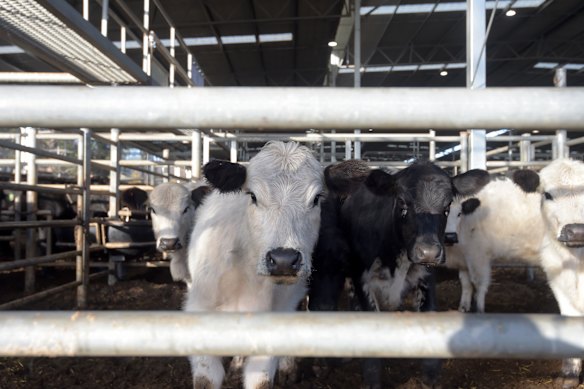
The new Chinese import quotas are a blow to Australian beef exporters.Credit: Bloomberg
Trade Minister Don Farrell said the government had told China the move to curb Australian exports was unnecessary.
“We have made it clear to China that Australian beef is not a risk to their beef sector, and that we expect our status as a valued Free Trade Agreement partner to be respected,” Farrell said.
Agriculture Minister Julie Collins said she had “serious concerns with this decision by China”.
“The Albanese government is working closely with the Australian beef industry to determine the full implications of this measure.”
Australia’s beef exports to China are worth about $3 billion annually, and the industry said farmers were bracing for an annual hit on China trade worth $1 billion a year.
The new tariffs will apply to all imports into China, from any country, once China receives its annual quota of 2.7 million tonnes of beef imports.
‘This decision will have a severe impact on trade flows to China over the duration of the measures’ enforcement.’
Tim Ryan, Australian Meat Industry Council chief executive officerPrime Minister Anthony Albanese on Thursday was more circumspect than his ministers, saying Australia had not been singled out by China, and added he was optimistic about the beef industry’s prospects in new markets.
“This is an announcement that is across the board,” Albanese said.
“Australian beef is in my view, proudly as the prime minister, the best in the world. Our products are in great demand right around the world, and we expect to continue.”
China imported 2.9 million tonnes of beef in 2024. Australian exports comprised 8 per cent, while 80 per cent of beef imported into China came from South America.
Loading
Australian farmers fear that red meat powerhouse Brazil could move to flood the Chinese market with beef as soon as possible in order to grab all the market share under the quota, leaving nations such as Australia to cop higher tariffs in months to come.
The new regime follows a 12-month investigation by China, which found that rising imports had undermined local producers. This means the action is permitted under World Trade Organisation rules, which sanction so-called safeguard measures to protect domestic industry from surging imports.
The Australian Meat Industry Council said it was “extremely disappointed” and warned the measures could slash its beef exports to China by about a third from recent levels, hitting trade worth more than $1 billion.
“This decision will have a severe impact on trade flows to China over the duration of the measures’ enforcement,” said chief executive officer Tim Ryan. “Imports of Australian beef are not a cause of damage to the domestic beef industry in China.”
Loading
Australia shipped 266,000 tonnes of beef to the Chinese market in the 12 months to the end of November, according to the industry council’s figures. However, demand fluctuates significantly.
Ryan said once the 55 per cent tariff was applied, “it is unlikely that commercial beef trade to China will be viable and exports will be redirected to alternative markets until the new quota year”.
Cattle Australia, the peak body for graziers, agreed with the Australian Meat Industry Council’s forecasted $1 billion loss of exports to China and said the quota system would restrict access to reliable meat products.
Chairman Garry Edwards said China’s restrictions breached the spirit of the free trade deal with Australia and demanded an explanation for the decision.
“Australia has a long-standing relationship with China as a trusted source of high-quality and safe beef, and we are deeply disappointed by this decision – a decision we believe to be entirely unwarranted and at odds with the sentiment of the free trade agreement we share,” said Edwards.
“While China is within its rights to impose safeguard measures under certain circumstances, we need more detailed information and discussions to understand why this decision has been made.”
In 2020, China imposed $20 billion of trade sanctions as an act of political retribution against the Morrison government with bans on barley, wine, lobster, timber, major beef exporters, timber and cotton.
Loading
It cited labelling and health certificate requirements as reasons for the beef bans, and claimed biosecurity issues were the reason for the lobster, cotton, barley and timber restrictions.
The restrictions came in response to then-prime minister Scott Morrison’s push for an independent coronavirus inquiry.
More to come.
With Bloomberg
Most Viewed in Politics
Loading