3 months ago
26
3 months ago
26
Stan Choe
March 13, 2026 — 5:20am
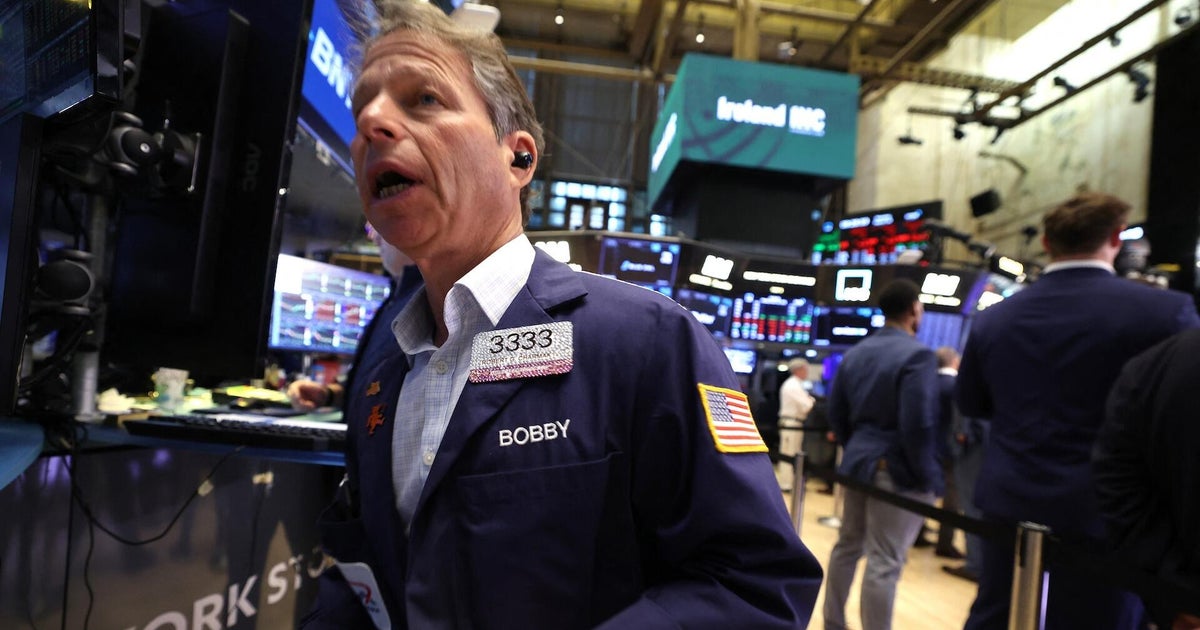
With no clear end in sight, the war with Iran is sending oil prices back to $US100 per barrel, and stocks are sinking worldwide.
The S&P 500 fell 1.1 per cent and is returning to sharp swings following a couple of days of relative calm. The Dow Jones Industrial Average was down 506 points, or 1.1 per cent, and the Nasdaq composite was 1.3 per cent lower. The Australian sharemarket is set to retreat, with futures at 5.02am AEDT pointing to a loss of 23 points, or 0.3 per cent, at the open. The ASX lost 1.3 per cent on Thursday.
The centre of action was again the oil market, where the price of a barrel of Brent crude, the international standard, climbed 8.2 per cent to $US99.46 after briefly touching $US101.59. US oil was 8 per cent higher at $US94.02. Worries are worsening that the war could block the production of oil in the Persian Gulf for a long time and cause a debilitating surge of inflation for the global economy.
Iran’s new supreme leader released his first statement on Thursday since succeeding his late father, saying his country would keep up attacks on Gulf Arab neighbours and use the effective closure of the Strait of Hormuz as leverage against the United States and Israel. A fifth of the world’s oil typically sails through the strait, and oil producers in the region are cutting production because their crude has nowhere to go.
Countries around the world are trying to make up for that, and the International Energy Agency said Wednesday that its members would release a record amount of oil, 400 million barrels, from stockpiles built for such emergencies.
But such moves are short-term fixes, and they do not clear the long-term risks. Analysts have said that if the Strait of Hormuz remains closed, oil prices could jump to $US150.
To be sure, the US stock market has a history of bouncing back relatively quickly from military conflicts in the Middle East and elsewhere, as long as oil prices don’t stay too high for too long. Even with all the up- and- down swings of the last couple of weeks, many rocking markets hour to hour, the S&P 500 is still just roughly 4 per cent below its all-time high set in January.
What’s made this jump for oil prices frightening is not only the degree — prices jumped near $US120 earlier this week to their highest level since 2022 — but that they’re also occurring during an uncertain time for the economy.
Last month’s report on hiring by US employers was surprisingly weak, which raised worries about a possible worst-case scenario for the economy called “stagflation.” That’s where economic growth stagnates while inflation remains high, and it’s a miserable mix that the Federal Reserve has no good tools to fix.
A more encouraging signal arrived Thursday. A report said that the number of US workers applying for unemployment benefits inched lower last week. That’s a sign that layoffs are potentially remaining low around the country.
Dollar General, meanwhile, reported better profit and revenue for the latest quarter than analysts expected. But the retailer with relatively low prices, whose customers often have the least cushion to absorb higher gasoline prices, gave forecasts for revenue this upcoming year that indicated a potential slowdown in growth. Its stock fell 5.7 per cent.
Some of Wall Street’s worst losses again hit companies with big fuel bills. Cruise-ship operator Carnival fell 6.3 per cent, and United Airlines sank 3.5 per cent.
Worries about the private-credit industry continued to hurt the market. Investors have been rushing to pull money out of some funds and companies that have lent to businesses whose profits are potentially under threat. Many of the worries are focused on business that could be made obsolete by new AI-powered rivals and may not pay back their loans.
Morgan Stanley fell 3.9 per cent after its North Haven Private Income Fund said it allowed investors to redeem only 5 per cent of its total shares instead of the nearly 11 per cent they had requested. That 5 per cent cap is the advertised limit.
In stock markets abroad, indexes fell across Europe and Asia.
Japan’s Nikkei 225 dropped 1 per cent, and France’s CAC 40 sank 0.7 per cent for two of the world’s bigger moves.
In the bond market, Treasury yields continued to climb because of upward pressure from rising oil prices. The yield on the 10-year Treasury rose to 4.24 per cent from 4.21 per cent late Wednesday and from just 3.97 per cent before the war started.
Higher yields make all kinds of borrowing more expensive, such as mortgages for potential US homebuyers and bond offerings for companies looking to expand. They also push down on prices for all kinds of investments, from stocks to crypto.
Because of the spike for oil prices, traders have pushed back forecasts for when the Fed could resume its cuts to interest rates. President Donald Trump has been angrily calling for such cuts, which would give the economy and job market a boost but also potentially worsen inflation.
A barrel of benchmark US crude rose 8.4 per cent to $US94.57.
AP
The Market Recap newsletter is a wrap of the day’s trading. Get it each weekday afternoon.