3 months ago
27
3 months ago
27
Opinion
January 10, 2026 — 5.00am
January 10, 2026 — 5.00am
After 15 innocent people were gunned down at Bondi Beach on a Sunday afternoon, a Hebrew word came to Peter Wertheim’s mind: teshuvah. Often translated into English as repentance, the concept more accurately describes a return, a turning back to something you’ve strayed or looked away from.
“In the Jewish tradition, changing one’s attitude and behaviour is a process. It’s not an instantaneous decision,” says Wertheim, co-chief executive of the Executive Council of Australian Jewry. “It takes an absorption into a person’s heart and soul that they have been wrong and a commitment to do better.”
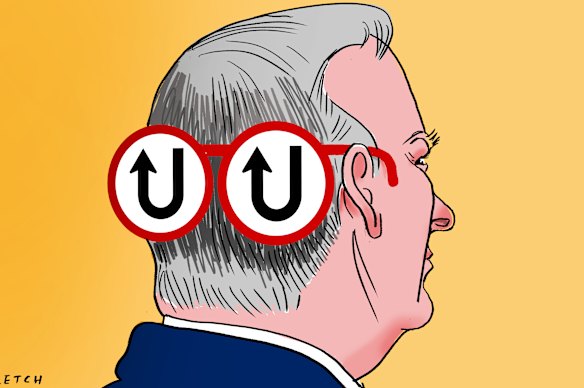
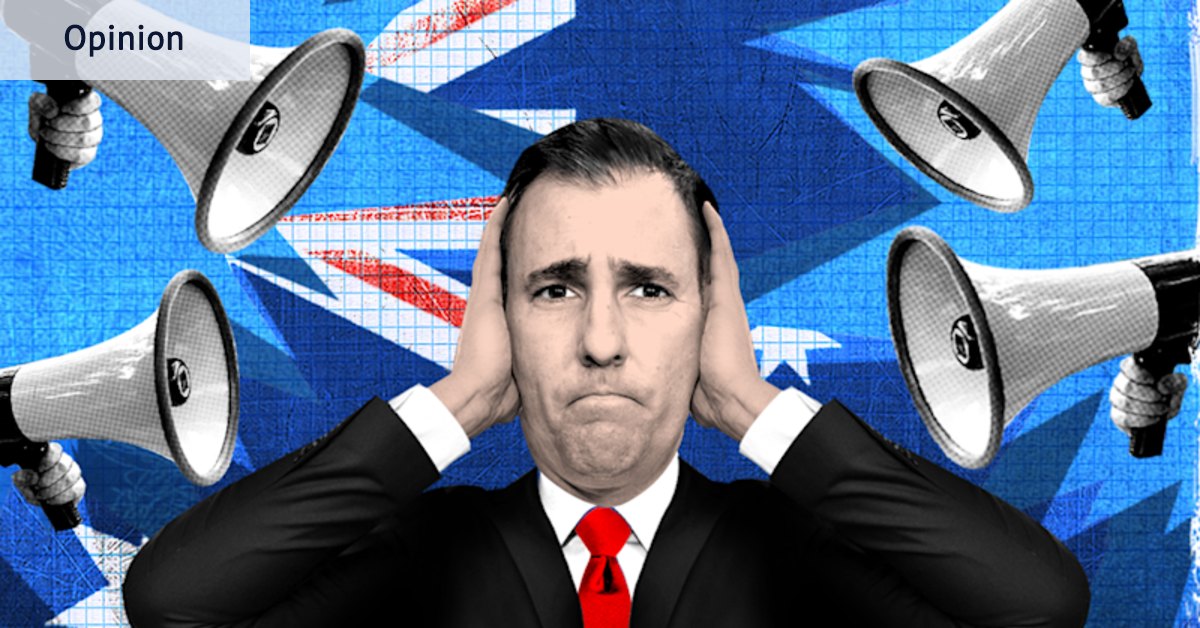
Illustration by Simon LetchCredit:
Since the October 7 attacks in Israel and the subsequent war in Gaza, Wertheim and other Jewish leaders had warned about surging levels of antisemitism and their fears that vandalism and harassment would morph into deadly violence. “People were telling us we were imagining or exaggerating things,” says Wertheim, whose 98-year-old mother survived the Auschwitz concentration camp and fled to safety in Australia. “Much of it was orchestrated ill will but it was aided by breathtaking ignorance.”
Then came the December 14 massacre. Among those shot was the Executive Council of Australian Jewry communications director Evan Zlatkis, who was lucky to survive. The terror attack, Wertheim says, shook Australians out of their sense of complacency, sparking profound questions about how the nation had reached this point.
Of all the nation’s Jewish leaders, Wertheim is closest to Prime Minister Anthony Albanese. The pair formed a bond two decades ago when Albanese opposed the boycott, divestment and sanctions movement against Israel that was gaining traction in Sydney’s inner west. They then united against the Abbott government’s attempts to water down the Racial Discrimination Act.
One prominent Jewish Australian describes Wertheim as the “good cop” working with the government while his fellow co-chief executive, Alex Ryvchin, criticises Labor’s policies on the Israel-Palestine conflict. Behind the scenes, Wertheim has played an important role guiding Albanese towards his unnecessarily protracted and painful decision to hold a royal commission into antisemitism and the Bondi attack.
The first public commentator to call for a royal commission – on the day after the attack – was Chris Taylor, a former national security official who now works at the Australian Strategic Policy Institute. To Taylor, the case for such an inquiry seemed so obvious as to be almost redundant. “Surely the federal government would act quickly along those lines? After all, how could there not be a royal commission following the worst terrorist attack on Australian soil?” Taylor wrote this week. Relying solely on a review by former ASIO boss Dennis Richardson into potential intelligence failures, he said, “is like responding to a city-wide arson spree with an inquiry into whether fire hoses are too short”.
The idea of a federal royal commission quickly gained pace, garnering the support of former foreign spy boss Nick Warner and former High Court chief justice Robert French. On December 29, 17 families connected to the victims of the attack wrote to Albanese calling for a royal commission. Polling for this masthead conducted in the week after the attack found 48 per cent of Australians supported a royal commission and just 17 per cent opposed it.
“The basic sense of fairness of the Australian people was offended,” Wertheim says. “People want to get to the bottom of it.”
Albanese, however, was not convinced. The NSW government had already announced a state-level royal commission, and he feared a drawn-out, polarising national probe would do more harm than good. The evidence gathered by police suggests that Naveed and Sajid Akram had operated in isolation, inspired by Islamic State ideology. No link has been established connecting them to the pro-Palestine protest movement that had flourished during the war in Gaza.
Loading
It did not help that former Liberal treasurer Josh Frydenberg – who demanded Albanese accept “responsibility for the death of 15 innocent people” in a fiery speech at Bondi Beach – was among the leading advocates for a royal commission. “There was a lot of politicisation and weaponisation,” a senior government source says, explaining the government’s reluctance to move.
Journalistic profiles of Albanese’s career routinely note his stubbornness, which can verge on obstinacy. He took a lot of persuading to amend the government’s stage-three tax cuts and he ploughed ahead with the Indigenous Voice to Parliament referendum despite a lack of bipartisan support. During the election campaign, he strangely resisted acknowledging he had fallen off a stage at a campaign event. This character trait came to the fore after Bondi.
Last week, Albanese said the government’s resistance to a royal commission was borne “not out of convenience, it is out of conviction that this is the right direction to go in. And the actual experts, who are the current experts, have all recommended this course of action.”
It was also noted at senior levels of government that Israeli Prime Minister Benjamin Netanyahu had done everything in his power to avoid a comprehensive probe into the worst intelligence failure in his nation’s history. His proposed inquiry, not announced until two years after the October 7 attacks, departs from existing Israeli law and has been criticised for lacking independence.
Yet none of these factors made the case for a federal royal commission into the Bondi massacre any less compelling. Matching Netanyahu in obfuscation and evading accountability is not the standard an Australian prime minister should aim for.
As recently as Tuesday, Industry Minister Tim Ayres was on radio describing a royal commission as “not necessary”, saying it would cause “division and delay” and that it would take up to 2½ years to complete.
Yet, by this point, Albanese’s inner circle was preparing to make a U-turn. As legal experts, business leaders, sport stars, former Labor politicians and national security experts joined calls for a royal commission, Albanese’s stubbornness began to erode, like a rock being worn down by a relentless tide. His private meetings with survivors of the attack were also influential, helping convince him that a properly structured royal commission could contribute to healing for a grieving community. Labor MP Josh Burns privately lobbied Albanese to change course, as did right-faction heavyweight Don Farrell.
Political calculations were at play too, of course. “This issue would have kept nibbling away at the government for weeks and months, making it hard for them to talk about the issues they want to talk about: childcare, the economy,” a prominent member of the Jewish community says. “It would have been a distraction, so they decided to cut their losses.”
Loading
On Wednesday afternoon, Albanese met Wertheim and antisemitism envoy Jillian Segal at the Commonwealth Parliamentary Offices in Sydney’s CBD to discuss the structure of a royal commission. As Albanese said in media interviews on Friday, the meeting lasted for four hours as they went through the details “line by line”. (Wertheim declined to comment on confidential discussions with the government).
When announcing the royal commission a day later, Albanese masterfully demolished his government’s own arguments against holding a royal commission. That it could take years to complete? He imposed a December 14 deadline. That it would delay the Richardson review? The existing probe will be wrapped into the royal commission and delivered as an interim report. Concerns it would platform antisemitism and division? The terms of reference make clear the royal commission should promote, not undermine, social cohesion.
Albanese may have been for turning, but not for apologising. While the Jewish concept of teshuvah usually involves the verbal expression of one’s sins, the prime minister is not inclined to concede mistakes either publicly or in private. He did not say sorry for taking weeks, rather than days, to support a royal commission or the fact that traumatised survivors had to juggle their recovery with lobbying the government. Indeed, he has skirted around the fact his government changed its mind on holding a royal commission.
Such sensitivity is probably unnecessary, if understandable. While political U-turns, like Albanese’s shift on a royal commission, are often portrayed as humiliating backdowns, veteran British journalist Peter Riddell has said they can be good for governments. They can remove sources of complaint and show that politicians are listening to the public. Academic research shows voters are more likely to forgive U-turns if politicians are shifting towards a position they favour and if they are driven by principle rather than political calculation.
Monash University political professor Paul Strangio, who has written about political U-turns, doubts whether the Australian public will see Albanese’s shift as a major backdown. Noting that less than a month has passed since the Bondi attack, Strangio says: “He has certainly responded to the clamour, the stampede, for a royal commission, but I think the events were too quick to be a full-on volte-face.” Albanese’s royal commission move did not involve abandoning a fundamental belief, as Kevin Rudd was perceived to have done on climate change when he abandoned an emissions trading scheme. Nor will this U-turn affect most Australians in a direct way, as happened when Julia Gillard reversed her pledge not to introduce a carbon tax.
Albanese’s standing has undoubtedly been damaged by his response to the Bondi attack, and he has been bruised by the hostility of the attacks on him. But he ends the week satisfied by the overwhelming support for the royal commission’s terms of reference and the fact he stared down Frydenberg’s bid to sink his chosen commissioner, former High Court justice Virginia Bell. With parliament to resume soon, he has cleared a thorny barnacle away.
As for Wertheim, it is enough that Albanese relented, if not repented. “This is fair. This is what we asked for. This is designed to get to the root of the problem,” he says of the royal commission. “As far as we are concerned, it is the outcome that mattered, not how we got there.”
Matthew Knott is foreign affairs and national security correspondent.
Most Viewed in Politics
Loading