2 months ago
7
2 months ago
7
Australia is inextricably tied to the water, and with this, swimming has become a way of life, an integral part of our national identity.
Dr Rebecca Olive, senior research fellow in the School of Global, Urban and Social Studies at RMIT University, says swimming is “part of how we think of Australian life because we have such hot summers, because so many of us had access to swimming classes as kids … and because of the success of the national swimming team”.
“It’s historically been cheap or affordable and is also a great way to spend your leisure time,” she adds.
But there are many ways people are disadvantaged when it comes to swimming, Olive says. Some of these include accessibility, rising costs, living in remote or disadvantaged areas, and even a sense of shame among adults who didn’t learn to swim as kids.
Three women share how they overcame challenges to make swimming an integral part of their lives.
“It helped me come out of my shell”: Victoria Belando Nicholson, 17
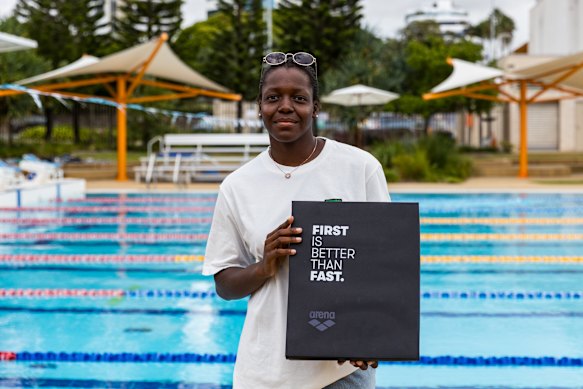
Victoria Belando Nicholson has her heart set on swimming in the Paralympics one day.Credit: Swimming Australia
“I was born in Africa with a condition called fibular hemimelia, which means I lack a fibula bone in my left leg, making it 14 centimetres shorter than my right. I also have a fused ankle and some knee problems.
In 2008, at six months of age, my mum, sister and I were trying to migrate out of Africa, and the boat collapsed. My birth mum died, but my sister and I survived. We were put in an orphanage in Malta, where our parents adopted us.
When I was younger, my parents always told me that I was really scared of getting in the water, so it took me a while to actually get used to it, but once I was in it, I always loved it.
Because I was young, I didn’t have the awareness that I maybe couldn’t do certain movements [because of my condition], so I just found a way around it and never thought much of it.
We moved to Spain when I was eight, and I started playing water polo. With this sport, there’s “the eggbeater”, where you need both of your legs to move to keep you floating without your arms. Because I couldn’t do it, I had to keep myself up with my arms, which was a struggle since you also needed your arms to do other things during the game. Over the years, I figured out my own way of doing things, and it worked to a point, but as I got older, the game became more physical and at times it could be too much.
About four years ago, because my dad’s Australian, we moved here to live. I kept on playing water polo, and my coach was also a swim coach. He suggested giving swimming a try.
I really enjoyed it from the beginning and swam in my first meet in 2022, where I did better than I thought I would. That’s when I started to really take it seriously. After competing in my first nationals, I realised I could go to the Paralympics: Los Angeles 2028 and Brisbane 2032 are now my goals.
Swimming and training every day have taught me a lot about discipline and resilience, and how to push through hard moments. It has introduced me to a great community. Before this, I wasn’t really exposed to other people with disabilities similar to mine, but with swimming, I’ve met so many.
Swimming allows me to be myself without thinking, ‘I’m limping’, or, ‘I have to do this differently’. It helped in getting me out of my shell and in putting myself out there.”
“It’s like being re-baptised”: Rona Mirtle, 65
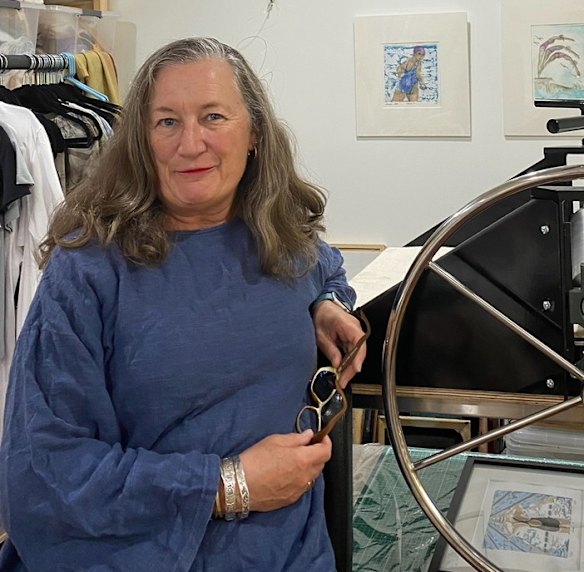
Rona Mirtle used swimming to help her tackle the responsibility of caring for her ill husband.
“Growing up in far north-west Scotland meant my introduction to swimming was in the North Sea, where the water temperatures in summer are between 10 and 15 degrees. During one ‘swim’ with my dad, a pod of porpoises swam past, followed by two orcas. They looked like grand pianos coming out of the water about 30 or 40 metres away from us. We both looked on, amazed.
In 1987, I migrated to Fremantle, but on the journey from Scotland I detoured via the Middle East for 18 months. While I was there, I learnt to dive in the Red Sea. I saw a coral reef for the first time in my life, and I just could not believe my eyes. It was just like an epiphany. From then on, I became a water person.
Arriving in Fremantle, I was inspired by seeing young kids swimming as if they were Olympians. I wondered if this was just inherent in Australians. Are they born being able to swim? Then I discovered, no, you need lessons.
After relocating to Margaret River in 2004, I had an accident on a hike, rupturing a disc in my back. I ended up having to leave work for two years. I couldn’t walk properly and was miserable. While doing rehabilitation at a local pool, I spotted a woman in the swimming lanes taking lessons. That was the start of my journey with a group called Swimming Women.
Through them, I undertook a fundamentals class, so I could learn how to swim properly. When I started, I was on hardcore pain patches and steroids for my back, but swimming helped reduce the pain and improve my mental health.
After completing the fundamentals course seven or eight times, Charlie [O’Beirne, Swimming Women’s founder] kicked me out of this program and said, “You’ve got to be brave and swim with the big girls now.” This involved regular training as well as a foray into ocean swimming, which was my end game: I wanted to get back into the sea to see the amazing creatures. I’m not a religious person by a long shot, but every time I go into the ocean, it’s like being re-baptised.
In January 2024, I was diagnosed with triple-negative breast cancer. I had chemotherapy, then surgery in July, and I’m now back on chemo until February. I became anaemic and had no energy. I wasn’t allowed to swim in the pool due to the risk of infection, and while I did try the ocean, I couldn’t swim for long.
Throughout this, the community support from the Swimming Women members blew me away. I know that they’ve got my back in and out of the pool; I have found my tribe.”
“I’ll keep swimming until my body stops”: Anne Percy, 74
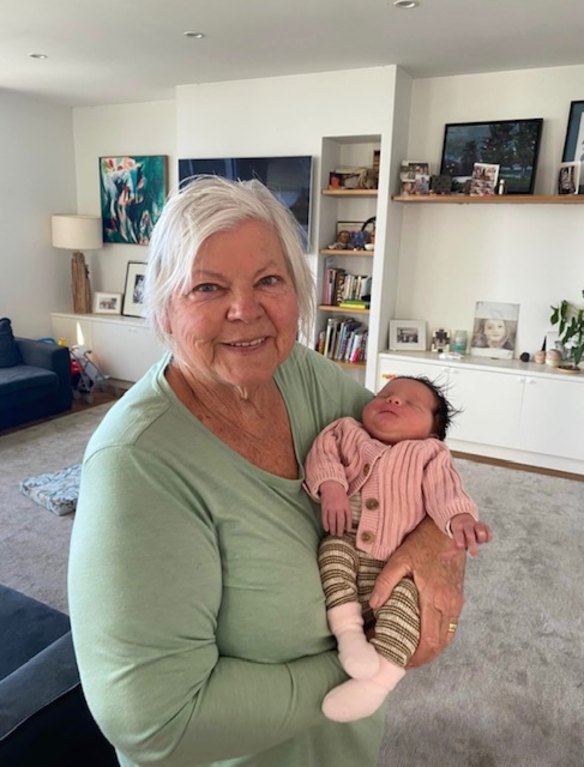
Anne Percy found support, comfort and encouragement after joining a swimming group at her local pools.
“I started swimming at Bulli and Austinmer ocean pools [south of Sydney] in 2020 when I was 69. My daughter encouraged me to start swimming with the Winter Wonder Women [an all-female, all-year-round swimming group] for physical fitness and mental health as my husband Brent was slowly deteriorating with Parkinson’s disease, and I needed to be home more to care for him.
When I started, I was apprehensive because I had weight and body issues, hated cold water and was not a good swimmer. I need not have worried, as the wonderful Winter Wonder Women were of all ages, professions and body shapes, and offered no judgment.
At first, I just got in the water and chatted most of the time. The women were fun to be around and very encouraging. Now, I swim most days at 6am at Austinmer, although I miss some days because home life sometimes gets in the way. I am usually in the water for between 15 and 30 minutes, depending on how cold it is.
Loading
We have theme days when we dress up. We’ve been ‘Iron Women’ with ironing boards, as well as mermaids, while we have also embraced occasions such as Halloween or Easter. Some of us celebrate our birthdays with cake by the pool, and we always enjoy catching sight of pods of dolphins or a whale passing by.
These lovely women have lifted me by supporting me. When we talk, we realise we all have things going on in our lives where we need support, and our swimming group does that; we are not alone. There is always coffee at the end of a swim and lots of chatting and laughter.
I have come a long way. Swimming has built strength, cardiovascular improvement and peace. My mental health has also improved, and I have many supportive swim friends. I am more confident with my swimming and wearing a costume. I now enjoy cold water and am much calmer with home life. I will keep swimming until my body stops.”
Get the best of Sunday Life magazine delivered to your inbox every Sunday morning. Sign up here for our free newsletter.
Most Viewed in Lifestyle
Loading