3 months ago
18
3 months ago
18
From the beach I watched the distant fuzzy dots of husband and child going under the waves. The surf was relentless, but after each wave crested and crashed over them they bobbed back into view. It should have been a relief. It wasn’t. Each time they emerged they seemed further away than I expected. No one else was in the water.
In Buddhism there is a concept called vedana. It’s the subtle sense of the quality of a moment. You can tune into it, though usually we don’t, and when we do, it is often because we are training to notice it, to bring it to awareness. On this day, before I could articulate it or say what signs I was reading from two half-submerged figures far off in the surf, a powerful sense of the danger in the moment overtook me. Something was not right. They were in trouble.
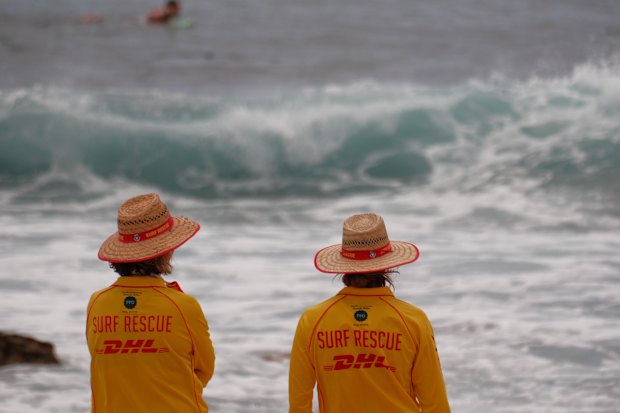
Thankfully Killcare was a patrolled beach; two lifeguards sprang into action to rescue my husband and child from a rip.Credit: Oscar Colman
Surely not. It was the first swim of our summer holidays. Each year we took a house with friends by this beach. Some of my most blissfully peaceful moments have been spent in its waters, sculling on my back, looking up at a blue sky or back at the caramel-coloured cliff tops and the grey-green bush sweeping along the escarpment. It’s a place of refuge.
But I have done battle with its rip: pushing an all-too-confident kid on their boogie board back towards the safety of the shallows, only to realise I was getting nowhere and that my only option was to move sideways, inching forward in diagonal bursts when we caught an obliging wave and harnessed its power.
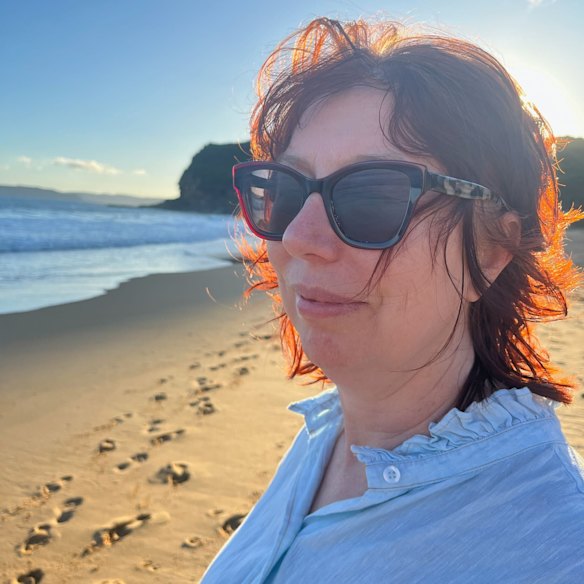
Julie Lewis on Killcare beach. She says some of her most blissfully peaceful moments have been spent in its waters. Credit:
This year, brimming with holiday zest, my husband and now university-aged child had plunged into the surf. The rip was far from their minds. That was a mistake.
It was not one my husband admitted easily. Usually a decent swimmer, he found the unexpected pull and power of the rip and the constant pounding of the surf were taking a toll, but the twenty-something had to ask twice, “Are you OK?” before he finally acknowledged, no, he was not.
Loading
That’s when the twenty-something’s freshly undertaken training as a swimming instructor kicked in. They got their dad to float on his back. They held him under the shoulders and they raised a single arm: Help! I saw the hand shoot firmly into the air, and my chest tightened.
Two lifeguards on patrol grabbed their rescue boards, ran to the edge of the waves and threw themselves in. They brought back a subdued husband and triumphant child on the prow of each board. The lifeguards were pumped. They had proven their worth. We will be forever grateful. And thankful our favourite beach is patrolled.
But we were shaken. It had all unfolded so quickly. A stronger rip, a man less willing to sacrifice pride for prudence, a child with less water safety training, a family with a different cultural background, a beach without guards – the outcome could have been so different, and too often is.
It was hard to take in; to absorb how close we had come to disaster at the very place where we had been so happy so regularly. We saw the fragility of life and its deepest truths. That loss will come to us all, often when we least expect it, even if it didn’t visit us on that day.
You might think that would be the last summer we would spend at that beach. But no. We will swim there again this summer. Because, like life, a beach, even your favourite beach, can be both beautiful and terrible, and to enjoy it, you have to accept its moods, adjust and not be afraid to ask for help.