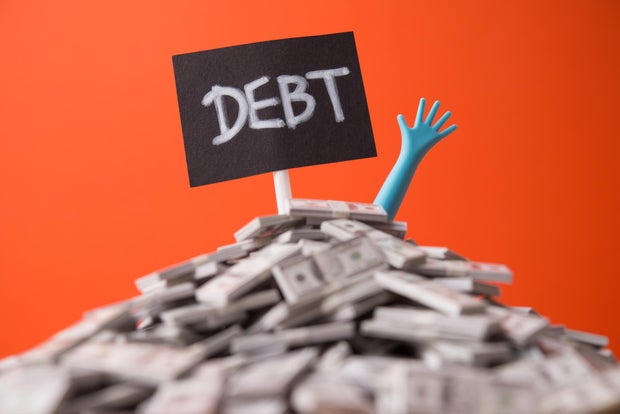
 Before you pursue any type of debt relief, it's important to know what government help (if any) exists for credit card debt.
Pla2na/Getty Images
Before you pursue any type of debt relief, it's important to know what government help (if any) exists for credit card debt.
Pla2na/Getty Images
Americans are carrying record-high credit card balances right now, with collective credit card debt currently topping $1.23 trillion nationwide. As a result, the financial strain is being felt across every demographic. And, while the wider interest rate landscape is starting to shift in favor of borrowers, credit card APRs have remained stubbornly high, which is making it even harder to dig out of this type of revolving debt. As a result, many borrowers are wondering whether a government-backed credit card debt relief program is available to offer an official — and guaranteed — lifeline.
After all, federal assistance programs do exist for student loans and mortgage assistance. And, various public resources are available to help cover necessities like healthcare or food for older adults or those with limited incomes. So it's natural to wonder whether credit card debt, which is one of the most common and expensive forms of consumer borrowing, comes with similar safety nets. But unlike federal student loans or government-backed mortgages, credit cards are private financial products.
Given that difference, do federal debt relief options apply? Understanding what the government does and doesn't offer in terms of credit card debt relief can help you choose the relief strategy for your situation and timeline.
Compare your credit card debt relief options here.
Are there government credit card debt relief programs available to borrowers?
The short answer is no, the federal government does not offer a program that wipes out or reduces credit card balances for borrowers. There is no national credit card forgiveness initiative, no federal settlement program and no government-sponsored consolidation option specifically designed for credit card debt. However, the government does provide indirect forms of support that can help stabilize your finances and make repayment more manageable. The indirect help that is available to credit card users includes:
Consumer protection laws
Federal laws like the Fair Debt Collection Practices Act (FDCPA) and the Fair Credit Reporting Act (FCRA) help ensure borrowers aren't harassed by collectors and that credit reporting remains accurate. While these laws don't reduce your debt, they can prevent unfair practices that ultimately make your financial situation worse.
Find out how to get help with your high-rate debt today.
Bankruptcy protection
Filing for bankruptcy is the closest thing to government debt relief that a credit card user can access, as it allows you to either partially or fully discharge your card debt through the legal system. If you qualify for Chapter 7 bankruptcy, taking this route allows you to eliminate unsecured debt, like credit cards, entirely, while qualifying for Chapter 13 lets you create a court-supervised repayment plan. In other words, bankruptcy is a powerful tool, but it should also be a last resort due to the long-term credit and financial consequences.
State-level hardship protections
Some states offer temporary safeguards that indirectly protect credit card users, such as limits on wage garnishment by creditors or other protections for seniors with fixed incomes. Again, these measures don't erase your debt, but they can prevent aggressive collections while you regain your financial footing.
Temporary national programs
During major crises like the one that occurred during the COVID-19 pandemic, the government may enact short-term protections like stimulus payments or collection pauses to help borrowers who cannot meet their payment obligations. These are rare emergency measures extended by the federal government, though, not ongoing credit card debt relief programs.
What debt relief help should borrowers consider instead?
While formal government credit card debt relief isn't available, several private-sector and nonprofit solutions can help you significantly reduce your payments, the interest charges or even your total balance. The following options are the programs most borrowers rely on, especially when credit card debt becomes overwhelming:
Debt settlement
Debt settlement allows you to negotiate with creditors to try and pay less than the full balance on what you owe, and while you can take a DIY approach, many borrowers opt to get help from a debt relief company. Borrowers typically make monthly deposits into a dedicated account until there's enough to offer a lump sum settlement. If the creditor accepts the offer, the remaining debt is forgiven.
This approach can provide substantial savings, but it may temporarily lower your credit score, add to your tax burden and typically involves fees. For borrowers facing financial hardships, though, it can be one of the fastest ways to reduce total debt.
Debt management
With the help of a credit counseling agency, borrowers can create a debt management plan that consolidates multiple credit card payments into one monthly payment, generally with significantly reduced interest rates. Creditors may also waive certain fees during the process. These plans typically last three to five years and can make repayment far more affordable without requiring you to take out new credit.
Debt consolidation
Debt consolidation replaces high-rate credit card balances with one lower-rate installment loan. Using a loan to pay off multiple credit cards doesn't directly reduce what you owe, but it simplifies repayment and can reduce long-term interest costs if you can secure a competitive rate.
Hardship options
Many credit card issuers offer in-house hardship plans that may temporarily reduce your interest rate or minimum payment if you're facing a hardship due to unemployment, medical issues or other qualifying events. These programs aren't widely advertised, so you will typically need to call and ask directly, but enrolling in one could offer significant, albeit temporary, relief.
The bottom line
There is no federal program that directly forgives or restructures credit card debt, but that doesn't mean borrowers are stuck. There are other effective relief options available to help lower payments, reduce interest charges and even eliminate portions of your balance. The trick is to take action early, though. The sooner you explore your relief options, the sooner you can stop the cycle.
Edited by Matt Richardson