3 months ago
24
3 months ago
24
This story contains the names and images of Indigenous people who have died.
The Colleano Heart ★★★★
Documentaries occasionally suffer from sticking too tightly to a tried-and-true formula: energetically repeated old footage, a professional narrator importing sonorous gravitas and facts slathered about like there’s a quota per minute. You learn something about otters, or WWII strategies or Brutalist architecture in 1950s Britain, but ultimately, it lacks heart. And heart, as the title of this beautifully made feature documentary says, emanates with meaningful abandon, and years of detailed research, from The Colleano Heart.
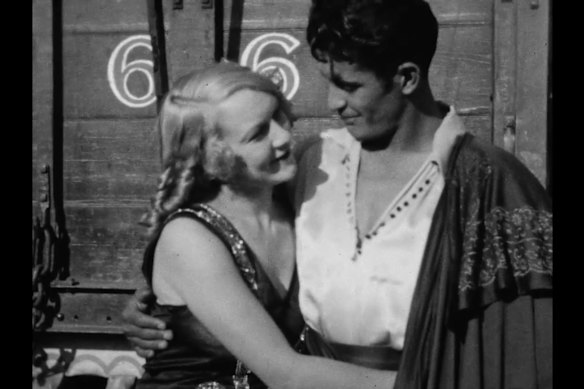
Con and Winnie Colleano, featured in new documentary The Colleano Heart.Credit: NITV/SBS
Centred on the lives and talents of the Colleano family, nee Sullivan, a troupe of Australian circus artists whose fame shone globally in the first half of the 20th century, this is a documentary with many parts. It’s about generations of family discovering each other and their history across continents and decades. It’s about the spectacular circus skills of a group of brothers and sisters who left Australia and found remarkable fame in the UK, Europe and the US. And it’s about their homeland’s racial assimilation policies that forced the family to hide its heritage and leave the country for bigger things.
The Colleano Heart begins with the marriage of Irish boxer Cornelius “Con” Sullivan and 16-year-old Vittorine Julie/Julia Robinson (known as Julia), a woman of partial Bundjalung descent in Narrabri NSW, in 1894. Over time, as the family swelled to 13, they adopted the Italian-sounding surname Colleano and formed a circus troupe – Colleano’s All-Star Circus – finding huge success and touring across several Australian states, sometimes in their own rented train.
Among the performing siblings was Cornelius “Con” Colleano whose tightrope balancing artistry as “The Australian Wizard of the Wire” made him, years later, one of the highest-paid performers for the Ringling Bros and Barnum & Bailey Combined Circus in the US.
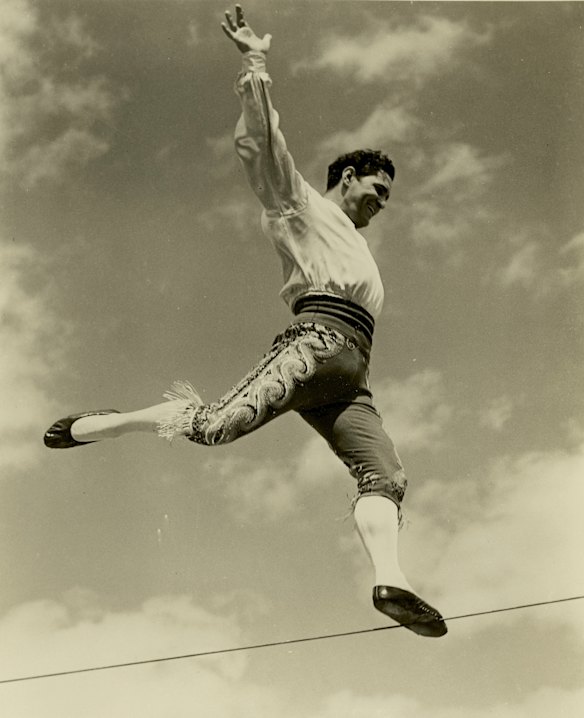
Con Colleano, known as “The Australian Wizard of the Wire”Credit: NITV/SBS
But, before this, the Colleanos were doing their best to evade Australian authorities driven by racial segregation and discrimination under the White Australia policy. Success prompted regular shapeshifting. The troupe’s name and purported heritage changed several times – they were sometimes known as the Royal Hawaiian Troupe and the Akabah Arabs – but, in 1920, they left for London and the beginning of global success.
The narrative is led by director, filmmaker and Yaegl woman Pauline Clague, Gamilaraay historian and Colleano family relative Deb Hescott and Molly O’Donnell, the daughter of Colleano’s sister Coral and granddaughter of Julia. We first see Clague and Hescott travelling to Narrabri and Lightning Ridge, following in the footsteps of the family’s travelling circus act beginnings and sharing this with O’Donnell via video call from the US.
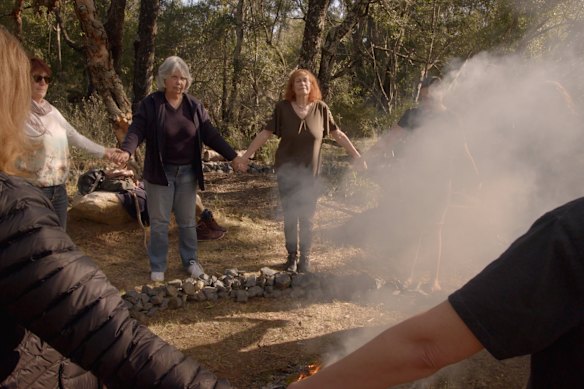
Molly Colleano O’Donnell at a smoking ceremony in Narrabri.Credit: NITV/SBS
This journey develops as they, along with family members in Australia and Pennsylvania, talk or meet for the first time about their shared heritage and the Colleanos’ story. There’s a particularly emotional moment in which O’Donnell travels to Australia and is part of an ancestral smoking ceremony on Country.
Loading
The other wonder of The Colleano Heart is the reams of archival footage, much of it filmed by Con Colleano, a keen documentarian. Watching each sibling balance on a web of ladders or contort backwards to aim a bow and arrow with their feet is extraordinary. Watching Con, who at one point was feted by Hitler and Mussolini, balletically deliver his world-famous forward somersault on the highwire gives you tingles.
There is so much in this documentary. It’s deftly edited and paced. It’s packed with emotion, years of research and the true character of people linked across more than 150 years. And it’s a stark reminder of why the Colleanos should be more prominently known in their home country.
Most Viewed in Culture
Loading