3 months ago
18
3 months ago
18
Opinion
November 14, 2025 — 5.01am
November 14, 2025 — 5.01am
I have been applying for jobs and have found some excellent ones. These are jobs I’m certain I’m well-suited to. In some cases, I can confidently give myself a “high mark” in every selection criterion. But I’m hearing nothing back except for the odd pro forma rejection.
This is the first time I’ve been job hunting for a while. I wonder whether my cover letter may be the problem? Is there a chance I no longer understand what hiring managers are looking for, and I am writing cover letters full of irrelevant details? Or are hiring managers not even getting to my cover letter? If so, what part of the application do I need to work on?
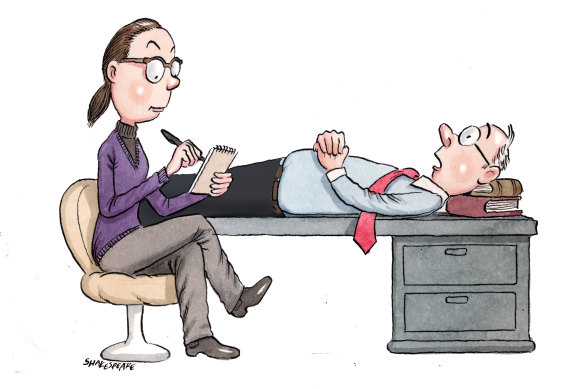
I’m reasonably sure you’re not being ignored because your cover letter isn’t hitting the mark.Credit: John Shakespeare
Until I looked into it, I was surprised the subject of your question hadn’t been brought up before by a Work Therapy reader. Now I have a better idea of why. And, at the risk of sounding like an old fuddy-duddy, the reason came as a shock to me: most job applicants don’t write cover letters any more.
That’s a generalisation. In some fields or sectors, I’m sure, cover letters are still the norm. But from the conversations I’ve had with people in hiring positions, it seems the majority of applications they receive include little more than a CV.
That could be laziness. It could be that the art of letter writing is considered archaic or anachronistic by generations who have grown up without posted mail and with little need to give much attention to email.
I think the more likely reason, however, is that jobseekers have been conditioned over the past five to 10 years to understand that seriously researched and carefully crafted applications are not worth the effort.
We live in a work world in which the courtesy of putting time and thought into an application is rarely reciprocated.
Almost everyone reading this will be familiar with spending hours – even days – on a job application and hearing nothing back from the potential employer. Not, as you said, a “pro forma rejection”. And certainly not a thoughtful, personalised response.
I’m not sure, however, that this is a reason to stop writing cover letters. All the hiring managers I spoke with said that they appreciated cover letters and tended to favour applications with one attached. And if my own experience is anything to go by, most job ads still ask for one.
With this in mind, I asked Dr Andrew Dhaenens, a senior lecturer in management and leadership at RMIT University, about your question. He said he commiserated with you, noting that modern job searches are notoriously frustrating for those applying. But he said that despite huge technological changes, “the essential elements of good application are the same” as they’d always been.
Loading
“Can you quickly and succinctly show that you check the boxes in terms of skills, know the right people and demonstrate the right behaviours? Ultimately, employers will almost always hire the best candidate that they can afford.”
But Dhaenens underlined the importance of being “connected to the right people”. He said an unfortunate reality was that once a hiring team had checked the skill boxes and found no clear standout, they moved to the next distinguishing characteristic. And that, he says, is often whether a candidate comes recommended or is known beyond their application.
As for whether your cover letter is covering the right things, Dhaenens said a good letter concentrated on “fit and connection”.
“What values do you bring in your work? How do you know you would be successful in this role? Who do you know that will support you in this work? These are the qualities that secure the interviews and get the offers.”
I know you’re not doing this, but Dhaenens also strongly advised against using AI to write your letter. He suggested that although what it produced could seem tidy at first glance, “it carries a certain tone that hiring managers quickly come to know and get tired of reading”.
My guess is that the problem isn’t your letter. You may want to tweak what you say based on the above advice, but I’m reasonably sure you’re not being ignored because your cover letter isn’t hitting the mark.
And it certainly sounds like there’s nothing wrong with your résumé. I suspect what you’re confronting is what many people looking for a new job are confronting: a work world in which the courtesy of putting time and thought into an application is rarely reciprocated.
Send your Work Therapy questions to [email protected]
Most Viewed in Business
Loading