3 months ago
20
3 months ago
20
Prime Minister Anthony Albanese has said he is “stunned” by the Coalition’s resistance to the government’s antisemitism response bill after almost a month of demands from the opposition that parliament be recalled early and legislation responding to the Bondi shooting debated.
He condemned the Coalition shortly after Home Affairs Minister Tony Burke spoke on radio slamming the opposition for being hypocritical, as key Coalition figures argue the laws would damage freedom of religious expression and speech if passed in their current form.

Prime Minister Anthony Albanese during a press conference in Canberra this week. Credit: Alex Ellinghausen
“This is somewhat stunning, frankly. The Coalition day after day, very clearly, called for parliament to be recalled,” Albanese told ABC radio, referencing comments from Opposition Leader Sussan Ley in the days following the attack in which she demanded that laws “needed to be passed” and the parliament recalled early.
“You can’t have it both ways. And it just seems to me, people who were watching the events since December 14 would have seen politics being played by the Coalition. They’re still playing politics, and I’m just stunned that they are saying they will vote against legislation, a number of their members, without even looking at it,” Albanese said on Thursday morning.
The government’s omnibus antisemitism laws – which among a number of measures would crack down on “hate preachers”, increase penalties for hate speech, and establish a national gun buy-back scheme – will require the support of either the Coalition or the Greens to pass. The laws were drafted in the weeks after the attack, and will be debated during a snap recalling of parliament next Monday and Tuesday.
Loading
Despite weeks of clamouring for early debate, the federal Coalition argued the bill was rushed without a decent period of scrutiny. Key opposition figures have argued against any further gun reforms, said racial vilification laws would have free speech implications, and fought against perceived impacts on freedom of expression and religion.
Opposition home affairs spokesperson Jonno Duniam on Thursday morning said passing the bill in its current form would be “bad for our country” as the proposed laws failed to effectively address “antisemitism and stamping out Islamic extremism”.
“The government have dropped the ball here. Yes, get it done urgently, but do it properly and make sure the provisions actually work out. Sadly, it appears they are failing on that. That said, we’re still working through this process. We have to get the balance right,” Duniam told the ABC.
Ley met with senior Coalition MPs on Wednesday, expressing serious reservations about the speed at which the bill had been brought forward. A mix of moderate and conservative MPs within the opposition have publicly and privately expressed their concerns about the package, with some contacting Jewish community leaders to explain their rational for opposing the bill.
Albanese said he had met repeatedly with both Ley and Greens Leader Larissa Waters recently to discuss the legislation, and was open to any proposed amendments. He said no amendments had been proposed to him so far.
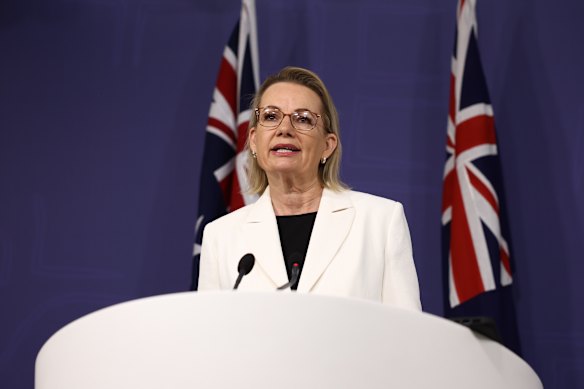
Opposition Leader Sussan Ley.Credit: Dominic Lorrimer
“I just find it astonishing that people who were arguing this was absolutely urgent – it was on the front page of papers day after day after day – and now they’re saying: ‘Oh no, well, actually, it’s not that urgent’,” Albanese said.
“I saw one comment from [Liberal MP] Andrew Hastie saying that this could wait until after the royal commission. So pushed into 2027 before anything is done. Well, on the one hand, they’re saying, do it in Christmas week of 2025, and now they’re talking about pushing things off until 2027,” he said.
Speaking to Seven’s Sunrise on Thursday morning, Burke said: “If the opposition, after all of this, opposed the exact sorts of legislation they’ve been calling for, then the hypocrisy of what they’ve been calling for the last four weeks is just really disappointing”.
Loading
“I think everyone comes from a real sense of goodwill. And let’s do everything we can to try to make sure something like this doesn’t happen again. And let’s take on bigotry, let’s take on the gun laws, let’s make sure that we’re acting. So I’m still hoping that people’s better senses will come through,” Burke said.
The bills include a provision to criminalise membership or support of extremist organisations, with a penalty of up to 15 years of jail time. Neo-Nazi group the National Socialist Network has in response disbanded.
“The Nazis are taking a significant step backwards. None of this means that the hate in these individuals goes away, but it is making it more and more difficult for them to organise, and that’s why I can’t, for the life of me, see how the Liberal Party have got themselves to the point where they’re now effectively opposing the legislation,” Burke told ABC radio on Thursday.
Controversial Islamic fundamentalist group Hizb ut-Tahrir, also targeted under the laws, told the ABC they “cannot be banned” and were “neither hateful nor violent”.
Start the day with a summary of the day’s most important and interesting stories, analysis and insights. Sign up for our Morning Edition newsletter.
Most Viewed in Politics
Loading