3 months ago
17
3 months ago
17
Opinion
December 8, 2025 — 5.00am
December 8, 2025 — 5.00am
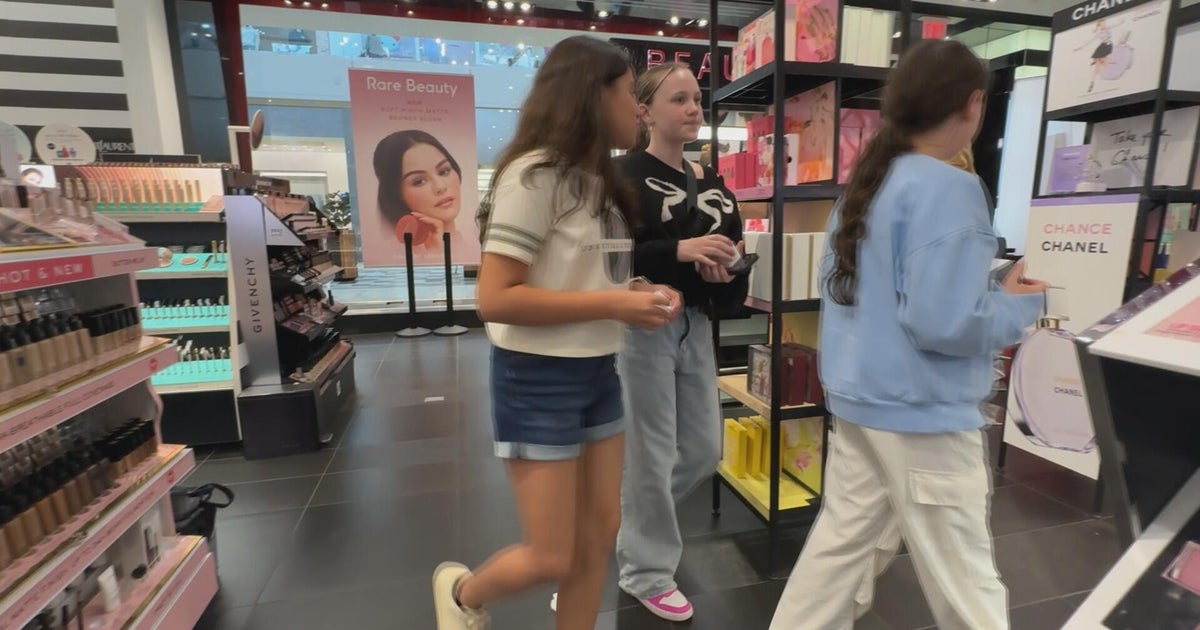
Last week I was in Adelaide. Someone put me up at a hotel – I’ve been promoting my Quarterly Essay, you might recall me mentioning it – and it was sufficiently old-school that they offered the luxury of newspapers with breakfast. The front page of Adelaide’s tabloid was about the government’s social media ban. A 14-year-old had been recognised, by Snapchat, as a 24-year-old.
My breakfast companion asked me if the story would have worried me when I was a political staffer. Yes, I said, because that’s politics: the media points out problems, you do your best either to fix them or explain why it’s not really a problem.
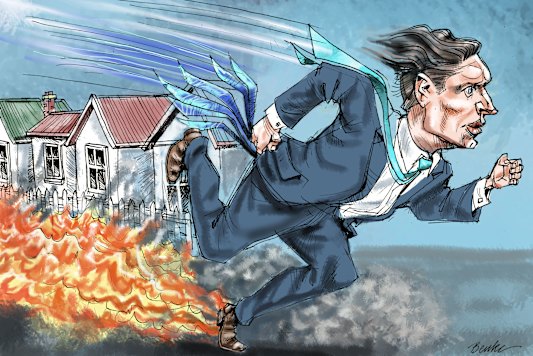
Illustration by Jozsef BenkeCredit:
But, I added, I shouldn’t have been worried. I recalled one of my favourite Paul Keating quotes, that in politics you want to be like the roadrunner: announcing policies, burning up the road behind you. This particular front page, technically negative, was actually a pointer to something useful for the government. Its policy was being discussed. People would have no doubt the government was actually doing something.
You could say the same, in a different way, about the government’s environmental reforms. I’m not convinced most Australians noticed; and it is unclear yet how important they will be. But the laws dominated political discussion for a week or two. The government’s gas reservation policy, when it arrives, may do the same. Even if people don’t grasp the specifics, they feel the hum of activity.
After the election, the government – and particularly Anthony Albanese – seemed more confident. It was unclear whether this confidence would lead to complacency or a stronger desire to get things done. The first months of this term were a bit muddled, which raised concerns it was the former. But the last few weeks have offered small signs – no more than that – that the latter may yet turn out to be true.
Loading
This is particularly important given the results of the recent Australian Election Study, which suggest taking too much comfort from the election result would be a mistake. The figures show Peter Dutton was the most unpopular major-party leader in the study’s history. As well, the election took place in a “unique” context: “A factor in evaluations of Dutton, was his perceived similarity to Trump.” Labor can’t count on either at the next election.
And that is especially true because some Liberals are determined to make sure the battleground of the next election is very different.
Here was Andrew Hastie recently: “The economy isn’t working for regular Australians. Both parents are forced into work to pay the bills. The government is pushing kids into institutionalised childcare. Everyone is tired and stressed. The Australian dream is fading for many.”
Hastie isn’t cobbling some attack lines together, the way many politicians do. He is, as Nick Dyrenfurth of the John Curtin Research Centre argued a few weeks back, mounting a case against the neoliberal consensus of both major parties over recent decades. It is an accurate description of the way many people feel, seen through the prism of policy. It is not a predictable criticism of the Albanese government; it is a critique of society.
Loading
And this is significant because oppositions, in their own way, can burn up the road behind them too. Mostly, they do so by shifting the terms of debate. Kevin Rudd managed this in 2007, by dragging the contest onto technology and climate. Albanese managed a similar thing in 2022, partly by shifting away from old policy debates into a contrast between conflict and calm. Their success did not come only from criticising the government. It lay in critiquing developments in society and political culture. Because the government did not share those critiques, it allowed Rudd and Albanese to argue the government was caught in an old way of seeing things.
Sussan Ley has done well despite massive obstacles. But she is caught on an old political axis, between conservatives and moderates, pulled in both directions. There is no way to win. Hastie is, instead, taking a new angle into politics by presenting voters with a new way of thinking about the frustrations they feel. It’s not everything: as the NSW bushfires remind us, climate change could still easily sideline the Coalition, Hastie included. But Labor shouldn’t assume this will happen.
Everyone involved in politics must watch to make sure we don’t get stuck in old frameworks. At an event in Adelaide, I was asked a question about the health of democracy in Australia. I started with the conventional wisdom: that compulsory voting keeps it healthy. Suddenly, though, I realised I could phrase the question differently. Did I really think that if America had compulsory voting and a functioning Electoral Commission it would have avoided its current troubles?
In my Quarterly Essay, I quote American philosopher Richard Rorty who, decades ago, criticised the Democrats for occupying a sterile centre, in which its left wing had gone quiet and redistribution was never mentioned. If the situation continued, he wrote, America would come to be led by a strongman, the economy run by the super-rich, women and minorities treated with contempt.
Loading
Australians may not like Donald Trump himself. But that doesn’t mean they are not – or won’t be, at some point – sympathetic to the arguments that have driven Trump’s ascent. With the threat of inflation returning, we are all aware, again, of how much “cost of living” continues to dominate voters’ concerns. It is worth considering that for many, that may not be separate from inequality. That what presents as concern about rising prices also captures frustration at being left behind - while those with assets race ahead.
It may be that the political party that finds a new way to address cost of living – a new way to think about it – takes a decisive advantage. Burning up the road by driving policy debates is important. Doing so on the issue that is top of voters’ minds is more important still.
Sean Kelly is a regular columnist and was an adviser to former Labor prime ministers Julia Gillard and Kevin Rudd.
Most Viewed in Politics
Loading