3 months ago
27
3 months ago
27
Opinion
January 15, 2026 — 3.50pm
January 15, 2026 — 3.50pm
A week after the Bondi Beach massacre, and just three days before Christmas, Sussan Ley was insistent. The nation’s federal parliamentarians ought to be in Canberra legislating to protect Australia’s Jewish community from antisemitism.
“We should be back in parliament strengthening those hate speech laws today,” Ley said on December 22. “Instead, the prime minister has pushed it into the weeks ahead, saying it’s all too hard to do now.” Branding the government’s proposals to toughen hate speech laws as “not sufficient”, Ley said recalling parliament “needs to be done now”.
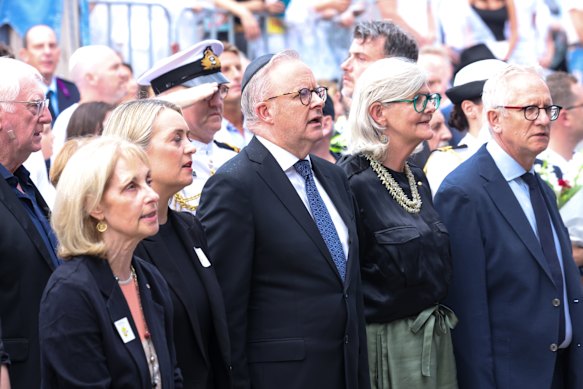
Anthony Albanese has recalled parliament early to respond to the Bondi Beach terror attack.Credit: Edwina Pickles
What a difference a month makes. Parliament is set to resume on Monday for two days of emergency sittings, a fortnight ahead of schedule. Suddenly, the Coalition is accusing the government of moving with undue haste and many of its MPs believe the proposed hate speech laws are too tough, rather than too weak.
Recalling parliament for rancorous legislative debate while the 15 victims of the attack were still being buried would have been a terrible idea, further politicising a tragedy that had already inflamed rather than calmed existing community divisions. The days immediately after a traumatic incident are not the right time to make complex changes to the nation’s laws. High emotion can be a barrier to thoughtful policymaking. Often, it can lead to overreach.
One example: the 2014 rush, championed by rival media outlets, including this masthead, to implement sweeping lockout laws in Sydney’s pubs and bars in response to the death of two young men in random acts of alcohol-related violence. The laws were wound back five years later after devastating the city’s nightlife economy and forcing almost 200 venues to close.
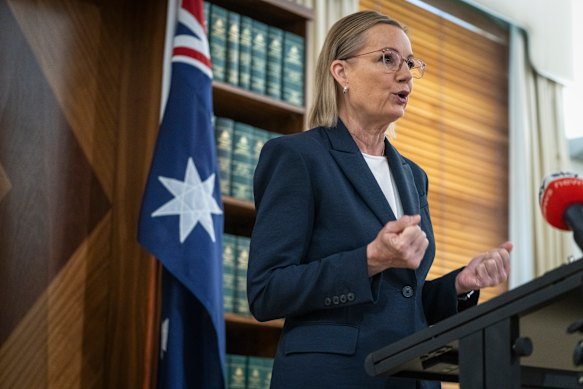
Opposition Leader Sussan Ley is now accusing the government of moving with undue haste with its race hate legislation.Credit: Eamon Gallagher
In a similar vein, the panicked and poorly communicated decision to uninvite author and academic Randa Abdel-Fattah from Adelaide Writers’ Week after Bondi led to a mass author boycott and the eventual cancellation of the entire event.
Anthony Albanese was right to resist the Coalition’s demands to immediately recall parliament. And there is nothing wrong with returning to Canberra ahead of schedule to pay condolences to those who died at Bondi and get started on legislation to respond to the attack.
It’s another matter entirely to demand a sweeping package of legislation spanning gun laws to a crackdown on hate preachers be passed into law just a week after being released for public scrutiny. If Albanese’s stated timeline holds, the whole thing will be over by next Tuesday.
“We want this to be timely, but we also want there to be a proper process,” Albanese said this week.
No textbook, however, will ever hold up the consultation process for the Combatting Antisemitism, Hate and Extremism Bill as a gold standard for policymaking. Public servants and the Australian Federal Police were still clearly getting their heads around the details of the laws when they appeared before the parliamentary intelligence and security committee on Tuesday.
As for representatives speaking on behalf of Muslims, Christians and the LGBTQ community, they had to hotfoot it to Canberra to comment on legislation they had only just received.
“This approach undermines the principles of democratic engagement,” Australian Federation of Islamic Councils president Rateb Jneid said. “It places significant strain on civil society organisations, particularly those operating with limited resources or on a volunteer basis, who may be unable to properly review or respond to legislation of such gravity in the time provided.”
Former Home Affairs department boss Mike Pezzullo, who appeared before the parliamentary committee this week, says Australia is “entering uncharted waters when it comes to operationalising ideas in security practice such as ‘hate’”, describing the legislation as the “most consequential change in this area of law since 9/11”.
Loading
Pezzullo has concerns about the draft legislation, including a controversial exemption to hate speech laws for those quoting religious texts. But he does not think extending the process for another month would make a material difference.
Many others disagree, persuasively. “Rushing complex and far-reaching legislation such as this through parliament, without adequate time for scrutiny, risks poor policy and undermines public confidence in the legislative process,” warns Anthony Whealy, chair of the Centre for Public Integrity.
Figures from across the political divide have raised thoughtful concerns about the legislation. Liberal frontbencher Tim Wilson has questioned whether the thresholds set by the new racial vilification laws are too broad to justify a five-year prison sentence, and whether there should be exemptions for good-faith public discussion or education. Meanwhile, independent MP Allegra Spender has asked why a neo-Nazi promoting hatred against Jews should be prosecuted while one promoting hatred against Muslims (or gays, lesbians or the disabled) should not.
Next week’s return of parliament will pose a profound test for the nation’s political system following the worst terror attack in Australian history. After demanding parliament be recalled early and claiming the moral high ground on tackling antisemitism, it is incumbent on the Coalition to be constructive. Certainly, any action does not need to be put on hold until after the royal commission reports in December, as prominent Liberal Andrew Hastie argued this week.
Loading
The Executive Council of Australian Jewry is urging Ley not to let the perfect become the enemy of the good. It would be remarkable to see the Coalition, which has argued antisemitism is a national crisis, vote against the government’s laws while the Greens, who have been quiet on the topic, allows them to pass.
A meaningful response to Bondi means acknowledging it was a mass shooting as well as an antisemitic terror attack, even if this is uncomfortable for the conservative side of politics. As David Meagher said at the funeral of his brother Peter, who was shot dead at Bondi: “[An] antisemite without a gun is just a hate-filled person, an antisemite with a gun is a killer.” If the Nationals want to deploy nonsensical US-style “guns don’t kill people” rhetoric and vote against sensible firearms restrictions, the Liberal Party should be prepared to split with them on the issue.
As for the government, Albanese should be willing to slow down and allow further consultation rather than seize a chance to wedge a divided opposition. Some of the most contentious aspects of the legislation, like the racial vilification laws, could be carved out for more debate and expert input. It’s worth taking a month, rather than a week, if it means the laws are improved.
Since Donald Trump’s return to office, the United States Congress has become little more than a rubber stamp for the president. Australia’s parliament should not follow suit. The Bondi tragedy calls for urgency and focus, but not a frenzied scramble to pass such significant, far-reaching legislation.
Matthew Knott is the foreign affairs and national security correspondent for The Sydney Morning Herald and The Age.
Most Viewed in Politics
Loading