3 months ago
21
3 months ago
21
Opinion
November 11, 2025 — 7.30pm
November 11, 2025 — 7.30pm
Taxpayer-funded public broadcasters are expected to strive for objectivity and impartiality in a divisive era when most commercial news organisations barely pretend to do so. It’s a ferociously difficult task.
In September 2018 – not that long ago – the ABC’s managing director was sacked by its board, and the board’s chairman was forced to resign, in the space of three days.

For all the angst over pressure from Donald Trump and other right-wing critics, the real power in Westminster and Canberra currently lies with Labour and Labor.Credit:
This week, the BBC’s director-general, Tim Davie, and its CEO of news, Deborah Turness, both resigned in the space of a single day. On the face of it, an even more startling concatenation.
Is it the result of a political hatchet job, as some are alleging? It’s true that the BBC has been under huge pressure from Britain’s right-wing critics in parliament and in the media.
But that’s been going on for decades, and neither Britain’s conservative politicians nor its rampant national press have the power that they used to have. For all the meteoric rise of Nigel Farage’s Reform Party in the polls, the power in Westminster and Canberra right now is with Labour and Labor.
Donald Trump, of course, has demonstrated the most ferocious opposition to critical media outlets, whether they are American or foreign. And it is a documentary about Trump, aired last October in the run-up to the presidential election, that is the primary reason for the resignation of Davie and Turness.
Panorama’s editing of Trump’s famous speech on January 6, 2021 was, in my view as in many others’, egregious. Trump is a rambling speaker. It’s normal to edit people down for television. But to take two widely separated fragments of his speech and run them together to suggest that, in a single sentence, he had called on the crowd to march on the Capitol and “fight like hell”, without even a wipe to indicate the edit, is unacceptable.
Still, does a single unjustifiable edit in a Panorama program merit the resignation of the boss of the entire BBC? Most people would say, “of course not”.
The trouble is that the revelations last week in the UK’s conservative Telegraph came from a man who had been appointed to the BBC’s own Editorial Guidelines and Standards Committee to counter the allegation that it is a self-policing organisation.
The whistleblower (if that’s the appropriate term) is an experienced journalist and corporate media man, Michael Prescott. Yes, he was for 10 years the political editor of the Murdoch-owned Sunday Times, but he’s a reputable journalist, with no obvious hostility to the BBC.
As a public broadcaster, the ABC is vulnerable to the same attacks as the BBC.Credit: Getty
It is his long letter to the BBC board that was leaked to the Telegraph. It details a series of criticisms of BBC coverage, mostly written not by Prescott but by the senior editorial adviser to the Standards Committee, veteran BBC reporter David Grossman.
They target not just the BBC’s coverage of the Trump-Harris presidential contest, but two other broad topics that conservatives have routinely accused the BBC of approaching with a kind of left-leaning groupthink: the Gaza War, especially the coverage by the BBC’s Arabic Service; and its treatment of issues affecting transgender people.
According to Prescott, BBC News has done nothing much to deal with the concerns raised, and “in many cases simply refused to acknowledge there was an issue at all”.
If Prescott’s allegations are well-founded (and they may not be), that was very unwise of the BBC.
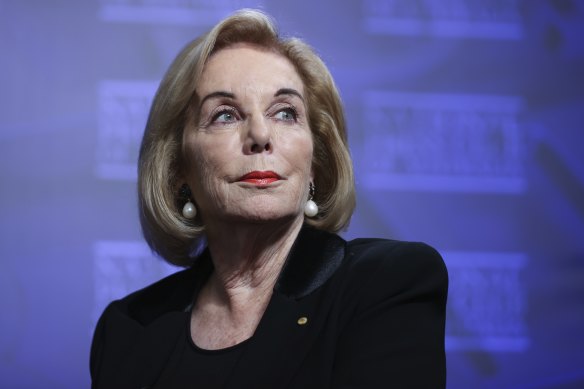
Former ABC chair Ita Buttrose was appalled when the ABC News rejected criticisms of a 2021 documentary.Credit: Alex Ellinghausen
A parallel case that’s nearer to home. In 2021, the ABC aired a three-part documentary series about the 1979 fire in the Ghost Train ride at Sydney’s Luna Park, in which seven people died. In the documentary’s third part, it raised allegations that the fire was set at the behest of underworld figure Abe Saffron, with the probable collusion of the then premier of NSW, Neville Wran (who died in 2014).
Many of Wran’s friends and colleagues were outraged. But their detailed complaints were dismissed by the ABC’s internal complaints unit.
The then chair of the ABC, Ita Buttrose, was unhappy. Former Four Corners reporter Chris Masters and academic Rodney Tiffen were asked to conduct an independent review of the Ghost Train Fire series.
Loading
They found that though the docos had many virtues, the production team did not have the evidence to justify the allegations against Wran. ABC News simply rejected that finding.
Buttrose was appalled. She appointed an outsider – former ACMA board member Fiona Cameron – as a new “independent” ABC ombudsman, to take charge of the ABC’s complaints system and rule on contentious issues. The ombudsman reports directly to the board, rather than to the managing director.
So far, the system has worked quite well to counter the allegation that the ABC sits in judgment on its own output. If the 2023 complaints about the appointment of Antoinette Lattouf had been referred to the ombudsman, she would probably have pointed out that Lattouf had contravened no ABC rules or guidelines – on air or on social media. Unfortunately, they were not.
But imagine the furore if it emerged that the ombudsman had been filing critical reports on major issues for months, which ABC management had played down or dismissed.
The BBC doesn’t have an independent ombudsman. It does have its Editorial Guidelines and Standards Committee, chaired by BBC chair Samir Shah, which as well as a panoply of top BBC execs (including Davie and Turness) has appointed two “external editorial experts”, one of whom was until last month Michael Prescott.
His critique of the BBC’s output has been manna from heaven for its many enemies. The usual voices are calling for abolition, or drastic cutbacks, or radical reform. Abolition won’t happen: the BBC is still, by far, the UK’s most trusted news outlet. But its charter is up for review in less than two years.
Tim Davie had clearly had enough. His successor will have a hard row to hoe.
Jonathan Holmes is a former executive producer of the ABC’s Four Corners and 7.30 Report, a former presenter of Media Watch, and is currently a Director of ABC Alumni.
The Opinion newsletter is a weekly wrap of views that will challenge, champion and inform your own. Sign up here.
Most Viewed in World
Loading