1 month ago
6
1 month ago
6
A new front in the trade wars has opened this week. Both the US and China started charging fees for ships built, operated or financed by their rival when they dock at their ports.
The tit-for-tat exchange was initiated, as could be expected, by the US, which foreshadowed the port fees in February and started implementing them on Tuesday. China’s fees, which mirror America’s, also went live that day, having only been unveiled last week.
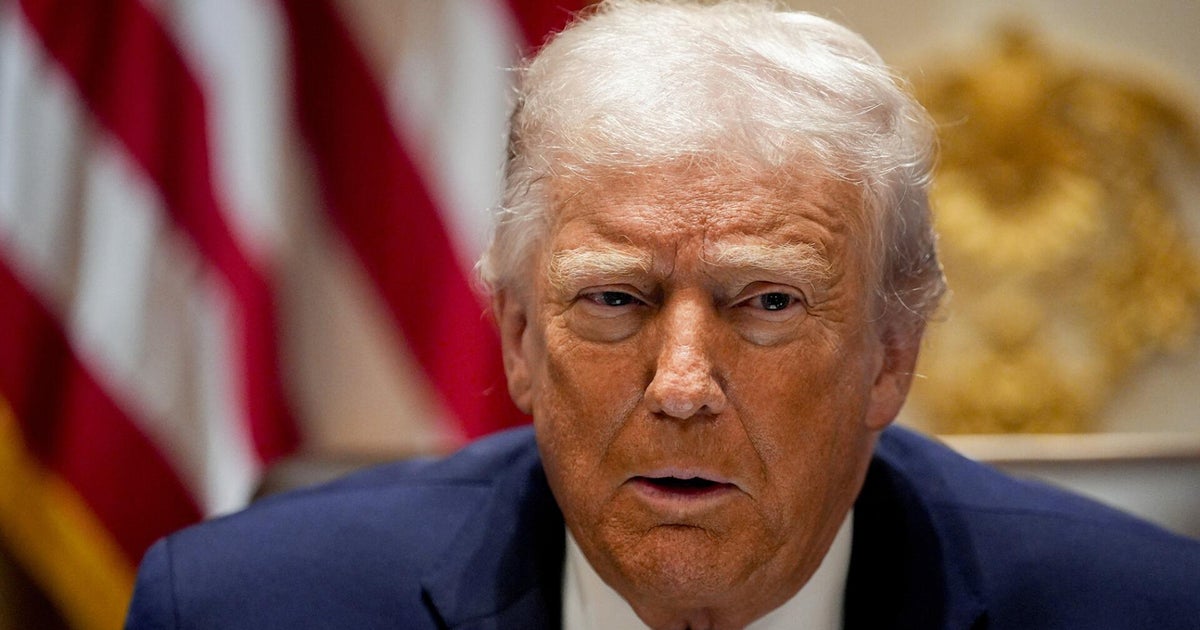
That announcement was overshadowed by Beijing’s tightening of restrictions on rare earth exports, which prompted Donald Trump’s threat of 100 per cent tariffs on all of China’s exports to America.

“The shipping news weren’t good this week” as both the US and China implemented hefty port fees on each other’s vessels.Credit: Bloomberg
The US decision to introduce the port charges date back to a report commissioned by the Biden administration, which accused China of using unfair practices – including forced labour, artificially low labour costs, state-subsidised funding and access to artificially cheap raw materials – to develop its dominance of global shipbuilding.
China built nearly 60 per cent of the world’s largest vessels last year. This year, it has built another 717. The US, whose notoriously inefficient shipbuilding capacity is almost entirely devoted to its navy and small boats, has built one. More than a quarter of all large vessels now on the water were built in China.
Non-Chinese shipowners have been scrambling to reroute their ships to avoid having Chinese-built ships docking at US ports, while there has also been re-financing of vessels, particularly those acquired via sale and leaseback arrangements – where Chinese institutions have an exposure approaching $US100 billion ($154 billion) – to try to avoid the hefty new imposts.
China will clearly do whatever it can to protect an industry that is economically and militarily strategic and thwart America’s attempt to erode its dominance.
The fees are substantial and are set to treble over the next three years. A Chinese built or operated supertanker docking at a US port next year could have to pay more than $US6 million, a bulk ore carrier nearly $US4 million and a container ship effectively $US180 per container.
China’s fee scale, which applies to ships where US interests have ownership or control interests of 25 per cent or more, essentially matches the US charges and, like them, escalate over the next three years.
Hardest hit by the US fees will be China’s giant state-owned Cosco, with US investment banks estimating that it could face an extra $US1.5 billion to $US2 billion in port charges next year.
Loading
China’s biggest targets would be vessels carrying US oil and LNG, with supertankers facing a similar $US6 million-plus charge to those calling at US ports. There are estimates that China’s fees would hit about 16 per cent of the tankers carry refined product imports and 13 per cent of those transporting crude oil to China.
The Trump administration sees the charges and the financial inducements they provide to build vessels in the US to avoid them as an opportunity to revitalise an almost non-existent US shipbuilding industry.
Historically, there is a strong nexus between the health of a commercial shipbuilding sector and a country’s navy, given the scale benefits and intellectual property gains that can be achieved and shared.
The US Congress has been looking at mechanisms for subsidising a homegrown commercial shipbuilding industry, although they would need to be massive to compete with China, which can build its vessels at a fraction of what they would cost to build in the US.
The more likely beneficiaries of the US-initiated fee are the shipbuilding industries in Japan, which ranks second to China, and South Korea, although both have, in return for lower tariff rates, agreed to invest heavily in sectors within the US that the Trump administration deems strategic.
America will need their experience and expertise if it wants to kick-start a domestic commercial shipbuilding industry.

China’s giant state-owned Cosco is expected to be hardest hit by the new fees to American ports.Credit: Bloomberg
Earlier this year, South Korean shipbuilder Hanwha Ocean announced a new $US5 billion investment in a US shipyard it bought last year for about $US100 million as part of a promise South Korea made (under duress) to invest up to $US150 billion to help revive the US industry.
This week, China announced sanctions on the company’s US-linked subsidiaries, prohibiting Chinese companies and individuals from having any relationship or dealings with them. It accused Hanwha of supporting the US government and jeopardising China’s sovereignty, security and “developmental” interests.
China will clearly do whatever it can to protect an industry that is economically and militarily strategic and thwart America’s attempt to erode its dominance.
China’s response to the US port charges isn’t the only development in the shipping industry that is causing angst and anger in the White House this week or that could add to shipping costs and, with the port charges, eventually bleed into higher costs for US companies and consumers.
The International Maritime Organisation will this week decide on new regulations that would see the shipping sector pay up to $US10 billion a year for its greenhouse gas emissions.
Under the IMO’s plan, large ocean-going ships would have to lower their emissions intensity or be charged between $US100 and $US380 a tonne for over-emitting, with the revenue directed to vessels that over-achieve their emissions targets. It appears likely the new rules will be adopted, with the European Union, UK, China and Japan supporting their introduction.
The Trump administration, peopled by climate change sceptics and having taken a chainsaw to Joe Biden’s climate-related spending, is, as would be expected, violently opposed to what it calls “a global carbon tax.”
Loading
In a statement earlier this year it said that “the Trump administration unequivocally rejects this proposal before the IMO and will not tolerate any action that increases costs for our citizens, energy providers, shipping companies and their customers, or tourists.”
The US has threatened member nations and individuals who are “sponsoring activist-driven climate policies” in the IMO with tariffs, sanctions, visa restrictions and the denial of access to US ports.
In its latest World Economic Outlook, issued this week, the International Monetary Fund said the impact of Trump’s tariffs hadn’t been as bad as it expected, but that it saw the risks “tilted to the downside.”
As the full effects of Trump’s tariffs start to show up next year, the new charges at US ports start to hit and, assuming the regulations are approved, the global tax on ships’ carbon emission is imposed and Trump retaliates with even more tariffs, that “tilt” will be even steeper.
The Business Briefing newsletter delivers major stories, exclusive coverage and expert opinion. Sign up to get it every weekday morning.
Most Viewed in Business
Loading