3 months ago
35
3 months ago
35
By The Economist
January 16, 2026 — 3.00pm
A few years ago, it would have been hard to imagine Chinese brands making it big in America. Yet shoppers in Manhattan today can pop by the 2800-square-metre store of Urban Revivo to pick up one of the Chinese retailer’s trendy outfits, which are all the rage on TikTok, a short-video app owned by ByteDance, another Chinese company. They can follow that with a latte from Luckin Coffee, which began opening outlets on the island last year, or an ice-cream from Mixue, another Chinese retailer that has recently set up shop.
With each passing year, the presence of Chinese business abroad grows stronger, in rich and poor countries alike, and across a widening range of industries. Last year BYD, a Chinese maker of electric vehicles (EVs), overtook Tesla, America’s EV champion, in sales. More than a fifth of its cars were purchased abroad, up from a tenth in 2024. Chinese artificial intelligence models are now being used the world over, not just in the global south but also by Western companies such as booking platform Airbnb.
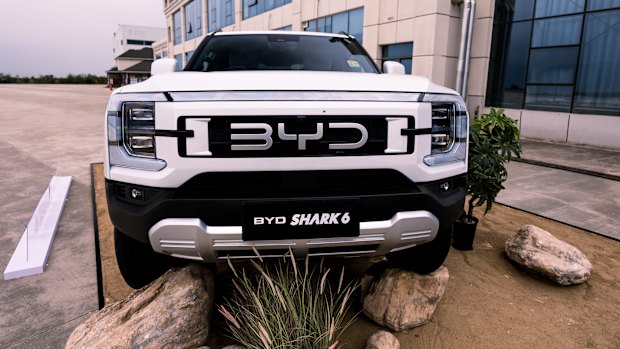
BYD last year overtook Tesla as the world’s top seller of electric cars.Credit: Joseph Plumb
This latest wave of global expansion is notable for both its speed and breadth. In 2024, listed Chinese firms generated 15 trillion yuan ($3.2 trillion) in overseas sales, up from less than 11.6 trillion yuan in 2021. Chinese companies now invest more abroad than foreign ones do in China. But equally striking are the changes occurring in how Chinese companies approach going abroad as they look to build a greater physical presence overseas against a fraught geopolitical backdrop.
Chinese business has been through periods of globalisation before. Beginning in the 1990s, and accelerating with China’s accession to the World Trade Organisation in 2001, firms such as Haier, a maker of home appliances, and Huawei, a producer of telecoms gear, began selling overseas the cheap products they manufactured at home – though they struggled to the shake the perception that their goods were inferior.
Another wave came around the mid-2010s when a handful of Chinese conglomerates, including Anbang, Fosun and HNA Group, splashed tens of billions of dollars on foreign banks, hotels and other businesses.
Loading
The experiment was short-lived. Western governments, increasingly wary of China, began blocking deals, and a number of the over-indebted acquirers later collapsed.
More successful abroad were the state-owned Chinese businesses that secured enormous contracts to build ports, railways and mines across the global south under the country’s Belt and Road Initiative, launched in 2013.
The most recent wave, which began with China’s post-pandemic reopening, has partly been a product of gloomy economic conditions domestically. Growth has slowed and brutal price wars are common. Between 2019 and 2024, the average operating margin generated by listed Chinese companies declined from 12.4 per cent to 11.2 per cent; analysts at Goldman Sachs, an investment bank, reckon that the figure for Chinese firms’ overseas operations is typically higher than at home.
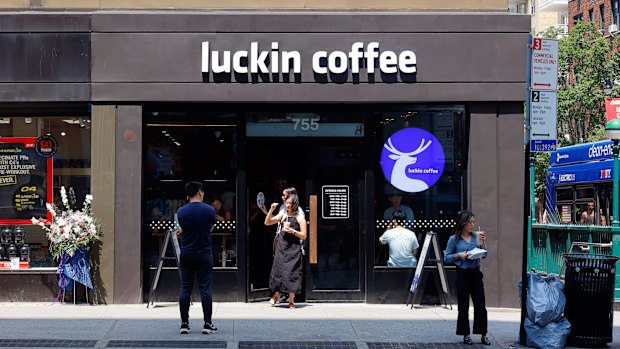
An outlet of Chinese-owned Luckin Coffee on Manhattan.Credit: Alamy Stock Photo
Yet the expansion abroad also reflects a tantalising opportunity. Having closely watched foreign multinationals operating on their home turf, Chinese firms have learnt to make all sorts of advanced products, from industrial robots to medical equipment. Some even say they have mastered making milky coffees (your correspondent begs to differ). Moreover, pioneers such as ByteDance and Shein, a purveyor of ultra-fast fashion, have shown that China can innovate, not just imitate. Western carmakers such as Volkswagen now want to learn from the country’s ascendant EV firms.

Airbnb uses Chinese artificial intelligence models.Credit: Bloomberg
To thrive abroad, Chinese companies are discovering that they must rethink how they do business. Most used to keep as much of their operations as possible in China. That helps explain why the country’s stock of outbound foreign direct investment (FDI) stood at just 17 per cent of its GDP in 2024, much of it in infrastructure and resources projects in developing countries, compared with 38 per cent for America and 57 per cent for Japan, according to the Institute of International Finance, a think tank based in Washington. China’s stock of overseas FDI accounts for just 4 per cent of the global total, about half that of the Netherlands.
That is changing. Spurred on by rising labour costs and Western tariffs, Chinese companies have been busily building overseas factories, many of them in the global south. Cloud providers such as Alibaba, which are serving a growing roster of overseas clients, including the foreign arms of fellow Chinese businesses, are building more data centres abroad.
To build awareness of their brands, Chinese companies are also increasingly setting up foreign stores. Miniso, a retailer from Guangzhou that sells stationery and trinkets, now has more than 3300 outlets overseas, from Texas to Thailand. Xiaomi, which makes everything from smartphones to scooters, plans to have 10,000 overseas shops in the next half-decade or so.
They are mastering local distribution and supply chains too. Shoppers at Ulta Beauty, an American cosmetics retailer, can buy lipstick from Florasis, a beauty brand from Hangzhou. Mengniu, a Chinese dairy company, launched a factory in Indonesia in 2018 and has since become the most popular ice-cream brand in the country.
All this has required a new approach to hiring. Chinese companies with overseas operations have previously tended to move staff abroad rather than recruit locally. That sometimes caused grumbling in host countries, as it meant creating fewer local jobs. Chinese nationals were often also inclined to rely more heavily on suppliers back home.
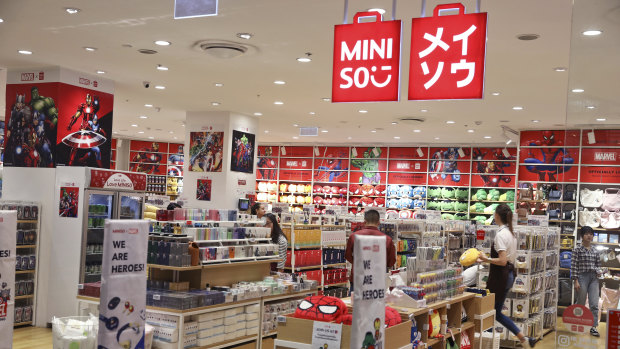
Miniso outlets have expanded around the world.Credit: Ben Rushton
Now, however, the companies are hiring more locals into roles such as sales, customer service, public relations and even management, notes a partner at a global advisory firm (though he adds that senior finance roles are often still deemed too sensitive to entrust to foreigners). This greater openness often reflects the fact that human resources staff have become more confident in managing foreigners as they themselves have spent more time abroad.
An ecosystem of advisers is also emerging to help Chinese companies expand overseas. Many of the world’s big professional-services firms hail from the West, and have tended to focus more on helping companies from America, Europe and Japan enter China, rather than the other way around. But law firms, accountancies and other advisory businesses, some of them home-grown, are now supporting Chinese firms as they globalise.
Loading
Splitting headaches
They need plenty of help. Chinese companies, particularly those operating in sensitive industries in the West, are acutely aware of the risks presented by regulatory clashes, such as the one that led to the forced sale of TikTok’s business in America, due to be completed this month. Some have structured their businesses to avoid similar problems. Squirrel AI, a Chinese tutoring company, plans to launch in America later this year. It has already established an independent technology platform in the country that is separate from its Chinese operations, says Joleen Liang, a co-founder.
Such arrangements add cost and complexity. Whether they will be enough to appease America’s government is also not clear. This month the Trump administration ordered a reversal of the acquisition of some of the assets of Emcore, an American semiconductor company, by HieFo, a business registered in Delaware but controlled by a Chinese citizen.
Chinese multinationals must also navigate their own government’s wariness. Chinese officials gripe about complex cross-border structures in which only parts of a business fall under their purview. Local taxmen have caught on to the fact that many companies which appear to be struggling in China and paying little tax are thriving abroad and keeping their foreign profits offshore. In some cases, they are requesting more taxable remittances.
China’s government is particularly leery of companies that suddenly uproot their staff and set up headquarters in places such as Singapore. Manus, a popular AI company that moved to the city-state last year, is one such example. Regulators in Beijing are investigating its proposed acquisition by Meta, an American social-media colossus, and may block the deal.
Nonetheless, many Chinese companies looking to go abroad will find their government to be supportive, particularly those whose businesses are not deemed sensitive. Officials appear to have woken up to the power of global brands. State media now celebrate Labubus – cuddly toys created by PopMart, a Chinese firm, that have swept the world – as a sign of growing cultural strength. The central government may begin to relax approvals for overseas investments, which are currently very tight, says Denis Depoux of Roland Berger, a consultancy. Shoppers around the world can count on stumbling across more buzzy Chinese brands in the year ahead.
The Economist
The Business Briefing newsletter delivers major stories, exclusive coverage and expert opinion. Sign up to get it every weekday morning.
Most Viewed in Business
Loading