3 months ago
45
3 months ago
45

September 1, 2025 — 2:26pm
I have a freshly baked koesister (spiced doughnut) in one hand and a milk tart in the other. The dribble of saffron syrup down the front of my blouse? A dead giveaway that these are not my first treats of the day. Such are the temptations of Cape Town’s Bo-Kaap neighbourhood.
“Bo-Kaap was established in the 18th century to house slaves, and eventually, their descendants,” says our guide, Malcolm Sompila. “Most had been brought to the Cape from Indonesia and Malaysia by the Dutch.”
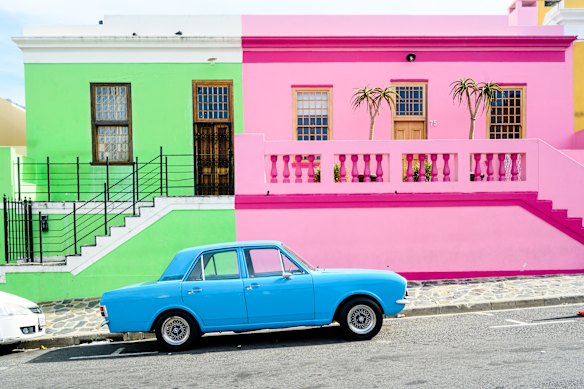
Today, the main street buzzes with visitors posing for photos in front of the candy-coloured houses, while largely overlooking everything else. But travelling with a guide as informative as Sompila, our group of 12 is encouraged to see beyond the bright facades to the Cape Malay culture beneath.
We stroll past houses emblazoned with fresh wall art, where Sompila explains that these “Murals for Gaza” stand as a message of solidarity with Palestine. Like all the best guides, Sompila has a knack for pointing out signature spots, such as the Bo-Kaap Museum and South Africa’s oldest mosque, as well as knowing where to buy spiced nuts or fresh koesisters.
It’s day one of our 10-day “Highlights of South Africa” small-group tour with Australian-owned Inspiring Vacations.
Our all-Australian group includes a multi-generational family of five, three couples from three different states and me. The premium, partially escorted itinerary is designed to blend adventure, culture and natural beauty, with a mix of mostly included tours and a few optional extras.
In my experience, this is the sweet spot of group travel – there’s someone else to take care of the hard yards, while I’m free to slow down and enjoy the journey.
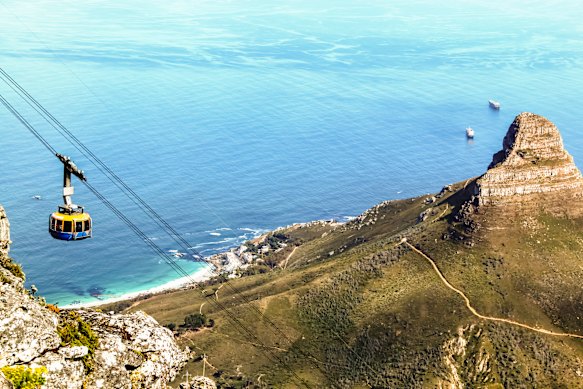
Settled into our minivan, we continue to Table Mountain, where an aerial cableway brings us to the summit, an opportunity that had eluded me twice before. Once the cable car was closed for maintenance (I’d failed to check the schedule) and the second time I was discouraged by the long queues (I’d arrived at peak hour). Third time – with a guide, Fast Track ticket and priority entrance - is the charm.
The next day, we head south along the western shore of Cape Peninsula, with a brief stop at the picturesque Hout Bay before tackling the spectacular bends of Chapman’s Peak Drive.
We wind along the coast, clinging to a narrow strip of road, the Atlantic Ocean to our right and soaring cliffs overhead. Further along, we veer towards the Cape of Good Hope, entering a wild landscape of sweeping beaches and rocky platforms, where flocks of cormorants gather and baboons saunter like gentlemen on a Sunday stroll.
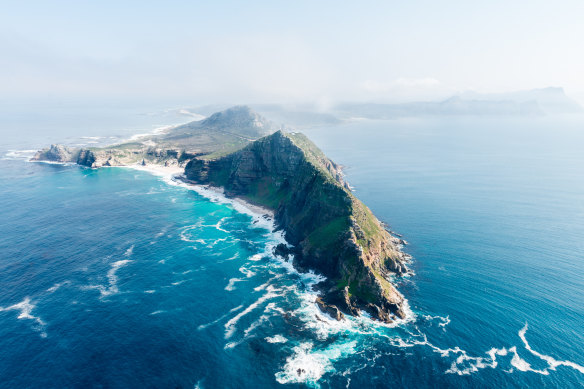
After a windswept photo at the “Cape of Good Hope: the most south-western point of the African continent” marker (not to be confused with the southernmost point, which is 150 kilometres away at Cape Agulhas), it’s a five-minute drive to Cape Point. Yes, there’s a confusion of capes, with this one being the actual tip of the peninsula.
Here, some of us tackle the hike to the lighthouse, while others jump aboard the Flying Dutchman funicular instead. A lunch at Two Oceans restaurant above False Bay (at our own expense) sees our group begin to bond, as we pass around samples of ostrich carpaccio and local mussels for each to try.
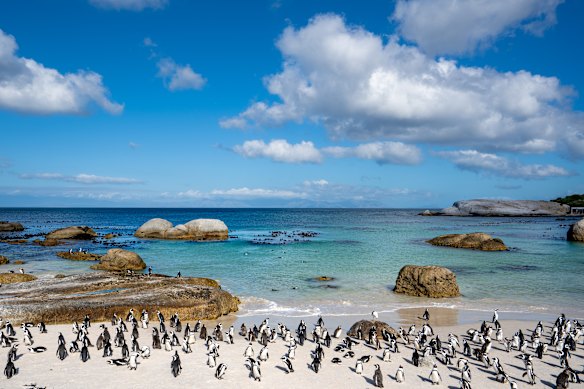
We return to Cape Town via the east coast, where a stop at Boulders penguin colony brings us within braying distance of the endangered African penguin, also known as the “jackass” for their call. Sporting what looks to be black eyeliner and speckled tummies, these dapper dudes bring my tally of penguins in the wild to 12 out of 18 species. I can barely resist breaking into a happy dance.
My happiness continues the following day as we leave Cape Town for the wine-making town of Franschhoek (meaning French Corner) in the heart of the Western Cape.
In less than 90 minutes, we’re sipping a welcome glass of bubbles at Le Franschhoek Hotel and Spa, a white-washed resort built in classic Cape Dutch style. With the afternoon at leisure, most of us take the hotel’s shuttle bus into town; some visit the Huguenot Memorial, others go shopping, I settle in at the French Connection bistro with a cheese board and a small carafe of Boschendal chardonnay.
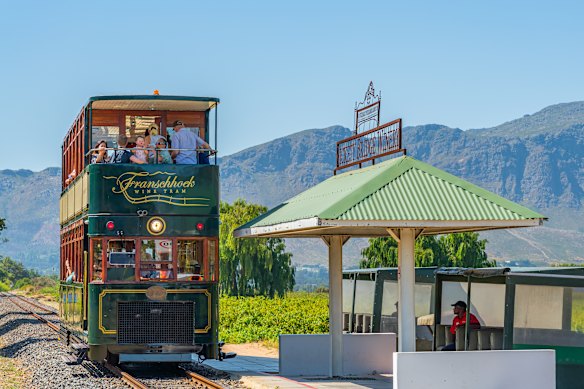
I learn more about Boschendal the next day when we visit the estate, not by minivan – that would be far too ordinary. Rather, we board the double-decker Franschhoek Wine Tram, a hop-on, hop-off service that trundles between wineries like a dinky extra in a Thomas the Tank Engine episode.
Each of us has a pre-booked ticket on the navy line (there are five colour-coded lines), but with stops on the hour, we can choose when to start and finish, and which wineries to visit. There are almost 30 wineries on the service, and while the tram ticket is included, all other expenses are our own.
I buddy up with the couple from South Australia with the plan to visit two smaller estates and a soil-to-fork dining experience at Boschendal. A splash of rosé, a toast to our good fortune and we are off, scooting along the historic lines to Plaisir Wine Estate for our first tasting.
Happily ensconced next to the fire, we sip four wines (the 2023 chardonnay is a standout) before it’s another slow roll through the vines. Without question, this is the most fun I’ve had wine tasting.
And the estates are the most stunning I’ve encountered. Vrede en Lust is a sprawling estate built in 1688, its Cape Dutch architecture, mountain-side location and elegant, terroir-driven wines making it one of Franschhoek’s treasures.
Boschendal is a destination winery with accommodation, horse riding, garden tours, a deli shop and a butchery. But for our food-focused group of three, it’s all about the farm-fresh produce of Werf Restaurant served inside the original cellar.
One by one, the courses appear – braided lamb with tempura, butcher’s steak on the bone, green beans with mustard dressing, all accompanied by house-made mosbolletjie bread and a 2019 pinotage.
Just when we think nothing could top this, a 2.5-hour flight brings us to Kruger National Park, one of Africa’s largest and oldest game reserves. For the next three nights, we settle into the Sabi River Sun Resort, a comfortable stay about 15 minutes’ drive from the Phabeni Gate entrance to the park.
It’s an early start, with our guide Jabu “Happy” Tsatsi handing out blankets, breakfast boxes and hot water bottles as we clamber aboard the open-sided safari vehicles. The sky is a pink cowrie shell-pink when we pull up at a lagoon, the banks thick with hippos lounging about in the shallows, while a gang of grubby buffalo hover in the distance.
African buffalo, along with lions, leopards, elephants and rhinoceroses, are the traditional Big Five game animals. Over the day, we see them all, except the rhinos. Given that they are vulnerable to poaching, it is a good thing they stay well away from human eyes.
And then there are the Ugly Five – warthog, wildebeest, vulture, stork and hyena. Our sighting of a family of fluffy hyena cubs has us all denouncing the less-than-flattering title.
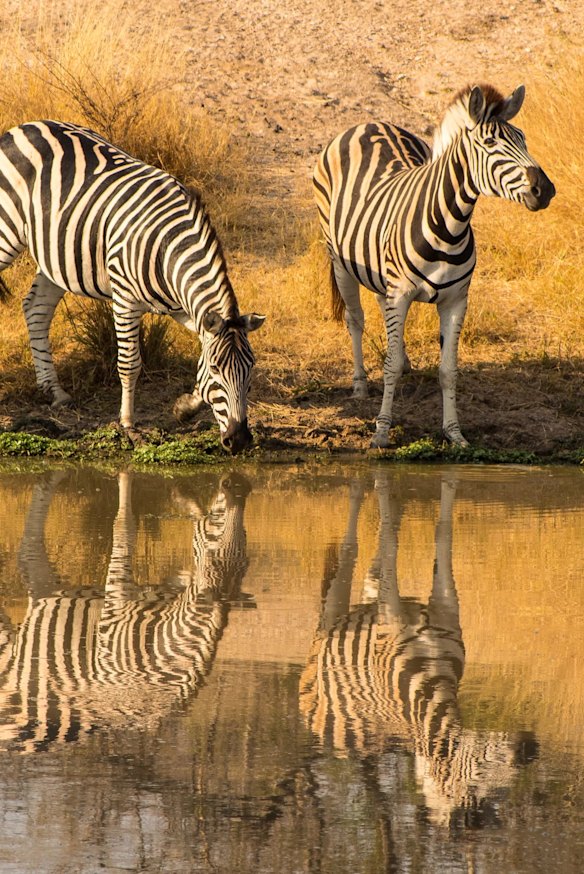
We move on, turning off the tarmac in favour of gravel roads, the dusty detours rewarding us with a blaze of zebra, and so many impala.
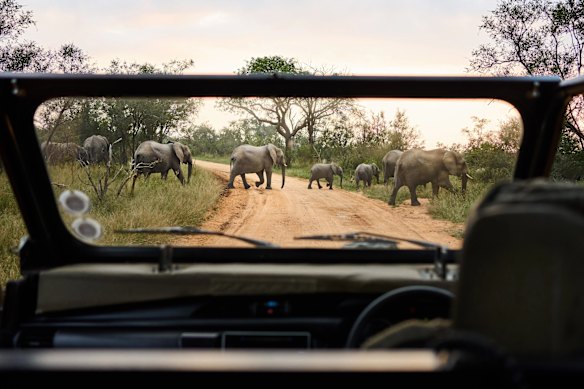
Lion sightings are the only time we encounter a queue of jeeps, but things move quickly, and everyone gets their chance. Travelling in early June means we enjoy cool, dry days, without the peak-season crowds of July and August.
A tip from a fellow guide about a leopard sighting sends us eastwards along the Sabie River. We find the spotted phantom on a bend in the river, sprawled in the dappled shade, only the slow flick of his tail giving up his hiding spot.
“Kruger doesn’t reveal itself all at once,” says Happy. “It takes patience and planning.”
He could just as easily be talking about South Africa as a whole.
THE DETAILS
TOUR
Inspiring Vacations’ 10-day “Highlights of South Africa” premium small group tour (maximum 12 guests) includes four-star accommodation, breakfast daily, some meals, internal flights, transfers, guided touring and entry fees. From $4595 a person, twin share (international airfares not included). See inspiringvacations.com
FLY
Qantas flies direct from Sydney to Johannesburg (and direct from Perth, from December), with onward connections to Cape Town on Airlink. See qantas.com.au; flyairlink.com
The writer was a guest of Inspiring Vacations
Sign up for the Traveller Deals newsletter
Get exclusive travel deals delivered straight to your inbox. Sign up now.