3 months ago
18
3 months ago
18
‘A long time coming’: Labor launches landmark bid to slash energy bills, plug gas shortfalls
Gas exporters will be forced to hold back supply for customers in the eastern states as the Albanese government launches an urgent push to drive down domestic energy bills and prevent shortfalls.
The reservation policy, announced on Monday, is the first of its kind on the eastern seaboard, and will apply to the operators of three giant liquefied natural gas (LNG) export terminals in Queensland.
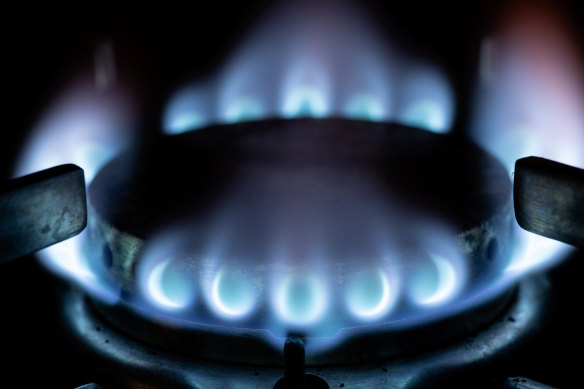
Most of the gas produced on the east coast is converted into LNG and exported. The federal government is developing a scheme to force producers to reserve some for the domestic market.Credit: Bloomberg
The government said its scheme would apply to new export contracts and force companies to reserve between 15 per cent and 25 per cent of this production for the east coast market.
“Australian gas for Australian users as the first priority,” Energy Minister Chris Bowen said.
“This is an important policy, a landmark policy, an historic policy, one that’s been a long time coming.”
The Albanese government has faced intensifying pressure to intervene as customers facing rising electricity and gas prices have decried the market as “broken”.
Homes and businesses on the east coast are running short of gas, while wholesale gas prices have tripled from $4 a gigajoule to more than $12 over the past decade.
“Most Australians think that… gas should be available to Australians at reasonable prices, and Australians are right about that,” Bowen said.
A long-running push for an east coast reservation has been stridently opposed by the gas industry since 2015, when LNG export hubs at Gladstone whirred into life and started shipping gas to Asia for the first time.
Loading
The east coat gas reservation is similar to the scheme imposed in Western Australia in 2006. The two sides of the continent form separate markets and cannot share gas, due to the prohibitive overland distances and lack of shipping import terminals.
Bowen said forcing producers to reserve gas for the local market would create an oversupply, which would drive down wholesale prices.
“The federal government’s promise of east coast gas reservation is a welcome and important milestone for Australian manufacturing, but now it needs to deliver,” said Ben Eade, the chief executive of Manufacturing Australia, which represents major gas users including BlueScope Steel, Brickworks and Tomago Aluminium.
“Gas reservation of at least 25 per cent should be the centrepiece of reform, but it cannot be the only measure.”
The government will consult industry on details of the scheme over the coming months.
Three factors are compounding the dire east coast shortage: the massive onshore fields in Queensland export significant amounts to Asia; the pipeline that connects these fields to NSW and Victoria is already running at full capacity; and the 50-year-old gas fields in Bass Strait are fast running out of reserves, with barely any new projects to replace them.
Bowen said the policy would only apply to new contracts.
“No existing contract – domestic or international – would be disturbed or cancelled under this policy,” Bowen said.
“Contracts entered into from today will need to ensure adequate domestic supply going forward.”
Business groups and the Victorian government have revived calls for the government to set up an east coast reservation scheme for Queensland’s LNG sector, similar to the Western Australia scheme, where gas exporters are required to hold back a prescribed volume for the local market only.
Loading
In June, the government launched a sweeping review to ensure the rules requiring gas exporters to keep the local market well supplied were delivering “as intended”.
Australia has become one of the top suppliers of liquefied natural gas (LNG) to the rest of the world, following the introduction of massive gas export terminals in Queensland 10 years ago.
The Australian Energy Market Operator’s warnings of local gas shortfalls in the south-eastern states marks a deepening challenge for governments, which are having to balance goals to tackle climate change with the need to shore up supplies of polluting fossil fuels for those who still depend on them.
Households are increasingly switching from gas stoves and heaters to electric alternatives, aided by government incentives and policies banning gas hook-ups in new residences. However, that shift is not happening fast enough to avert the need to boost gas supplies, the market operator says.
For the first time, the push for a reservation has also received high-level support from the oil and gas industry. Two of Queensland’s three LNG producers – joint ventures backed by Origin Energy and Shell – have signalled they are open to working with the government on the development of a reservation scheme, as long as all exporters contribute equally.
But Santos-backed Gladstone LNG venture, which relies heavily on buying gas from the domestic market to meet its export commitments, along with key Asian LNG customers in Korea and Japan, has raised serious concerns that some proposals for the scheme’s design would risk driving out investment and jeopardising trading relationships.
Cut through the noise of federal politics with news, views and expert analysis. Subscribers can sign up to our weekly Inside Politics newsletter.
Most Viewed in Politics
Loading