2 months ago
18
2 months ago
18
Rayan Narayan has been commuting from western Sydney to the north shore for work for more than 20 years, and has always felt he is being short-changed.
“I’ve spent so much of my life in trains and in my car, tolls and petrol burning through my pay the whole time,” he said. “And it’s because there aren’t enough opportunities close to home.”
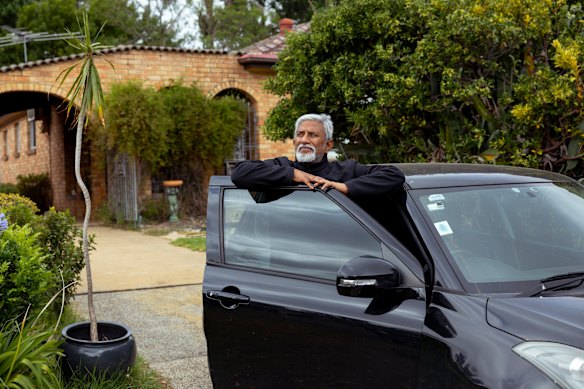
Rayan Narayan has been commuting to work from Blacktown for over 20 years. Credit: Dominic Lorrimer
Narayan commutes to Artarmon from Seven Hills every day, and is part of a growing contingent of professionals from western Sydney who make long daily trips for work, exporting their expertise and experience and in doing so, enriching the rest of the city.
“There are no opportunities here,” Narayan said. “And there are so many people here who are underutilised, either by time or skill set or both. The only opportunities we have here are what I call modern sweat jobs. You work longer and harder here, for less.”
Having spent a career at IT and technology companies in leadership roles, Narayan knows the opportunity cost that comes with living in an area that doesn’t cater to his skills or experience.
Loading
“It’s fatiguing, having to travel so far for so long,” he said. “I miss out on chunks of life and family, but that was where the work is. Western Sydney is a giant in waiting. It can be an Australian powerhouse with the right support.”
This sense of a region being drained of its potential and its workers was a key theme of a new economic report from Western Sydney University that says the east is being “enriched” by workers from the west.
The Unlimited Potential 2025 update on western Sydney’s economy found that while the region is booming, there are guardrails holding it back.
A key finding is that due to a lack of high-paying knowledge jobs, or jobs that recognise experience and skill, workers are having to commute long distances.
“There are far fewer jobs located in the region than there are resident workers. As a consequence, large numbers of residents commute each day to the eastern core of Sydney to access employment.”
And that dynamic doesn’t just impact those in white collar or leadership roles. Serena Parata is a barista with more than a decade of experience in hospitality, but found it difficult to find a job that recognised her skills in western Sydney. She travels 90 minutes to Redfern each day.
“I looked for jobs close to home for some time, and it honestly just wasn’t happening for me,” she said. “And when this job came along, I couldn’t say no even though it’s so far. You can’t say no when you need a job.”
The report says this dynamic is a product of western Sydney being a “peripheral” economy, in that it doesn’t have the capacity to provide the opportunities to meet the skills and demands of its workers.
The report found that there was nearly $20 billion difference between what local industries in western Sydney produced and what the workers from western Sydney produced.
“This gap demonstrates that wealth generated by the people of western Sydney is being transferred to the rest of Sydney, rather than being reinvested within the region,” the report said, adding that this dynamic was keeping incomes low.
A key indicator of western Sydney’s status as a feeder economy was its jobs-to-worker ratio, which shows whether a region is creating enough local employment to match its population. And western Sydney’s overall jobs-to-worker ratio has decreased over time, from 0.87 in 2000/01 to 0.82 in 2023/24.
By comparison, the rest of Sydney’s jobs-to-worker ratio is 1.24.
The industries that remain strong in western Sydney include manufacturing, wholesale trade and construction. Industries such as information media, finance, professional services and public administration all had much less of footprint in the region.
It’s not the same across the entirety of western Sydney, with some LGAs seeing better ratios than others. Fairfield, Liverpool, Campbelltown and Penrith all saw their ratios improve since 2000/01, while areas such as Cumberland, Parramatta and Blacktown saw their ratio decrease in that same time period.
Neil Perry, chief economist at the Centre for Western Sydney and author of the report, said the state of the western Sydney economy was “frustrating” its cohort of professionals and “curbing their ambitions”.
“As an economy, we’re losing their skills, the best use of their skills, and we’re losing the innovation that comes from that and the economic growth and the prosperity moving forward,” he said. “The rest of Sydney couldn’t create the wealth that it’s creating for its people without the western Sydney workers. The workers are doing the heavy lifting for the rest of Sydney. But it needs to be more than just the workhorse, it needs to be a job and knowledge creation centre of its own.”
The Sydney Morning Herald has a bureau in the heart of Parramatta. Email [email protected] with news tips.
Most Viewed in National
Loading