3 months ago
34
3 months ago
34
Until my 40s, I had not had a single close friend of my generation die. Does this make me lucky? Perhaps. But I suspect – and the stats would back me up here – I am somewhere close to normal. One wonderful boy at high school died by suicide; a kind cousin I knew only slightly died in a car accident when we were in our early 20s. Both events were tragic, but they didn’t involve people I was directly connected to. When I was young, my friends and contemporaries were, like me, essentially immortal. Right?
Wrong. In the past five years, as I’ve moved through my 40s, I have lost people I knew – really knew – and loved. People who lived nearby; people I worked with; close friends. And I’m not the only one. The awful fact appears to be that, everywhere you look, people in midlife – in their 40s and 50s – are being lost to us. Over Christmas and New Year alone, popular former doctor and Victorian liberal Katie Allen passed away at 59; respected Melbourne university chancellor Emma Johnston died at 52; and much-loved journalist Tim Stoney died at 58. And, at least for me, the same feeling accompanies all these deaths: the sense of a valuable person, gone long before their time.
In this context, I’m increasingly conscious that being here post-50 feels a bit like dumb luck; good fortune to be thankful for, rather than something to simply expect. Are we, as human beings, actually traversing some valley of random health disaster in our late 40s, 50s and 60s? And if so, I have two questions. What lies ahead? And is there anything we can do about it?
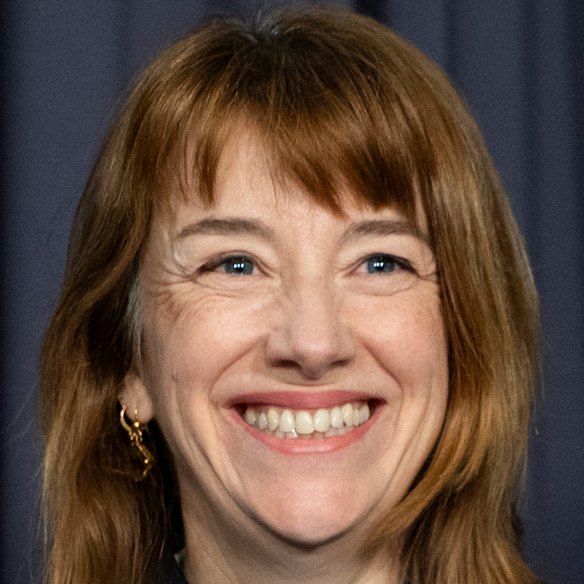
Distinguished Professor Emily Banks, AM, head of the Centre of Epidemiology for Policy and Practice at the National Centre for Epidemiology and Population Health at ANU, has red hair and an infectious enthusiasm for graphs. “Sergey has done a lot of really beautiful graphs about what creates the lived experience of ill health around us,” she says over Zoom, nodding at her split screen. ANU demographer and, evidently, master-of-graphs Dr Sergey Timonin smiles modestly.
The obvious graph for midlife health is, surprise surprise, one that depicts human death rate: age on the horizontal axis, death rate on the vertical. It’s an exponential curve, which those of us who became armchair epidemiologists during COVID-19 should recognise: shaped like a ski jump, with a long flat stretch at the start, then curving smoothly, and ever more steeply, upwards.
Until our 40s, life is basically happening on the long, flat bit of this graph. “We’re just going along in our lives,” explains Banks. “And then, as we get into middle age, and as the line of the graph begins to curve, we start to notice our own health problems, and the health problems around us. I know when I hit my 40s, I started to have increasing numbers of friends with serious illnesses. I had friends who died of brain cancer, pancreatic cancer, people who had heart attacks. My first boyfriend, who I’d hold hands with when I was 13, died of lung cancer in his early 50s. Those kinds of things start to happen to you.”
Yes, I say, that’s exactly what’s happened to me. Banks nods. “And that’s because for all this early time period, human mortality looks like it’s really, really flat. But actually, because it’s exponential, it’s going from one in a million, to two in a million, to four, eight, 16. For a long time, you’re only aware of deaths as isolated events, because initially the numbers are very small. But at a certain point, you’re doubling a number that’s quite big, and it becomes noticeable.”
In number terms, according to figures from the Australian Bureau of Statistics, the rate of annual all-cause mortality in the Australian population in 2024 was about 73 people per 100,000 between the ages of 25 and 44. Between 45-64, however, it’s 350 per 100,000. That’s almost a five-fold increase.
‘For a long time, you’re only aware of deaths as isolated events, because initially the numbers are very small.’
Distinguished Professor Emily BanksImportantly, it’s still not a big number. “At the population level, let’s not alarm everybody,” says Professor Gita Mishra, an epidemiologist at the University Of Queensland’s School of Public Health. “In terms of absolute risk, the number is still very small.”
It doesn’t feel small, though, when it’s happening around you, to people you care about. Emily Banks nods. “What it feels like to live it – and we saw this with COVID – is something new and frightening: more people we know are dying. And when new things like that happen, we tend to make them bigger in our minds. And we start to think ‘that could happen to me’.”
This is a normal human reaction: indeed, it’s part of the rich tapestry of unconscious cognitive processes that help – and sometimes hinder – our interpretation of the world. Processes like confirmation bias (our tendency to scour for evidence that supports our particular pet theory, while busily ignoring any contradictory information); and selective attention (giving our pattern-finder brains instructions to ignore most things and focus minutely on a specific search for particular information). Both these mechanisms inform the Baader-Meinhof phenomenon, a process in which it seems as if a certain event, object or idea is occurring more frequently than it actually is.
This doesn’t negate our “everyone is suddenly dying” feeling; but it does help explain it. Exponential increase is simply the way “natural human lifespan operates”, explains Timonin. This is not to say we haven’t influenced our own mortality at all over the centuries. “Of course we’ve had massive changes in life expectancy,” says Timonin: “People today live much longer than in Victorian times; half of all children once died before the age of five, many women died in childbirth. So the age at which the curve begins can change. But the overall shape of the curve does not.”
So we might think we’re being suddenly targeted by some malign fate once we hit our mid-40s. But really, it’s just maths.
One of the (admittedly many) uneasy but also ultimately hopeful details about the risk of death in middle age is that a lot of it can actually be avoided.
When we’re young, the top causes of death are usually sudden, and almost always have an external cause: car accidents, accidental drug overdoses. (Two more complex killers of young people are suicide, which has both external and internal, physiological factors; and, for young women, breast cancer.) As we age into midlife, however, from 45-64, things change dramatically. Accidental deaths are no longer the biggest danger. For women, breast cancer becomes the top cause of death, and is joined by lung cancer and coronary heart disease (which includes events such as heart attack). For men, coronary heart disease is number one, followed by lung cancer and suicide.
The crucial detail for both genders is that almost all these deaths are the result of chronic disease. Chronic disease is disease that takes a long time to develop, and is strongly influenced by simple details of our lifestyle: what we eat and drink, and how much exercise we do. These details are what epidemiologists call behavioural “modifiable risk factors”.
If this story came accompanied by a band, there would be a thrilling trumpet fanfare at this point, to announce the arrival of a major character onto the stage. Modifiable risk factors have a huge impact on premature death. Firstly, they can have a massive impact on disease. And secondly, they’re – well – modifiable. Which means we can alter them. Which in turn means we can meaningfully lower our risk of death: we can potentially avoid the sweeping scythe of midlife mortality. In their most basic, layman’s form, the five biggest modifiable risk factors are: tobacco use, physical inactivity, poor diet, overweight and obesity, and alcohol use.
Importantly, this is not to say that anyone’s life is reducible to statistics or that anyone is to blame for dying in midlife because they didn’t live a perfectly healthy lifestyle. A perfect life is, by definition, beyond all of us. Disease makes no moral judgment, and nor should we. As Emily Banks puts it, “It rains on the just and unjust alike.”
So. With that in mind, let’s modify some risk. Take lung cancer, for example: a top three cause of death for both men and women between 45 and 64. According to Cancer Australia, as much as 90 per cent of lung cancer in men and 65 per cent in women is estimated to be a direct result of tobacco smoking. (Other types have nothing to do with smoking and can affect people who have never smoked a single cigarette.) “Smoking is one of the most dangerous things we do,” says Emily Banks. “It plays a major role in the top five causes of death in humans overall – ischemic heart disease, dementia, lung cancer, stroke, and chronic obstructive pulmonary disease.” Yet people almost universally underestimate the risk associated with it. “Even if you’re a so-called light smoker – three to five cigarettes a day – your risk of dying from lung cancer is nine-fold that of someone who has never smoked.”
Stop smoking and virtually eliminate your chances of contracting lung cancer: this is the perfect example of a modifiable risk factor. Brilliantly straightforward; extraordinarily effective. So why don’t we all take action immediately? Welcome to one of the great questions of humanity: why do we so reliably fail to do the things we know are good for us?
Take another example: exercise. Of course we’d feel better if we exercised! We know this! Yet a full third of Australian adults do not reach recommended levels of aerobic exercise a week (150 minutes or more on at least five days) and a massive 80 per cent of us don’t do our two muscle strengthening sessions. Dr Rachel Dear is a medical oncologist and senior staff specialist at St Vincent’s Hospital Sydney. In her opinion, “Exercise is the number one thing you can do: it’s the wonder drug we’ve all been searching for. We have studies showing it reduces your risk of [breast cancer] recurrence by 50 per cent – that’s as good as adjuvant chemotherapy.” Dear, who has a lovely cheerful voice, sighs. “But of course, the number of people who don’t do it is huge. It’s too hot, it’s too cold, they don’t have time. And we can get the same dopamine hit from lying on the couch scrolling Instagram as we can from bench pressing 40 kilograms. And so a lot of people choose Instagram.“
Moving on to diet. Our sofa-scrolling high, alas, is not always accompanied by a healthful snack of broccoli florets and carrot soldiers. Eating more healthily may be an almost universal goal, yet seven out of 10 Australians do not eat the recommended quantity of vegetables each day (five kinds, half to a cup of each if cooked). Unhealthy eating, especially in these days of ultra-processed food, leads to its own risks – such as bowel cancer, type 2 diabetes, high cholesterol and heart disease – and it also means that, even when we do get off the couch, few of us are fitting into the jeans we were wearing back in our immortal 20s and 30s.
Which leads us to obesity. Six out of 10 Australians are over their healthy BMI figure. And being overweight and obese contributes to, among other things, type 2 diabetes, heart disease, stroke, high blood pressure, high cholesterol, fatty liver disease and endometrial, breast and colon cancers.
At this point, if you feel like you could use a stiff drink, think again. The final modifiable health risk is alcohol. It’s now acknowledged that, far from low levels being somehow “safe” – I clung for years to those claims about antioxidants in red wine – alcohol is, as the World Health Organisation stated in 2023, “a toxic, psychoactive, and dependence-producing substance and has been classified as a Group 1 carcinogen by the International Agency for Research on Cancer … [a] group which also includes asbestos, radiation and tobacco”. And yet, according to the AIHW, almost 70 per cent of Australian adults – 14 million people – consumed alcohol in 2022-23, and more than a quarter exceeded the alcohol guidelines.
Written down in black and white, perhaps, the changes we need to make seem ridiculously obvious. And yet we don’t make them. Indeed, we continue to take risks with our health we would never countenance in other parts of our lives. Why?
Part of the problem is past experience. Until our 40s (or even 50s), most of us have never had to worry about making any of these (let’s face it, unbelievably unappealing) lifestyle changes ever before. We’ve eaten badly and drunk too much and lain on the damn couch for 30 years, with no observable ill-effects. Why should things suddenly be different now?
‘You’re in a – hopefully slow – decline, but you are in a decline. There’s no getting around it.’
Professor Hassan VallyThe answer to this question involves one of the great challenges of middle age. “What we need to acknowledge, even just intuitively, is that when you stop being a ‘young’ person, even if you don’t feel any different [my italics], you lose a lot of the physiological resilience you’ve had up to this point,” says Professor Hassan Vally, an epidemiologist at Deakin University. “The ageing process involves a decline in all of the physiological activities of the body. Basically, everything gets worse. You’re in a – hopefully slow – decline, but you are in a decline. There’s no getting around it. Everything from lung function to glucose tolerance – every process that your body performs – slowly but surely gets less efficient, more prone to error, less robust. That’s just what ageing is.”
Our reluctance to accept this single, incontrovertible fact is a source of great middle-aged woe. After all, we often feel just as immortal at 45 as we did at 25. But whatever talisman we cling to – the red Ferrari, the Botox, the coconut mouthwash (if you are longevity guru David Sinclair) – we are not now that which we once were. We are, in fact, beginning to reap in health terms what we’ve sown in lifestyle choices for the previous 30 years. And – sadly for us – just because we haven’t noticed the damage we’ve done doesn’t mean it hasn’t happened.
“The fact is, it’s not like you’re a perfect physical specimen up to midlife and then suddenly everything collapses,” says Vally bluntly. “Damage has been occurring all along. But it’s often around midlife that it can actually begin to show in diagnosable chronic disease. It’s a question of accumulation. If someone eats really shitty food in their 20s and you go and look into their hearts, you can see the beginnings of the formation of plaques: it’s starting to happen. And over time, it just builds and builds, until it gets to a critical point and you either have a heart attack, or you get diagnosed with cardiovascular disease.” Ergo, potential illness and death in midlife.
But it’s not all bad news. The great upside of all this is that as soon as you begin to alter your life, things improve – sometimes extraordinarily quickly. Within 20 minutes of finishing a cigarette, your elevated heart rate and blood pressure begin to drop. Your body begins to process an unhealthy meal within a few hours. You clear the ethanol from an alcoholic drink out of your system in about an hour. Of course, you’ve got to then not have another cigarette, croissant or martini an hour later – and significant change does take time.
But it’s never too little – “It’s all about putting as few risk marbles in your disease jar as you can,” says Mishra – or too late. “If you’re a smoker, quitting at any age brings huge benefit,” says Banks. “And if you can stop by 45, you avoid 90 per cent of the excess risk.” Vally agrees. “The human body is amazing. If you do the right things at any age, it can have an effect.”
Of course, not all access to healthy lifestyle choices is created equal. UNSW Scientia Professor Kaarin Anstey is director of the UNSW Ageing Futures Institute. “There is an equity issue, where people with more resources have more capability and more access to healthy food and exercise,” she says. Ironically enough, we have created a world specifically designed for our maximum well-being, in which achieving that well-being is actually far harder and more expensive – in time, energy, and money – than any other way of living your life.
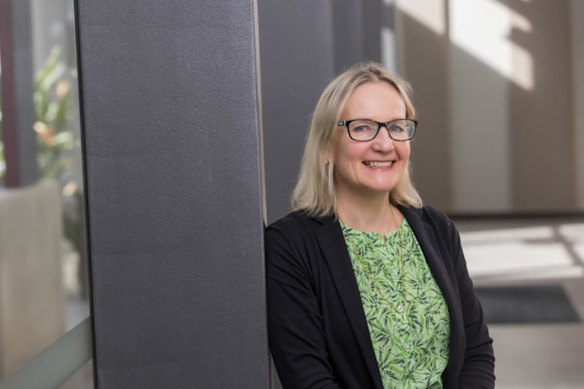
But even so. Some things are possible. “What we can all be doing,” regardless of our circumstances, says Banks, “is looking at this 40s, 50s, 60s time as a great chance to make some changes. When you get to 50, there’s free breast cancer screening, free bowel cancer screening, a free health check which looks at blood pressure, cholesterol.” And if there are issues, says Mishra, “in many cases, if you’ve tried to make lifestyle changes and you can’t get there, safe, effective medications are available.”
Ok. Let’s take a wild leap of faith, and imagine that we do, by some miracle, use our modifiable risk factor skills to dodge many of the chronic diseases of midlife. We become pictures of dietary health; neither alcohol nor cigarettes ever pass our lips; we are proud exercisers, gambolling at will among the healthy BMI ranges. (We are also unbearable people with no friends, but let’s leave that aside for a moment.) Even if we’re models of virtue and moulds of form, however, we still confront at least one risk we can’t account for, that we often cannot alter, and that we may know nothing about. Our genes.
Some of our inherited risk of disease is well understood. Diabetes, for example, which has both inherited, lifestyle and environmental factors, can lead to fatal cardiovascular and kidney disease. High blood pressure and high LDL (or “bad”) cholesterol, both of which also contribute to cardiovascular disease, can be the result of lifestyle, but can also be inherited. Familial hypercholesterolaemia, for instance, is an inherited genetic mutation that means people are born with extremely high LDL levels. Untreated, this condition can cause heart attack in half of all males who have it by the time they’re 50, and a third of affected women by the time they’re 60. Other examples are the gene mutations – notably BRCA1 and BRCA2 mutations – known to significantly increase breast cancer risk.
In many cases, the complexities of genes and their interactions are not yet fully understood – but certainly, no change in your lifestyle can alter your fundamental DNA. “We have patients who have a great lifestyle,” explains Dear. “They don’t smoke or drink, good diet, not overweight; and yet they’ve got breast cancer with no discernible mutation. So they’re asking, understandably, ‘Why?’ And our best guess is that their cancer is genetic – but we yet don’t yet know how.”
This isn’t a reason to give up on altering our modifiable risk factors for the better: positively changing lifestyle can significantly offset some genetic risks. But it is a reminder that making it through middle age (or any age) is not solely the result of our awesomely clean-living habits, brilliant diets and commando-style forward rolls. There are some things even we can’t control.
There is one final piece of the midlife health puzzle: emotion. Feelings are sometimes forgotten in the context of health – except, perhaps, the feeling that all this discussion of diet and exercise is depressing. “There is this metaphor of the human body as a machine,” explains Hassan Vally, “and our lives as engineering problems to be solved by optimising all the machine’s systems. But we’re not just machines.”
The Harvard Study of Adult Development is one of the oldest longitudinal studies of human life in history. Perhaps its most powerful finding is that close relationships and strong community ties are better predictors of long and happy lives than social class, IQ, genes – or even modifiable risk factors. As the director of the study famously remarked, “Loneliness kills. It’s as powerful as smoking or alcoholism.”
We need to remember this, says Vally: remember that the things that fell us in midlife can be emotional as well as physical. “People who survive to very old age: none of them are loners. You don’t get people living to 100 who are miserable and hate other people and don’t have a reason to live. All of them have a sense of purpose; they all are psychologically in a really healthy place.”
‘You don’t get people living to a hundred who are miserable and hate other people and don’t have areason to live.’
Professor Hassan VallyRemember this next time you see your friend’s eyes glaze over at the mention of a park run; the mutinous frown when you suggest a salad rather than steak frites. Who wants long life if you’re bursting with health and vigour, and all alone?
If life were a fairy tale, we could count on a happy ending to this story. An ending in which we health warriors, having fought a noble battle against the almighty combined power of the negroni, the streaming service and the Uber driver, actually triumph over the forces of disease disaster. Bloody but unbowed, we would stagger out of the danger zone of midlife, and receive our just reward: the medieval chest of plunder; the severed head of a dragon; several extra decades of mortal life.
Alas – just in case you haven’t already figured this out by your 40s – life is not a fairy tale. “There is no point in life where we get less likely to die,” explains Vally regretfully. “That exponential curve just keeps going up,” agrees Banks, as master-of-graphs Timonin nods sadly.
There is some good news, however. “Most chronic diseases have increasing death rates as we age,” admits Professor Tony Blakely, epidemiologist with Melbourne University. “But some other causes of death do go down: unintentional injury, suicide. And some cancers do too. Testicular cancer and thyroid cancer, for instance, are younger people’s cancers, as a rule.”
Breast cancer is an interesting case. Although total deaths continue to rise post-65, disease incidence slowly drops in your 70s and beyond. “This may be a genuine petering out of incident cases, or less surveillance for breast cancer as you get older,” suggests Blakely. Nonetheless, Dear’s clinical feeling is that “there’s a sense, looking at the research and at patients, that by the time you get to 75, there’s a sense of, ‘Wow. Things are starting to look like they might actually be OK.’ ”
Part of this is the simple, albeit rather brutal truth that the older we get, the more likely it is that “people who are at risk have already been affected by lung cancer, stroke, heart attack, whatever”, says Dear. “And so you’re left with the more healthy people, perhaps with a healthy lifestyle; they’re just a healthier cohort.” It’s Dear’s sense, at least, that “If someone reaches 75, they’re quite likely to be healthy enough to get to 84; and if they get to 84, they might well get to 94.”
Not all the news is so positive, alas. Post midlife, for example, we have a whole new danger to contend with: dementia. Once we turn 75, dementia, including Alzheimer’s disease, becomes a top cause of death for Australians (number one for women, number two for men) alongside heart disease – a position it never relinquishes.
But here’s the thing. Though for the most part it doesn’t kill us till we’re past midlife, we can actually alter our risk of dementia during middle age. “For Alzheimer’s-related dementias, the neuropathology is caused by the build-up of proteins in the brain,” says Anstey. “And what we’re seeing is that they’re starting to accumulate in middle age. Obviously there are younger-onset dementias, but for the majority, the accumulation of this pathology starts in our 50s and 60s.” It then takes “a couple of decades before symptoms start to appear. What we don’t yet understand is why they start at this point. But whatever the reasons, we need to be encouraging brain health.”
Maintaining brain health, surprise surprise, involves all the same stuff as maintaining the rest of your body, with the addition of getting enough sleep, challenging your cognitive skills and protecting your brain from injury. So get ready: now you can look forward to joining your gym and tossing your salad and pouring your mineral water, all while wearing a bike helmet and holding a puzzle book. Middle-aged sex appeal, here we come.
And so the truth is clear. We cannot live forever; we cannot know when the hammer is going to fall. There is luck and the genetic lottery – neither of which we can control. But there is also a whole variety of things we can do to try to press our finger to the scales of life. The catch is, we must do these things not knowing know how, or if, or when any will be successful.
But life is full of uncertainties on which we nonetheless expend enormous effort over many years. It seems worth at least making the attempt for our health. We are not, in our 40s and 50s, contemplating death – until we are. But that’s not a reason to ignore the moment. “The important thing is to recognise in midlife that this could be a decisive moment that does have repurcussions further down the path,” concludes Vally. “It might be a fork in the road.”
To read more from Good Weekend magazine, visit our page at The Sydney Morning Herald, The Age and Brisbane Times.