3 months ago
65
3 months ago
65

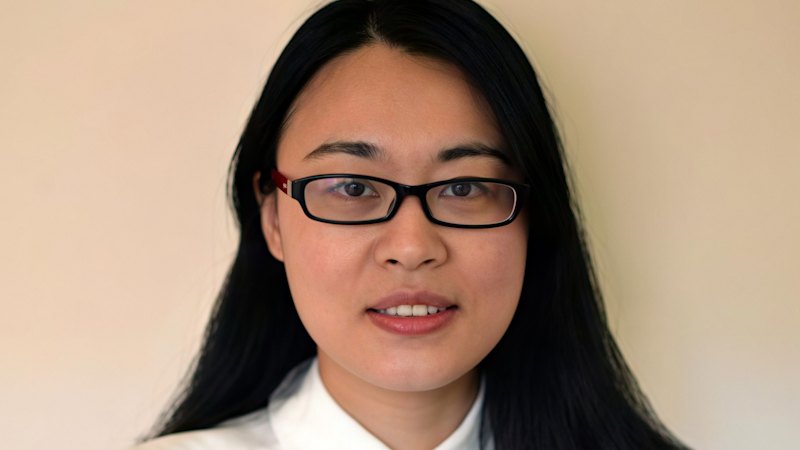
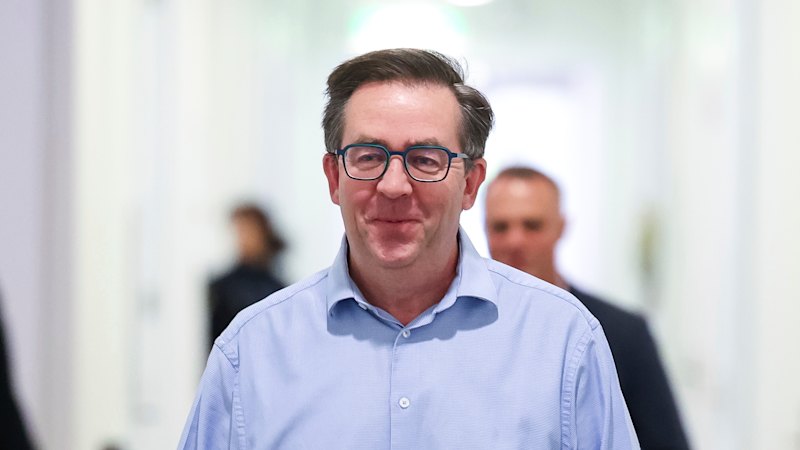
Each week, Benjamin Law asks public figures to discuss the subjects we’re told to keep private by getting them to roll a die. The numbers they land on are the topics they’re given. This week, he talks to Shabana Azeez. The 29-year-old Australian actor is best known for her role as medical student Victoria Javadi in the Golden Globe- and Emmy-award winning HBO TV series The Pitt.
SEX
We’re both migrant-background Australian kids. Were there certain attitudes and conversations – about sex and relationships – going on in your household that felt different to those taking place in other homes? Oh god, completely. My family’s Muslim, but I went to a Catholic school. Some things were so different, but others were exactly the same.
Oh, what did you notice? There was a lot of purity culture, shame and heteronormativity, and a lot of focus on marriage and procreation. They were like, “We are not like those other people.”
Did you feel attractive growing up? Oh my god, no. I got bullied really badly for being ugly as a kid. There was a race-based element. People were like, “Oh, I want to get tanned, but I don’t want to be as dark as Shabana.”
Wait, is that really what they said? That’s a quote. And there was a fat-phobic element: when puberty hit, my body changed and the bullying changed. Suddenly, people were being nice to me. I remember internalising: “Oh, so you people could have been nice to me the whole time …” Now I desperately don’t want to ever attach my sense of self-worth to how I look.
How do you feel now? [Makes a funny face] I think I’m rrrrrreal funny. I’m grateful for that childhood. It made me funny!
MONEY
Would you say you grew up poor, working-class, middle-class or rich? Well, I went to a private school my whole life and lived in a beautiful home with a big family. We had a very comfortable life. Actually, I think it’s really important to talk about your privilege. We’re comfortable talking about systems that oppress us because you want to change those systems. But I don’t know that I’d be here if I didn’t grow up financially stable; it meant I was able to take risks as an actor.
True or false? Your parents once said, “Audition for drama school and, if you don’t get in, never speak of it again”? [Nods] And I did the worst audition ever for drama at Flinders [University] in Adelaide. I crashed my car on the way to the audition, too. [Azeez did a Bachelor of Arts and Media at the University of Adelaide.] But I don’t think that being good at acting necessarily requires training. I think it requires some sort of EQ [emotional intelligence], some sort of ability to be vulnerable – and an almost compulsive need to embarrass yourself.
What jobs are you saying “yes” and “no” to now, and how much is money a factor? I’ve always worked below my pay grade which, as an actor, is $0. That has served me well. I’m doing that less now, which I’m very grateful for. But I really want the metrics that I use to judge a project to not be financial. I want to do a gig because the story or impact is amazing. Lesbian Space Princess was about queer joy. Birdeater was about coercive control. The Pitt is for healthcare workers. I’ve been very lucky that it’s all very impact-driven. I want that to continue, but it’s also just luck that people see that in me.
BODIES
Your American accent in The Pitt is so flawless that many Australians initially didn’t even know you were Australian. How did you acquire one so convincingly? I used the Paul Meier book, Accents & Dialects for Stage and Screen. If you get the e-book, it’s got each accent with audio clips. Also, probably everybody can do an American accent. If you sing any pop songs, you’re already doing it flawlessly. Just sing it, then bring it down to talking.
On The Pitt, you have medical supervision and undergo “doctor boot camps” to ensure accuracy. What have you learnt about the human body? That the human body is so complex. Suturing has been really fun for me, as well as seeing how intubating works. We learn how to massage the heart. We have these rigs where you feel the heart, and the doctors will be like, “Yep, that’s how it feels in real life.” And you’re like, “Wow, this is what it feels like to hold a heart …”
Are you ever grossed out? Only with the lateral canthotomy, a procedure where you cut the eye open. With other procedures, when the body’s open, you don’t really think, “That could be my body.” But looking at a guy’s face while it’s being cut open … that’s confronting.
Is it true that you were surprised at being cast on The Pitt considering your south Asian co-star Supriya Ganesh had already been cast? Did you assume the industry wouldn’t put two brown girls in the same show? My character wasn’t written as south Asian, hers was. Mine was originally Middle Eastern. I thought, “Am I taking representation away from people?”
One of the leads in season two is Iranian, though. [Nods] And it’s really important for there to be two people of [the same] colour. It’s the Brooklyn Nine-Nine way of doing things. If there’s more than one, then none of it is tokenistic. For me and Supriya, it changed our experience. To be the only woman, the only person of colour – whatever it is – can be isolating. It’s healing to have two of us.
When does your body embarrass you? At dinner, you can lift up my plate and see exactly where it was because there’s food all around it.
Wow. Like a snow angel except, instead of snow, it’s filth. Mmm, food angel …
What’s your superpower? I’m very observant. I don’t love to be looked at, but I’m really good at paying attention.
The Pitt is now airing on HBO Max.