3 months ago
21
3 months ago
21
Why we can’t keep delaying the closure of ‘old jalopy’ power stations
We’re sorry, this feature is currently unavailable. We’re working to restore it. Please try again later.
Opinion
January 20, 2026 — 3.18pm
January 20, 2026 — 3.18pm
Nothing draws the climate action battle lines quite like an announcement to extend the life of a dirty coal-fired power plant. But keeping the NSW Eraring coal station open for an additional two years until 2029 is the point where profit meets pragmatism.
Environmental advocates are understandably setting their hair on fire, citing a failure on planning by the state government and Eraring’s owner Origin, and the potential setback for our target to cut greenhouse gas emissions by 43 per cent by 2030.
This announcement won’t win the company nor the government any friends.
But no government or power company wants to be Johnny on the spot if something goes wrong and large numbers of NSW households are without lights or airconditioning one day.
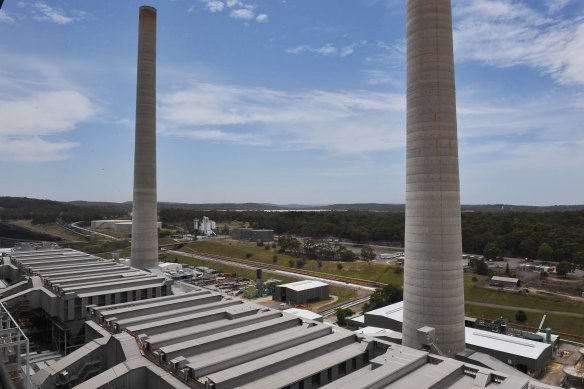
The Eraring power station has been given two more years.Credit: Nick Moir
It would be calamitous for the government’s election prospects and a disaster for Origin’s customer retention.
And this decision was made against the backdrop of officials from the Australian Energy Market Operator’s siren-level warnings last year about a shortage of the infrastructure required to maintain the safe and stable flow of electricity to protect the grid from sudden blackouts following Eraring’s scheduled closure, even though enough new generation projects and power lines were on track to be built by 2027.
Loading
So the decision by Origin – one that is backed by the NSW government – should be seen in a more nuanced way.
The company’s chief executive, Frank Calabria, debates any suggestion that the company has let down anyone on climate progress. “We have not let [anyone] down at all,” he says, citing the enormous progress and activity around the building of renewables that has taken place within the framework of mitigating the risks around system security.
Breathing the last bit of life into Eraring is effectively an insurance policy against an energy catastrophe.
And while keeping this dirty plant open longer isn’t great and does appear to be energy transition slippage, it’s better than the worst-case alternative.
What this decision does not represent is support for coal as a future energy alternative.
Origin has invested billions of dollars in building cleaner energy alternatives and took the decision a few years ago to bring forward the original closure date of Eraring from 2032.
But large infrastructure projects are notoriously difficult to pull off within hard time frames and budgets.
When Origin originally announced it would close Eraring in 2027, it took out an option with the NSW government covering 2026 and 2027, which allowed it to recoup some of the costs of running the ageing plant.
That option would have allowed the government to take a share of the profits of Eraring.
Loading
The fact that Origin has not triggered that option for 2026, suggests that Eraring – described by Climate Councillor and energy sector expert, Associate Professor Joel Gilmore, as a “banged up old jalopy” – remains profitable.
Origin has another set of stakeholders with which to contend – its shareholders. They took the Eraring extension as a positive and bid up the company’s share price by almost 1.7 per cent on Tuesday.
But Origin has also drawn a line in the sand, promising investors that after many years of investment in Eraring’s maintenance it won’t be spending any more meaningful capital before the plant’s retirement in 2029.
The community of environmentalists has a different spin on how transition has played out – and how keeping this ageing power station alive has come at a cost to how much we pay for our power.
“The 43-year-old Eraring Power Station had more than 6000 hours (250 days) of planned and unplanned outages in 2024, which were a key driver of major power price spikes,” the Climate Council said in a statement on Tuesday.
No one wants to see this deadline shift again.
The Business Briefing newsletter delivers major stories, exclusive coverage and expert opinion. Sign up to get it every weekday morning.
Most Viewed in Environment
Loading