3 months ago
34
3 months ago
34
The participants can deny it till they’re blue in the face, but there are telltale signs of a dead rubber at the end of a Test series.
The players still want very much to win, of course; and a Test match is a Test match; and there are World Test Championship points on the line; and 3-2 looks a lot better to English eyes; and there’s professionalism and pride and all the rest.
But there has been a difference between the super-intensity of Perth, Brisbane and Adelaide, and what has followed. Trust me, Sydneysiders have some experience here.
Picture what would be different on day one if Australia were trailing 2-1 in this series and needed to win at the SCG to retain the Ashes. Would Usman Khawaja’s retirement have been staged before the match, and been allowed to turn into the spectacle of contention that it has been?
As it is, we have had the chance to celebrate or debate Khawaja’s career in a pre-match mini-jubilee. He got to bring his kids onto the field for the anthems. It was nice. But if this were a must-win Test match for Australia, there would be questions about risking the slightest distraction.
The single-minded aggression that typified the first 11 days of this series would no doubt have been maintained and Khawaja – whose return in Adelaide was instrumental to Australia’s success – might have saved his announcement for after this game.
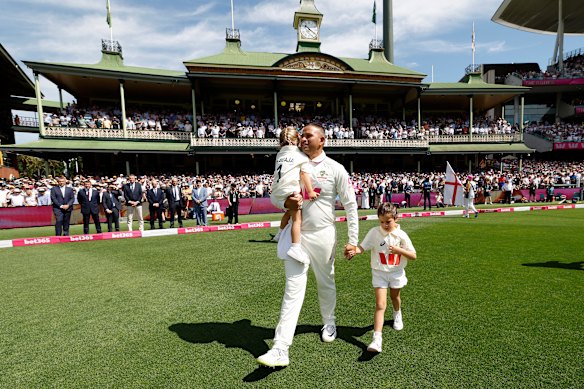
If this were a must-win Test match for Australia, would Usman Khawaja have had a big farewell before the game?Credit: Getty Images
If Australia had to win this Test match, I’d wager that they would have chosen a spin bowler. As it is, they’ve chosen a long batting order with Mitchell Starc at No.10; that’s a selection that indicates contentment, if not quite ecstasy, in walking away with a draw.
Of course, Australia have picked a team to win, but they have also picked a team to lessen the risk of losing.
Worn away by years of suboptimal intensity, the off-field atmosphere in Sydney has developed into a new year reunion. The SCG Test match is an enjoyable social occasion, sort of a rich person’s Adelaide (ha).
Followers of Australia and England want their team to win, of course, but they don’t have to suffer the white-knuckled fear of losing. By the time the caravan gets to Sydney and the competitive climax to the Ashes has passed, the air is festive, but also a bit supplementary: the Sydney Test match is cricket’s festivus for the rest of us.
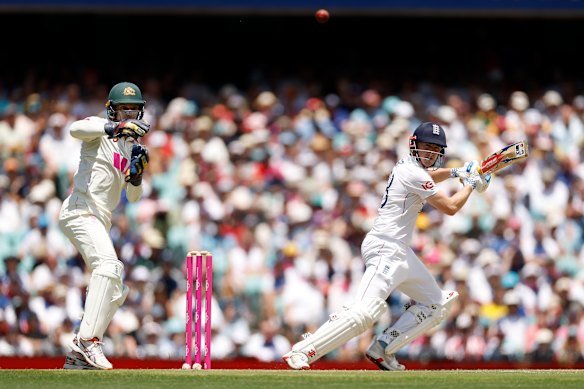
Harry Brook was his usual flamboyant self on day one in Sydney.Credit: Getty Images
On the field, Sunday’s play began along well-grooved lines. Ben Duckett swished and thrashed on the up, his approach looking magnificent when it came off and deeply flawed when, inevitably, it didn’t. English reactions weren’t disappointed so much as weary.
As the Australian bowling knuckled down, Zak Crawley and Jacob Bethell tried to build innings but were undone by good deliveries. By the end of the first hour, there were shivers of another brief affair.
The partnership between Joe Root and Harry Brook also followed the pattern set earlier in the series: the outcome only showed the fineness of the line between one narrative and its opposite.
The Australians probed Root relentlessly on his fourth-to-fifth stump weakness. It’s a percentage play that has got him out enough over time for them to keep repeating it. This time, however, he met and defeated the challenge. He played with an open face, he played away from his body, and he played the ball safely into space.
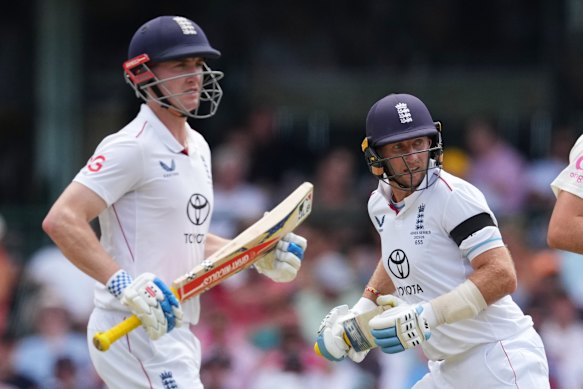
Harry Brook (left) and Joe Root combined for long-overdue runs in the middle order.Credit: AP
His method had the same thin margin of error as always, but on this day the margins worked handsomely in his favour. What microscopic variations in timing there are between success and failure; this time, success was Root’s. He smiled often. His batting and his demeanour appeared just a little more relaxed than usual in Australia.
Harry Brook, meanwhile, played like Harry Brook. He waited a little longer than usual before backing away and trying to swat a forehand drive towards somewhere only for it to go somewhere else. Steve Smith set a leg theory field for him, Starc pitched short and Brook took the bait. In earlier games his approach resulted in stupid dismissals. This time the ball dribbled off the end of the bat to mid-on or lobbed between fielders rushing in like seagulls for a chip.
Loading
Brook survived. He cracked some fine boundaries. I don’t know if that makes him less stupid than he was on those other occasions when the same approach got him out.
The last telltale sign of Sydney’s festivus was that the day’s play, which paused for some light rain and distant thunder just before tea, did not resume. The sky brightened, the radar showed that the rain had gone, the umpires came out and took a look, and even though more than an hour remained, the answer was yeah, nah, let’s come back tomorrow.
If this were a match that Australia needed to win, the departing crowd might have been less good-
natured. But forget it Jake, it’s Sydney town. They’re used to it. These Ashes might be over, but life goes on.
Most Viewed in Sport
Loading