3 months ago
29
3 months ago
29
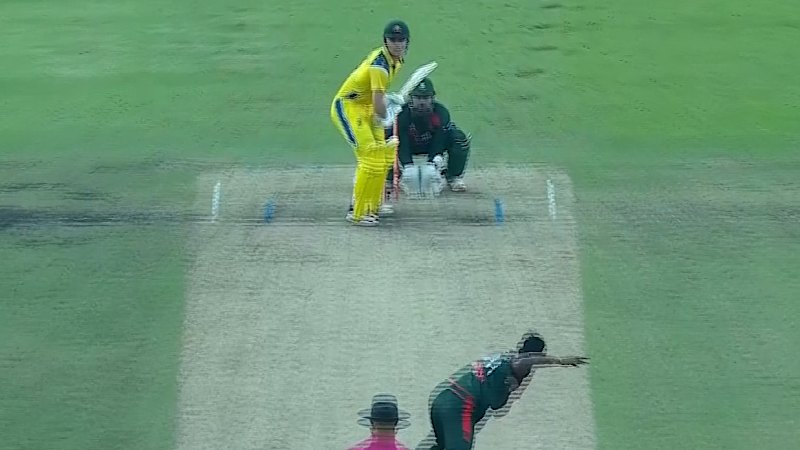
Cricket New South Wales announced Greg Shipperd’s sacking as coach at the end of last month. Just over a fortnight later, Australia were humiliatingly eliminated from the Twenty20 World Cup at the first hurdle. The two events are more closely related than you might think.
After a summer enjoying England’s Ashes misery, Australia’s early departure from the T20 World Cup alongside the likes of Namibia, Italy and the USA is a sobering reminder of what could be to come.
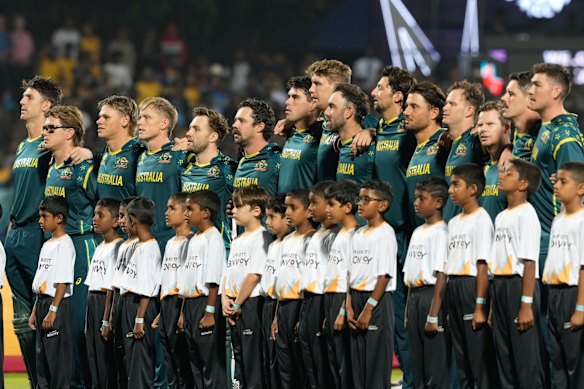
Australia bowed out of the T20 World Cup in the group stage.Credit: AP
While an ageing Test team continues to win, Australia’s white-ball sides have become the canary in the coal mine. Could early World Cup exits become the norm rather than the exception?
These are the formats used by selectors to introduce players to international cricket. With the priority given to the Test team in a cramped schedule, this is shrewd management. But the results are concerning.
Since the 2023 World Cup triumph, Australia’s win-loss ratio is just above 50 per cent with 11 wins from 21 games.
Loading
The T20 side crashed at the wrong end of the World Cup cycle.
It would be a mistake for the review of Australia’s wretched campaign to recommend prioritising T20 – even with a home World Cup to come in 2028.
Of the three formats, the Australian public has the lowest emotional connection to the T20 team, even if this is at odds with global attitudes and the game’s commercial future.
Cricket Australia need not fixture more T20 matches. There are ample opportunities already for Australian cricketers to play the shortest form of the game – and line their pockets – in the IPL and other domestic competitions.
Form slumps, injuries and, in the case of Steve Smith, questionable selections, crippled Australia’s tournament, but there should be embarrassment in failing to beat Sri Lanka, Zimbabwe, Oman and Ireland out of the group.
The reality is Australia does not have the depth of talent to be competitive in all three formats of the game – and NSW is central to the problem.
Chairman of selectors George Bailey and his panel have been regularly criticised for not blooding enough young talent in the Test team, but the reality is the next generation are not yet up to the required level to replace Smith, Pat Cummins, Mitchell Starc, Josh Hazlewood and Nathan Lyon. Shield stalwarts Scott Boland and Michael Neser answered the Ashes SOS, not Gen Next.
There are high hopes for pups like Sam Konstas, Ollie Peake and Campbell Kellaway, but they need time.
It’s the age bracket in between, from 25 to 30, that should be challenging for spots but isn’t. Of the 51 players to have played for Australia in any format since the 2023 World Cup, 17 are from this demographic, and none can be considered a lock in any team. It’s becoming a twilight zone.
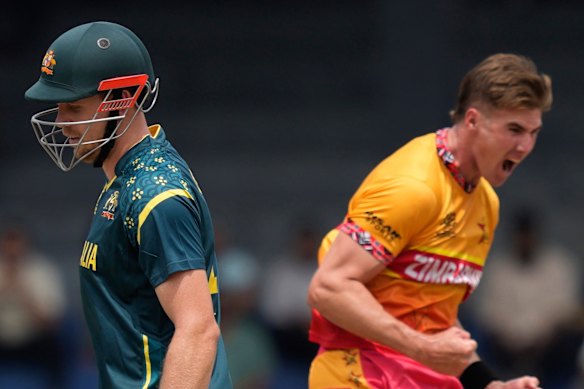
Cameron Green is struggling in all forms of the game.Credit: AP
All-rounder Cameron Green, 26, is the pin-up for this group, but his career has hit a crossroad to the point his position in the XI in all three formats is up for grabs. Jhye Richardson is international class but injury prone.
Matt Renshaw, 29, is coming again but has not realised the promise he showed as a newcomer almost 10 years ago. Nathan McSweeney (26) was found out as a Test batter last season against India. Aaron Hardie (27) has not taken his chances in the white-ball arena, though injuries have held him back.
The list goes on with the likes of Will Sutherland (26), Spencer Johnson (30), Lance Morris (27), Xavier Bartlett (27) and Matt Short (30), though short-form specialist Tim David has forged a successful career on the T20 circuit.
Of the 17 aged from 25 to 30, only two – Jack Edwards and Josh Philippe – are from, or represent, NSW. Cricket NSW’s boast that it’s the “most successful state, province or county in world cricket” rings hollow.
The state that gave Australia Mark Taylor, the Waugh twins, Glenn McGrath then Brett Lee, Michael Clarke and Brad Haddin, and the last sky-blue wave of Cummins, Hazlewood, Starc, Smith, David Warner, Usman Khawaja and the late Phillip Hughes has stopped producing world-class men’s cricketers, let alone great ones.
Of the 33 Test debutants since Hazlewood received his baggy green in 2014, only four played for NSW at the time – Peter Nevill, Kurtis Patterson, Nic Maddinson and Konstas. None have reached 20 Tests, though Konstas has time on his side. So much for David Hookes’ famous quip about NSW players getting a baggy green in a brown paper bag when they are presented with their baggy blue.
It goes beyond the playing ranks. Queensland, Western Australia and Victoria have produced the last three national men’s coaches.
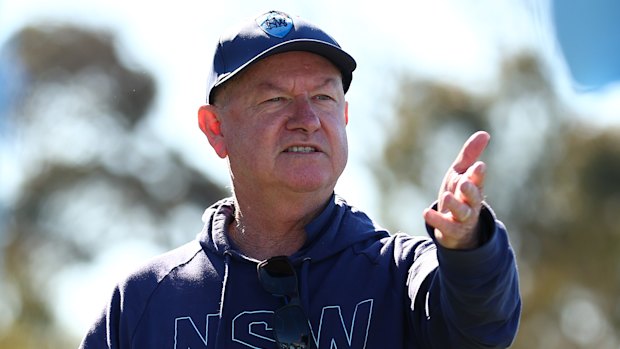
Greg Shipperd will finish as NSW’s coach at the end of this season.Credit: Getty Images
Shipperd’s contentious axing, a move chief executive Lee Germon said he drove, received far from unanimous support within Cricket NSW and the dressing room.
The views of former Blue and Sydney Sixers stalwart Stephen O’Keefe, who was savage in his criticism of Cricket NSW to News Corp, were widely shared by senior players. Not consulted by Germon, they were blindsided, according to two industry sources with knowledge of the issue who spoke on the condition of anonymity. One of those sources said cricket boss Greg Mail was also not in favour of the decision. His name was absent from Cricket NSW’s statement announcing Shipperd’s fate.
Cricket NSW declined to comment when contacted by this masthead.
Even those in club ranks who believed Shipperd’s time was up were critical of Cricket NSW’s removal of him just seven months after extending his contract by two years to the end of next season.
NSW’s issues go well beyond Shipperd, the state’s fifth coach in 15 years, but are now being felt nationally.
Unless something changes, it won’t be long until Australia fumble more important trophies than a T20 World Cup.
Most Viewed in Sport
Loading