3 months ago
27
3 months ago
27

February 20, 2026 — 11:00am
Ever since streaming began its decade-long disruption of the television landscape, “the algorithm” has ruled the kingdom. Reams of audience data, based on viewing choices, duration of attention and second-screen activity, have been used to guide content creation on most streaming platforms.
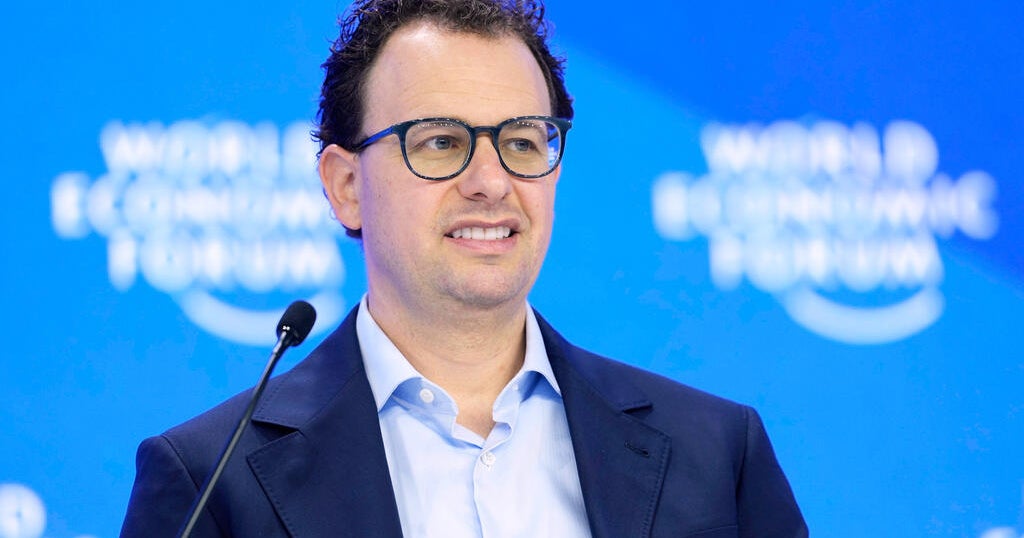
But as the streaming business slowly reorganises – Paramount and Netflix are both in pursuit of Warner Bros, there is a shift to focus on profitability over scale, advertising has been introduced to subscriber-tiers and platform “bundling” is on the rise – Apple’s senior vice-president of services Eddy Cue is comfortable declaring the algorithm dead.
“You can’t truly innovate by looking at customer data,” Cue says. “There’s a great line that I’ve always loved from Henry Ford, which is if he had asked customers what they wanted, the answer would have been a faster horse [and not a motor car].
“That doesn’t mean you ignore the audience,” Cue says. “You bet we look at it, and it’s a scorecard that you can look at and see, and you need to pay attention to it, but it can’t be the end-all. You have to have the guts to take the risk and the feel for something that may not make sense from a data point of view.”
As the head of Apple’s “services” portfolio, Cue reports to CEO Tim Cook, and manages Apple TV and Apple Music. Speaking to this masthead at a presentation to unveil Apple’s 2026 content slate, Cue said Apple’s ambition was “not to be the most, but to be the best. It’s part of our DNA. If you’re going to do something, really do it because you think you could be the best in it”.
That said, the company is atypical for a streamer. For its rivals, including Disney, Netflix, Stan and Warner Bros-owned HBO, content is the single silo. But for Apple, and also Amazon, content is a parallel business. Amazon is primarily an online department store, and Apple is a technology manufacturer, albeit one with a noticeable cultural footprint and a consumer ecosystem.
In the last few years, most of the major streaming platforms have introduced lower-priced, ad-supported tiers, to amplify revenue. To reduce churn and manage high subscription costs, streamers in the US are now bundling services together. And almost all the major streaming platforms have now pushed heavily into sports rights, mimicking traditional cable and free-to-air broadcasters.
In the midst of those shifts, Cue believes the road map to success is built on giving projects the time to find their creative feet. “I remember asking Steve Jobs, when he was running Pixar, why are all the Pixar movies huge hits? He said, ‘because we don’t put them out until the story is perfect’. It’s all about the story first and foremost.”
Apple TV aspires to the same approach, Cue says. “When we started, we said we’re going to get the best stories, we will get the best people in the business, whether it’s an actor or writers, we will create this environment where they could do their best work,” he says.
“If we do that, I don’t think it’s changed from when I was a little kid and I watched The Godfather, or when I was watching Everyone Loves Raymond or Friends back then, to what we’re trying to do, which is to tell stories that are amazing, that are the best in the world.”
Streaming may have rebuilt the back end – “[we] distribute it differently, how you pay, all these different things that are changing – but it does not alter the strategy, Cue says. “It’s hard to tell amazing stories that are the best shows on television or the best movies. That’s what we aim for. That’s our north star that we go for.”
Despite the proliferation of platforms in Australia, the emergence of Australian streaming content has actually been relatively slow. Stan, owned by Nine, the owner of this masthead, is the most prolific local drama producer in the streaming space, with a slate that includes Scrublands, Wolf Like Me, Bump, Black Show, Bad Behaviour, Wolf Creek and many others.
But the space is expanding: Last Days of the Space Age and The Artful Dodger (Disney), The Lost Flowers of Alice Hart and The Narrow Road to the Deep North (Amazon), and Boy Swallows Universe, Heartbreak High and Territory (Netflix) are among the most recent local dramas on other platforms. Apple TV’s Shantaram was an American-Australian co-production. The Dispatcher, starring Patrick Brammall, was filmed in Victoria and is likely to air this year.
To some extent, there is an expected uplift in local production following new legislation, passed in November, forcing major streaming platforms with over 1 million subscribers in Australia to invest 10 per cent of their local expenditure (or 7.5 per cent of local revenue) on Australian content, specifically drama, comedy, children’s TV, documentary or arts programs, and excluding news and sport.
Which means attention will inevitably turn to Apple TV’s wider local commissioning plans. According to Cue’s colleague, co-head of worldwide video Jamie Erlicht, Australia is viewed internationally as one of the “few countries that are really driving in that cultural exploration of filmed entertainment. Australia is always in the top conversation”.
Erlicht’s co-head of worldwide video, Zack Van Amburg, says Apple’s slate is defined by “stories that resonate more deeply, because it is [about] characters who are on a journey, and that journey tends to be an emotional one.
“One of the things that Apple does, as a true north star, is focus on humanity. How are we showing up? How are we enriching people’s lives?” Van Amburg adds. “We use that as a sort of keyword to everything we do. Even when it’s animated, even when it’s something in the natural history space.”
At this point, Apple has not unveiled a wide Australian “slate”, even as it showcases a 2026 content slate in Los Angeles that includes a 10-part reimagining of the classic thriller Cape Fear, starring Javier Bardem and Amy Adams, Margo’s Got Money Troubles, a drama from David E. Kelley, starring Elle Fanning, Michelle Pfeiffer and Nicole Kidman, the original film Outcome, starring Keanu Reeves, Cameron Diaz and Jonah Hill, and broadcast rights to Formula 1 racing.
But more locally produced content is inevitable, propelled in part by legislative pressure that will slowly come to bear. Slowly, because the quota, like the free-to-air TV drama quota, is triennial, which is to say, what you don’t do in year one and two, you’re allowed to make up for in year three. It gives broadcasters and platforms room to move, but it also causes boom-and-bust cycles in commissioning.
“I think we’ve set a bar for us that’s extremely high, whether it’s a show like Slow Horses, which if you looked at the first episode of that you would have said, oh, that’s just a show for the UK,” Cue says. “The reality is that that’s very hard. It’s way easier to do the things that don’t travel. The challenge is find the great stories that are going to resonate with people around the world.”
Find out the next TV, streaming series and movies to add to your must-sees. Get The Watchlist delivered every Thursday.