2 months ago
52
2 months ago
52

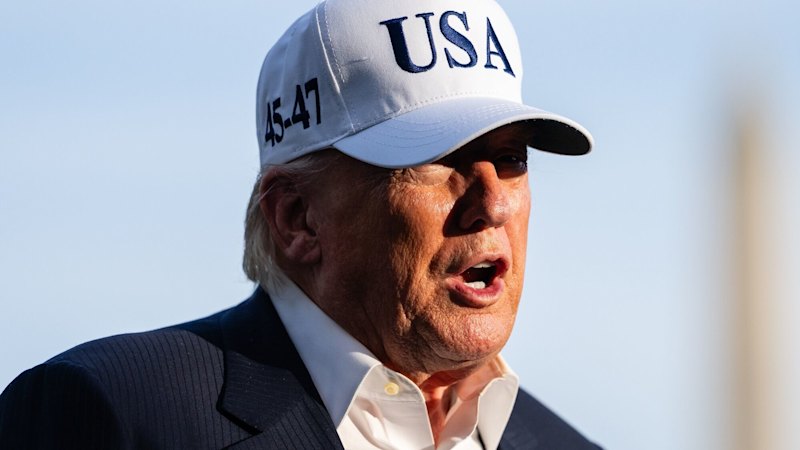
I was waiting at Starbucks in a Las Vegas hotel when the alert came through: Donald Trump posted on Truth Social that Ayatollah Ali Khamenei, the Supreme Leader of Iran, was confirmed dead.
There was no visible reaction in the casino, where the slot machines kept flashing, and the huge television screens at the Dawg House saloon remained fixed on men’s basketball and women’s tennis.
There is probably nowhere in the United States more insulated from the death of Khamenei than Las Vegas.
But this is a seismic moment for the world, and the US in particular. One of the country’s most persistent and dangerous enemies – “one of the most evil people in history”, Trump said – has been eliminated.
Nearly 50 years after the Pahlavi dynasty was overthrown in the Iranian revolution, regime change has again come to Tehran – to what extent, we don’t yet know.
And it’s not just Khamenei. Those killed reportedly include Islamic Revolutionary Guard Corps commander Mohammad Pakpour, Iranian Defence Minister Amir Nasirzadeh, and the secretary of Iran’s Supreme National Security Council Ali Shamkhani, among other senior officials.
“The people that make all the decisions, most of them are gone,” Trump told NBC News.
This was a regime responsible for exporting “death to America” around the globe. When he announced the attack, Trump ran through a list of misdeeds by Iran and its proxies against America, including the violent takeover of the US embassy in Tehran in 1979 and the Marine Barracks Bombing in Beirut in 1983.
Such attacks continued to this day, Trump said, although it is widely recognised that Iran and its network of regional proxies, including Hamas in Gaza, Hezbollah in Lebanon and the Houthis in Yemen, were already severely weakened.
That weakness – along with economic turmoil in Iran – prompted long-suffering Iranians to take to the streets en masse earlier this year, calling for the end of the Islamic theocratic regime. Trump and Israeli Prime Minister Benjamin Netanyahu seized the opportunity to rid themselves of a mutual enemy.
Middle East expert Aaron David Miller says Americans will not see this as the Trumpian equivalent of killing Osama bin Laden, who directly murdered 3000 of their fellow citizens.
He agrees that Khamenei’s assassination, taken with Israel’s killing of Hezbollah leader Hassan Nasrallah and Hamas’s October 7 mastermind Yahya Sinwar, is historically significant. But it’s what happens next that counts.
“Removing the hardest of hardliners can’t answer the mail when the structures that created them continue to endure,” Miller says. “It’s the day after problem in Iran, Lebanon and Gaza.”
In an analysis for Foreign Policy magazine, journalist and University of London research affiliate Ali Hashem argues Iran is built to withstand the Supreme Leader’s assassination. The constitution explicitly plans for it, directing that power immediately transfers to an interim council comprising the president, the head of the judiciary and a senior cleric selected by the Expediency Discernment Council.
“The Islamic Republic is not just a personal regime with religious language,” he wrote. “It is a revolutionary system that has invested heavily in planning for leadership changes. When under pressure, its structure is designed to pull together rather than fall apart.”
British author and war correspondent David Patrikarakos says that while the removal of Khamenei is “huge”, it is not necessarily decisive if he is replaced from within the regime. However, the assassination could trigger mass defections.
“These types of events create uncertainty at the top, which creates opportunity as senior figures start to hedge,” Patrikarakos said on X. “Trump knows this, and he’s spoken openly about offering immunity and inducements to regime insiders.”
If the defections come, Patrikarakos said, it would represent the first genuine crack in the system. “If not, then it’s an extraordinary assassination, but not much beyond that.”
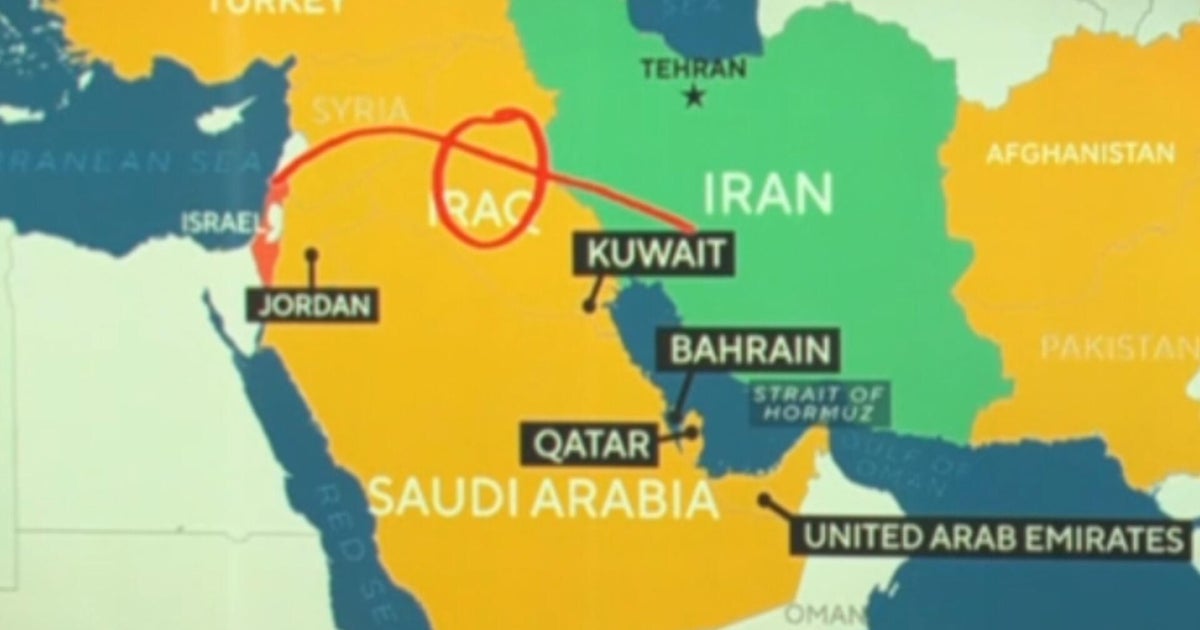
Vali Nasr, one of the world’s leading Iran experts, said before the Ayatollah was confirmed dead that Iran would seek to absorb the US and Israeli attacks, hold its position and wait for worried Arab nations to try to mediate a ceasefire. Khamenei’s death complicates that plan.
Some US partners have signalled deep displeasure about the strikes. Oman Foreign Minister Badr bin Hamad Al Busaidi, who was deeply involved in mediation between the US and Iran, said he was dismayed that the negotiations had been undermined. “I urge the United States not to get sucked in further,” he said. “This is not your war.”
At this stage, Trump appears to have put another notch in his belt of daring military conquests that were successfully executed despite grave doubts. It could all go pear-shaped, but Iran is weak, and its actions in the immediate aftermath of the strike – lashing out with drone attacks on neighbours – look pathetic, risk further retaliation and have united much of the region against it. That includes appearing to mend a serious rift between Saudi Arabia and the UAE.
It also follows Trump’s surgical bombing of Iran’s nuclear facilities in June and his brazen mission to capture Venezuelan leader Nicolás Maduro in January. With the US military at your disposal, it turns out that if you really want to, you can just do stuff.
Trump made a point of this in his video address. “No [previous] president was willing to do what I am willing to do tonight,” he told the people of Iran, adding that it was now up to them to respond.
He has pledged the bombs will keep falling this week: an acknowledgement that the regime is not yet vanquished.