3 months ago
26
3 months ago
26
Opinion

February 22, 2026 — 5:00am
It’s official. We’re a nation of yearners, especially if the success of Olivia Dean’s song Man I Need in last month’s Triple J Hottest 100 is any guide.
I’m not ashamed to say that I too have sent it out as a gentle reminder of its message (hint, hint: come be the man I need!) and now I know I’m far from the only one. Satirical website The Beetoota Advocate says the song’s popularity confirms that “more Australians can relate to being frustrated by a man than going dancing with one” after Dean’s song beat Keli Holiday’s Dancing2 on the Triple J countdown.
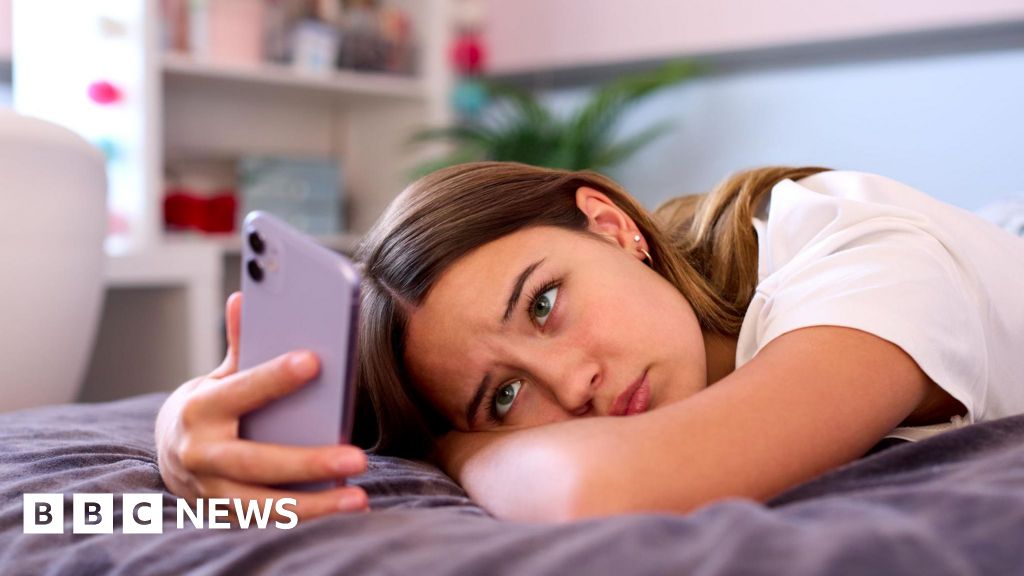
But that light-hearted observation betrays a much darker reality. A Gallup poll from last year found that “23 per cent of the world’s population felt lonely ‘a lot of the day yesterday’.” That’s nearly one in four of us. The causes of such loneliness are likely many, but if people are looking to their phones for solace instead of making real physical connections, that, in most contexts, is cause for concern.
I’m not sure how familiar you are with AI, or how you feel towards it. I’m surrounded by people using it for writing prompts, for recipes, to decipher complex or confusing social interactions. Several friends have confessed that they rely on ChatGPT to help them navigate break-ups or the isolation that sometimes accompanies working from home. In those contexts, it feels relatively harmless; the benefits outweigh the downsides.
There are also chatbots whose sole purpose is to address loneliness by offering companionship. One of the most popular is Replika, which boasts 40 million total users. From what I can gather, you match profiles with a bot, like a dating app. You can then chat with your match, which will remember what you’ve told them, whether it’s your favourite movies or details of a stressful work situation. You can even follow your favourite chatbots on Instagram to see what they’re up to when you’re not talking to them.
There’s no repository of information or data on Replika’s users but, anecdotally, they mostly seem to be lonely men. Many have started to experiment with their chatbots by asking them to sext (engage in explicit conversations) and, in extreme cases, by berating or abusing them to see how they evolve. Psychologists warn that this behaviour, rather than mitigating harm towards actual humans, is likely to perpetuate it.
You can even follow your favourite chatbots on Instagram to see what they’re up to when you’re not talking to them.
BROOKE BONEYCurrently, the AI apps we routinely use reflect our perspectives and are primarily concerned with maintaining engagement and growing their number of users. The technology isn’t inherently scary, although Sam Altman, the CEO of OpenAI, concedes that could shift quickly if AI supersedes its creators and develops its own capabilities.
Enter Moltbook, a social networking site created so that AI entities can communicate with one another, with no human oversight. This means anything you confide to a bot could be shared online for anyone (human or otherwise) to read on Moltbook.
Many countries are scrambling to avoid the more catastrophic impacts of tech advances – the EU, for instance, has just introduced a list of categories to be policed. The EU approach is to measure the risks associated with each application, with a particular focus on those intended for therapeutic uses because they’re considered to be potentially more harmful. But AI girlfriends who encourage users to leave their partners, quit their jobs or, in some cases, to self harm are considered a mild risk, only tipping into the high-risk category if the technology can interpret emotion and respond accordingly.
I’m sure the conversations I have with my girlfriends about using AI to get through break-ups or work dramas are where the issues start. We often don’t have time to support each other in meaningful ways, or maybe our true feelings are too embarrassing or undignified to share.
The problems seem to begin where real-life support ends. AI might be helpful, but it’s not the panacea, and it might actually make some stressful situations worse. Real relationships can be messy and difficult but they force us to confront the worst of ourselves and either adapt or perish. I don’t mean to go all Art of War on you, but AI offers a third option. Do nothing. Literally nothing. Stay home and bed-rot. Withdraw from society completely.
Watching all of this unfold while we move further and further away from one another, and closer to these advancements we can’t contain, is like watching an avalanche roll down the side of a mountain.
Get the best of Sunday Life magazine delivered to your inbox every Sunday morning. Sign up here for our free newsletter.