3 months ago
26
3 months ago
26
Western Australia’s peak business networks have singled out reliable and affordable energy as the key to unlocking the strength of the state’s economic future.
Following a recent report showing WA has the potential to overtake Victoria as the second-strongest economy in the nation by 2040, the WA Chamber of Commerce and Industry and the WA Chamber of Minerals and Energy both pointed to how the state navigates the energy transition as a key challenge over the next 15 years.
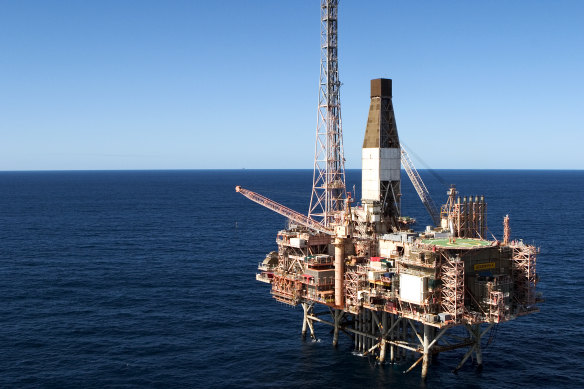
The Australian Energy Market Operator’s 20-year outlook on WA’s gas system predicted the state will be well served with gas for energy production until 2030.
According to WA 2040 Vision – a strategic long-term economic report for the state prepared by Oxford Economics Australia with the UWA Public Policy Institute – WA has the potential to be Australia’s second-largest economy with a population of more than four million, if it can reach the same annual growth rate of the last 25 years.
However, the report states that WA must grow its renewables fleet from roughly 2GW today to more than 55GW of new capacity by 2040.
“This presents both a challenge in renewables build-out but also an opportunity to develop industries supporting the clean energy transition,” the report states.
Loading
New Chamber of Minerals and Energy chief executive Aaron Morey said WA’s historic energy cost advantage was one of the key reasons the state was able to attract the scale of investment that produced the resources sector it has today.
“Without competitively priced energy, WA will struggle to maintain its existing industrial base, let alone attract new energy-intensive pursuits like critical minerals processing and advanced manufacturing,” he said.
“For that reason, it is vital both affordability and reliability remain front of mind throughout the energy transition.”
The WA 2040 Vision report also recommended long-duration storage and battery systems are phased in from the early 2030s, ensuring grid stability as variable renewables scale up.
CCIWA head of policy Dr Anthea Wesley said the state’s economy has been buoyed by strong commodity prices, low unemployment, strong migration and government investment in major infrastructure projects.
“The WA Government has a strong focus on diversifying the economy beyond mining and there are huge opportunities for WA in other sectors like defence, data centres, life sciences, clean energy, agriculture, to name just a few,” she said.
“How the WA economy navigates the energy transition will be a key challenge over the next15 years. It’s vitally important that we get the policy settings right to ensure WA businesses and households have access to reliable and affordable energy.
“Without secure and affordable energy, WA industries would not be able to exist.”
However, Wesley added while reliable and affordable energy was critical, it was also vital that WA’s regulatory regime worked to support and enable investment in the state.
Loading
“Timely approvals, investing in development-ready strategic industrial areas, and a more competitive payroll tax regime are key to making WA the best place to do business,” she said.
While the report showed WA has outpaced all other states with real gross state product growth of 3.8 per cent every year since 1999, it also added that WA required an 18-fold expansion in renewable energy capacity to support industry with sustainable and affordable energy supply over the next decade.
Just last week, the Australian Energy Market Operator’s 20-year outlook on WA’s gas system predicted the state would be well served with gas for energy production until 2030, when the state will be short 11 terajoules of gas daily.
That supply gap will grow to 82 terajoules a day in 2035, and to 478 terajoules daily by 2045, which AEMO said was driven by “declining production from existing, committed and anticipated gas fields”.
Additional challenges include overcoming constraints on housing markets and tight labour markets, while the state’s research and development investment lags the nation’s average.
Wesley said the CCIWA wanted to see investment in core common-user infrastructure, including utilities, as well as transportation infrastructure to create turnkey strategic industrial sites.
“To support and enable the latest technological advances, an investment in data centres will also be important,” she said.
“Housing across the state will also be critical to house the workers needed to support this growth.”
Most Viewed in National
Loading