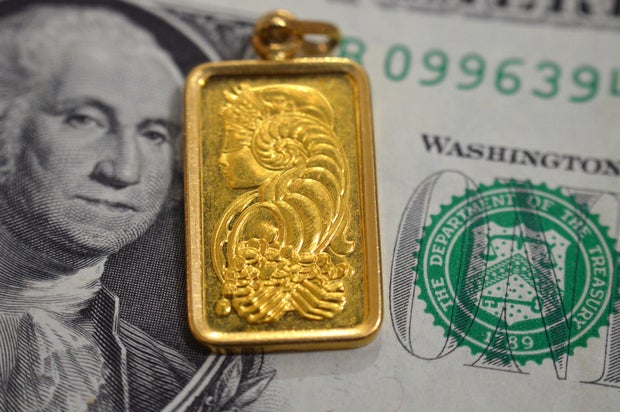
 With gold prices as high as they are right now, it makes sense to know the actual cost of a gram of 24 karat gold.
Tamer Soliman/Getty Images
With gold prices as high as they are right now, it makes sense to know the actual cost of a gram of 24 karat gold.
Tamer Soliman/Getty Images
Gold has never been a particularly quiet asset, but what's happening right now is something that even seasoned investors are struggling to fully process. The precious metal, which spent most of the last decade hovering in the $1,200 to $2,000-per-ounce price range, has blown past every ceiling analysts once thought was a stretch — and it doesn't appear to be slowing down. Case in point? For those who remember buying gold at pandemic-era prices, today's gold market looks almost unrecognizable.
The forces pushing gold prices higher aren't random or speculative, either. They're structural. Central banks around the world have been buying gold at a rapid pace, quietly shifting reserves away from dollar-denominated assets. Geopolitical tensions have simultaneously sent investors scrambling toward safe-haven assets and gold is one of the most trusted hedges in moments of uncertainty. Add in inflation concerns and a complicated Federal Reserve policy backdrop into the mix, and you have a recipe for an uptick in gold demand.
That kind of sustained price movement also makes investors want in. But with gold prices as high as they are, it also makes sense to know what it would actually cost to buy a gram of 24 karat gold right now.
Find out how to add gold to your investment mix now.
What does 1 gram of 24K gold cost in today's market?
With the price of gold sitting at $5,408.26 per ounce (as of March 2, 2026), one gram of 24 karat gold, which is the highest level of purity (99.9% pure), would currently be worth approximately $173.90. That figure is derived by dividing the per-ounce price by 31.10 — the number of grams in a standard troy ounce, which is the unit gold has been priced in for centuries.
That means if you were buying a gram of unadulterated gold bullion today, the base material itself is worth roughly that amount. There are a few things worth underscoring, though:
- Spot price does not equal retail purchase price. If you're buying a 1-gram gold bar from a precious metal dealer, you'll typically pay more than the spot price due to dealer premiums, fabrication costs and distribution expenses. Small gold bars often carry higher percentage markups than larger bars.
- Gold prices fluctuate. Gold is traded around the clock, and its value can change in response to a range of factors, including macroeconomic news, currency moves, inflation expectations, central bank policies and geopolitical events.
- Different gold sources can show slightly different numbers. Because prices update constantly and different dealers calculate their numbers independently, you might see slight variations if you check other live price feeds. However, the about $170 per gram figure is a reasonable snapshot of the market right now.
What this means in practice is that if you were to walk into a gold dealer and ask for 1 gram of pure 24K gold bullion today, you'd be looking at paying in that ballpark for the metal itself, before adding on any dealer premiums.
Start protecting your investment portfolio with gold today.
Is this a good time to invest in gold?
While no one can guarantee where gold goes next, there are a few reasons why it could make sense to buy in now. The first is that gold has historically served as a hedge against economic uncertainty. When inflation remains sticky, central bank policy feels unpredictable or equity markets swing sharply, gold often benefits from investors seeking stability. And, in today's unusual economic landscape, using gold for this purpose could pay off.
Gold can also provide portfolio diversification, which is crucial in today's market. It doesn't move in perfect lockstep with stocks or bonds, and that difference in behavior can help smooth volatility in a broader investment mix, especially for investors concerned about preserving capital.
Accessibility matters, too. With gold priced at about $170 per gram, investors can enter gradually, even at today's higher per-ounce price. Buying smaller gold increments makes it easier to build a position without committing large sums all at once, which can be appealing in an uncertain rate and market environment.
Global demand trends — including central bank purchases and sustained interest in physical bullion — also continue to support the metal's long-term appeal. While short-term pullbacks are always possible, gold's role as a store of value hasn't faded.
That doesn't mean gold should dominate your portfolio, though. It doesn't directly produce income or dividends, and its price can be volatile in the short term. But for investors looking to add a stabilizing asset, there is a reasonable case to be made for including gold in your investment mix currently.
The bottom line
At $5,408.26 per ounce, one gram of 24K gold will cost you approximately $173.90 at spot — and likely more once dealer premiums are factored in at retail. That number reflects a market reshaped by central bank demand, persistent geopolitical risk and years of structural inflation pressure. Whether you're buying a single gram as an introduction to precious metals or building a more substantial position, though, it could make a lot of sense to start adding gold to your portfolio now.
Edited by Matt Richardson