3 months ago
15
3 months ago
15
Western Australia has never faced bushfire conditions like those that fuelled the Los Angeles fires earlier this year, which killed 31 people and razed 17,000 buildings – but it isn’t out of the realms of possibility.
And now, one West Australian researcher is investigating the devastating LA Palisades and Eaton fires to see whether there are lessons to better prepare the state’s communities for bushfires.
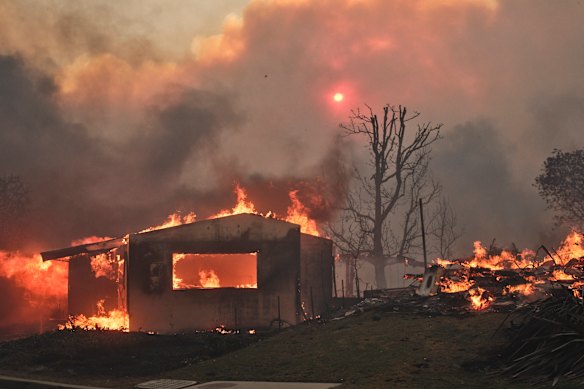
Homes ablaze in the Pacific Palisades area of Los Angeles on January 7.,Credit: Philip Cheung/The New York Times
Department of Fire and Emergency Services intern Anna Durkin’s research into some of Perth’s worst bushfires has already found they didn’t have the high wind and low humidity precursor conditions that made the LA fires and other major Australian bushfires like the Black Saturday fires in 2009 so bad.
“Perth hasn’t really faced a fire under those conditions with very high wind speeds and very low humidity, the levels which they found in LA, which led to that catastrophic type of fire,” she said.
“The seasonal winds that they get in LA, you get those high winds more frequently than you would get in Perth, based on the research I’ve done so far.”
Loading
However, Durkin said those conditions could occur in WA and her ongoing research, using funding from Natural Hazards Research Australia, is looking at how to reduce the quick spread of a major fire in urban areas like what occurred in LA.
Durkin is aiming to identify the strengths and weaknesses of WA’s bushfire preparedness.
She said four aspects impacted the spread of fires: the connecting fuels between homes like hedges and wooden decks; the materials used in homes; how far apart the homes were built; and how far embers flew beyond the fire front.
Perth’s love of double-brick homes was a positive.
“In Perth, there is a lot of double-brick, it is a very common housing material in Perth, which is a bit more unusual compared to other cities, and it could make it slightly more robust, but you’ve got to factor in those other elements as well,” she said.
Durkin said WA’s prescribed burning program also helped reduce fuel loads in dense bush areas.
Despite occurring in winter, the LA fires came at the end of months of drought, and were driven by the Santa Ana winds, which reached up to 160 kilometres an hour in some parts of the state.
The fires started on January 7 and took until the end of the month to contain. They forced the evacuation of 179,000 people.
Emergency Services Minister Paul Papalia said the research would be helpful for WA first responders.
“Our first responders are using international insights to strengthen their knowledge of bushfire risk, which can only help Western Australians,” he said.
“It is critical we use every opportunity to not only learn from events of the past, but also look to what could happen in the future to ensure we are prepared.
“These groundbreaking insights will help with the complex challenges of managing the largest emergency services jurisdiction in the southern hemisphere.”
Durkin expects to conclude her research next month.
Most Viewed in Politics
Loading