3 months ago
9
3 months ago
9
Opinion
November 20, 2025 — 3.30pm
November 20, 2025 — 3.30pm
With a lifespan of typically just five months, Labord’s chameleon, native to southern Madagascar, is among the world’s shortest-lived creatures. That record might be under threat.
In recent days, the Victorian Liberal leader Brad Battin has been ousted. The position of his NSW counterpart, Mark Speakman, is vulnerable. And NSW Nationals leader Dugald Saunders has resigned, giving way to Coffs Harbour MP Gurmesh Singh.
Meanwhile, federal Liberal leader Sussan Ley maintains, at best, a tenuous grip on her job as her party wrestles with internal rifts and poor polling.
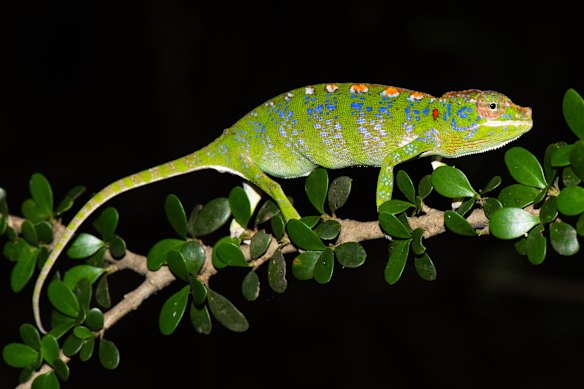
Madagascar’s Labord’s chameleon: does it have a challenger for the world’s shortest-lived creature in the Australian political leader?Credit: Alamy Stock Photo
Until recently, it seemed Australian politics had shaken off the turnstile leadership tussles of the Rudd-Gillard-Rudd and Turnbull-Abbott-Turnbull years. Not so.
Loading
The current political “killing season” has ushered in widespread changes in party stewardship. This pattern has consequences for the quality of opposition and governing parties alike.
Speakman is one of NSW’s few remaining long-haul politicians. He entered parliament at the 2011 election and has championed a “constructive and collaborative” tone in government and in opposition. As his party looks to the March 2027 election, the prospect of a leadership spill is now being openly considered.
Fifteen years of parliamentary hard graft didn’t save Brad Battin in Victoria. More strident and reactive than Speakman, Battin nevertheless came with similar ministerial and shadow cabinet experience. With first-term moderate Liberal MP Jess Wilson taking the reins after a meteoric rise, Victorians will have little more than a year to get to know her and her plans for the state before they go to the polls.
Like chameleons, Australian political parties have the ability to change their appearance to suit circumstances, or even just to ensure survival. Leadership change, ahead of detailed policy alternatives, is again emerging as the preferred way to do that.
Loading
There was an era when time was more than a grace granted opposition leaders; it was viewed as essential to building trust with the electorate. In some cases, long stints in opposition proved highly effective apprenticeships for lengthy and successful terms in office.
The longest serving, and first, NSW Liberal premier, Sir Robert Askin, weathered more than five years as opposition leader, including an election loss, before beginning, in 1965, his nearly 10-year stint as premier. Liberal premier Nick Greiner took more than five years as opposition leader to whittle down 12 years of seemingly unassailable Labor rule under Neville Wran, then Barrie Unsworth. Greiner credited his success to the “positive vision” he had licence to articulate from opposition. This, he said, differed from “most oppositions who get elected … with either a small-target or a big-negative approach”.
Labor’s Bob Carr forged a similarly optimistic agenda during his nearly seven years of fronting the NSW opposition. He went on to lead the state for more than a decade, pursuing conservation reforms and public-private partnership models that still shape contemporary politics.
Impactful leadership doesn’t magically begin on taking office. Opposition has proven a formative arena for many of our most resonant leaders. But it requires patience on the part of colleague MPs understandably restless at their exile from government benches.
Loading
With invention, ego and invective permeating global politics, Australians should consider what makes our system different. We ought to be prizing humility and conviction in our political leaders.
Carr remarked in a diary entry made upon taking up the party leadership that he “felt like a doomed man”. Leading a party through the wilderness can be a thankless task. But it has been the making of many of our greatest premiers and best prime ministers.
Bill Hayden is perhaps chief among the few exceptions to this rule. Having taken the helm of federal Labor amid the post-Whitlam wreckage, Hayden set a platform for what would prove, in time, one of the nation’s most transformative periods of government. As opposition leader, Hayden restored Labor’s economic rigour and built a talented team that would eventually realise the party’s generational reforms. His focus on fiscal discipline was balanced by a commitment to social equity.
Never comfortable with the media, nor an easy communicator, Hayden was compelled by colleagues to make way for union firebrand Bob Hawke just a month shy of the party’s 1983 return to office. But Hayden’s legacy is undiminished. He remains a model of what deliberative and selfless opposition can make possible.
Having a little faith in leadership, especially in opposition, brings meaning and purpose to power when it is eventually won.
Labord’s chameleons spend more time incubating than the fleeting life they lead above ground. Patience, it seems, is everything in politics – and for ephemeral Madagascan reptiles.
Andy Marks is a political analyst and social commentator.
Most Viewed in National
Loading