3 months ago
16
3 months ago
16
After months of revelations from this masthead’s Bidding Blind investigation, there are moves afoot to improve Victoria’s property market, that will mean changes for buyers, sellers and real estate agents. Below is a guide to what we know so far.
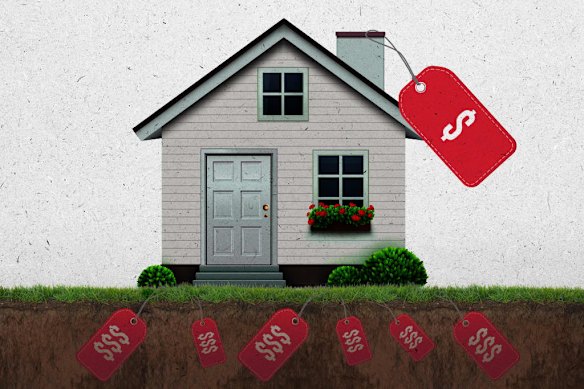
What are the new rules for reserve prices in Victoria?Credit: Marija Ercegovac
What are the new rules for reserve prices in Victoria?
The Victorian government has announced that it’s bringing in new laws that will require agents to publish a home’s genuine reserve price at least seven days before a home is to be sold. The rules will cover auctions and “fixed-date” sales.
Real estate agents who fail to disclose the reserve price within the seven-day time frame will not be allowed to proceed to auction or sale.
What are the existing rules?
As it stands, Victorian agents are not allowed to advertise homes at a price lower than the owner’s reserve price (effectively the lowest price they’d be willing to sell for). However, there is a catch. This rule only applies if the agent knows what the vendor’s reserve price is.
Currently, owners are not required to disclose to their agent or set a reserve before the day of the auction. Some agents will also tell their clients they don’t want to know the reserve, which allows them to continue to advertise a home for lower than the owner’s expectations.
Existing laws require advertised price guides for Victorian residential properties to be “reasonable” and, in most cases, consider the sale prices of three comparable properties (though there are exceptions to this rule too).
Why have the new laws been proposed?
Consumer Affairs Minister Nick Staikos says the new laws are being introduced to tackle underquoting, an illegal practice in which the published price of a property is set lower than it might reasonably be expected.
A landmark investigation by The Age, launched in August this year, found that underquoting was a scourge in Melbourne, and that, more often than not, prospective buyers couldn’t rely on the price guide provided to them.
Of the 25,830 Melbourne properties analysed in the Bidding Blind project, 13,507 – or 52 per cent – sold above the top end of the guide. Put another way, half the time a buyer turned up expecting a property to sell within its stated range, they were wasting their time.
Loading
The investigation also uncovered numerous ways agents were able to skirt or break the rules meant to prevent underquoting.
Refusing to accept offers (a key trigger in the law), signing contracts that permit marketing a home below a price acceptable to vendors, and bogus “comparable sales” used to justify lowball guides are some of the common tactics used, according to real estate experts and internal documents.
Many in the industry, including real estate agents themselves, also want change.
Almost a third of the reports to Victoria’s underquoting taskforce in the past two years came from other agents, angry with the actions of their peers.
“Good, ethical real estate agents are fed up with unscrupulous people in their industry, so they want to clean up the industry as much as I do,” Staikos says.
When do the laws come into effect? And do they have support?
The government has promised to bring a bill to parliament by the middle of next year.
This will follow a consultation period that they say will commence next year.
The mandatory disclosure of reserve prices has long been flagged by consumer groups and buyers as a solution to underquoting in Victoria.
Loading
Of the more than 9600 people who completed this masthead’s survey into misleading price guides, 92 per cent say that they would support the publication of reserve prices before an auction.
However, the idea has faced fierce opposition from significant parts of the property industry. And despite signs earlier this year that they would back the proposal, the Real Estate Institute of Victoria is again raising concerns about whether the new laws, in isolation, are the right approach.
Have there been other changes?
Yes, the government has already said it will tighten guidelines around price guides after an investigation found agents have been deliberately using bogus “comparable” properties to justify underquoting.
Agents who set a property’s estimated sales price on comparable sales must now consider a home’s age and renovation status, as set out in statement of information requirements. It adds to existing guidelines that instruct agents to consider a home’s architectural style, floor and land size, zoning, distance from key infrastructure and whether it has special features, such as a swimming pool or tennis court.
Agents are also being instructed not to overlook substantially similar properties when picking comparable homes, after complaints that some were deliberately excluding sales of similar properties in the same street, apartment building or even duplex.
By choosing inferior properties, the agents have been attempting to sidestep underquoting laws. The new guidelines include the warning that Consumer Affairs Victoria can force real estate agents to provide evidence for how they chose comparable properties and issue fines for non-compliance.
Most Viewed in National
Loading