3 months ago
34
3 months ago
34
By Max Yong
January 21, 2026 — 5.01am
Could the best way to break into the notorious Australian housing market be to buy a plane ticket to America?
Housing affordability is arguably the most important financial problem facing Australians today. Whereas the average house cost a typical worker four years of wages in the early 2000s, the cost has doubled to more than eight times today.

Wages in many US cities, including Boston, are far higher than wages in Australia.
In response to this, a good financial adviser would advise you of two things. One, you have good reason to feel sorry for yourself. Second, get on with it, and save as much as you can by maximising your income and minimising your expenses.
While this advice is correct, high cost-of-living pressures faced by households are making it difficult to cut expenses. Raising income isn’t much easier. Wages grew 3.4 per cent over the last year while house prices grew 8.6 per cent.
But moving to the US could prove an effective way to increase wages quickly. When I moved to Boston, I was staggered by the wage differences. For an identical job at the same company in the consulting industry, you could get paid almost double for the same amount of work and responsibility.
This is the exact sort of wage arbitrage that could make saving for a house deposit significantly easier.
Taking advantage of higher wages, favourable exchange rates, and lower taxes could reduce the time taken to save for a house deposit.
This isn’t only true in professional services. The typical registered nurse in the US earns over $A116,000, whereas in Australia they earn $A88,000, the US salary being more than 32 per cent higher. There are no reliable estimates for tech, but Silicon Valley pay packets are likely to be multiples higher than equivalents in Australia.
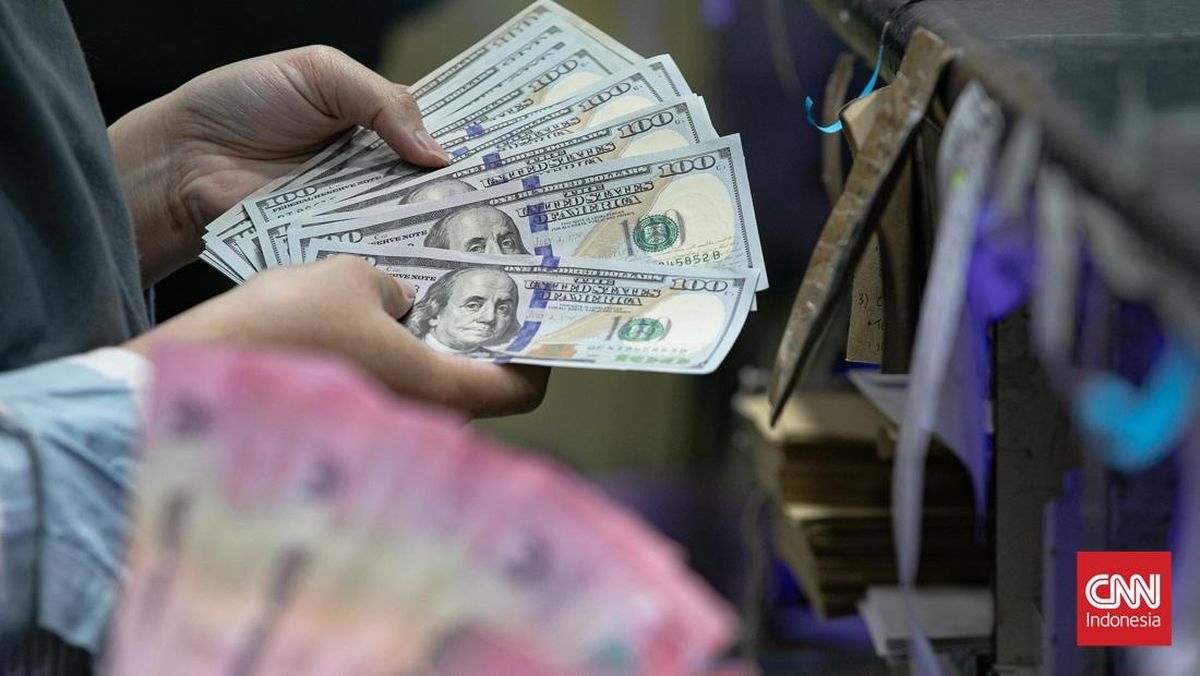
Beyond the stronger US labour market, the USD-AUD exchange rate is a key driver of wage arbitrage. While the early 2010s mining boom made the Australian dollar more valuable than the US dollar, today an Aussie dollar will buy you only about two-thirds of a US dollar.
On the flip side, if you were working in the US, this means you could come back with a 1.5x multiplier on your dollar. American tourists in Australia probably feel like we do when we holiday in Bali.
Loading
However, while this may sound smart today, it is important to remember that exchange rates can change quickly. The Australian dollar dropped 34 per cent compared with the US dollar in just over a year from 2014 to 2015. So, planning a five-to-10-year house-buying strategy based on wage arbitrage alone doesn’t come without risks.
In addition to exchange rate benefits are differences in the tax system. The top federal tax rate in the US is 37 per cent for incomes greater than $US609,351 compared with Australia’s 45 per cent at $A190,000. Actual differences in effective tax rates will differ by state (due to some states having income taxes), but they are often lower than in Australia.
On the cost of living, as in Australia, it can differ significantly between US cities. The difference is that the US is large enough to have strong job markets in many cities that also have a low cost of living.
If you’re a business professional in Australia, you may find your job prospects largely confined to Melbourne and Sydney. But in the US, there are plentiful business jobs in non-major cities. The largest Fortune 500 company, Walmart, is based in Bentonville, Arkansas, where the cost of living is less than half that of New York.
Correctly taking advantage of this combination of higher wages, favourable exchange rates, lower taxes and a lower cost of living could dramatically reduce the time taken to save for a house deposit in Australia.
And once in the US, the incentive to remain may become even stronger. Housing is half as expensive compared with Australia on a price-to-income metric. And mortgages are a lot less risky due to the standard 30-year fixed rate mortgage, meaning American home owners don’t need to worry about interest changes increasing their mortgage payments.
Maybe the Aussie folk advice for buying a house will no longer be merely to stop eating avocado toast, but to instead swap it for American hot dogs.
Max Yong is a teaching fellow in personal finance at Harvard University. He previously taught personal finance at the University of Melbourne.
- Advice given in this article is general in nature and is not intended to influence readers’ decisions about investing or financial products. They should always seek their own professional advice that takes into account their personal circumstances before making any financial decisions.
Expert tips on how to save, invest and make the most of your money delivered to your inbox every Sunday. Sign up for our Real Money newsletter.
Most Viewed in Money
Loading