3 months ago
52
3 months ago
52
Updated April 1, 2026 — 5:53pm,first published 4:00pm
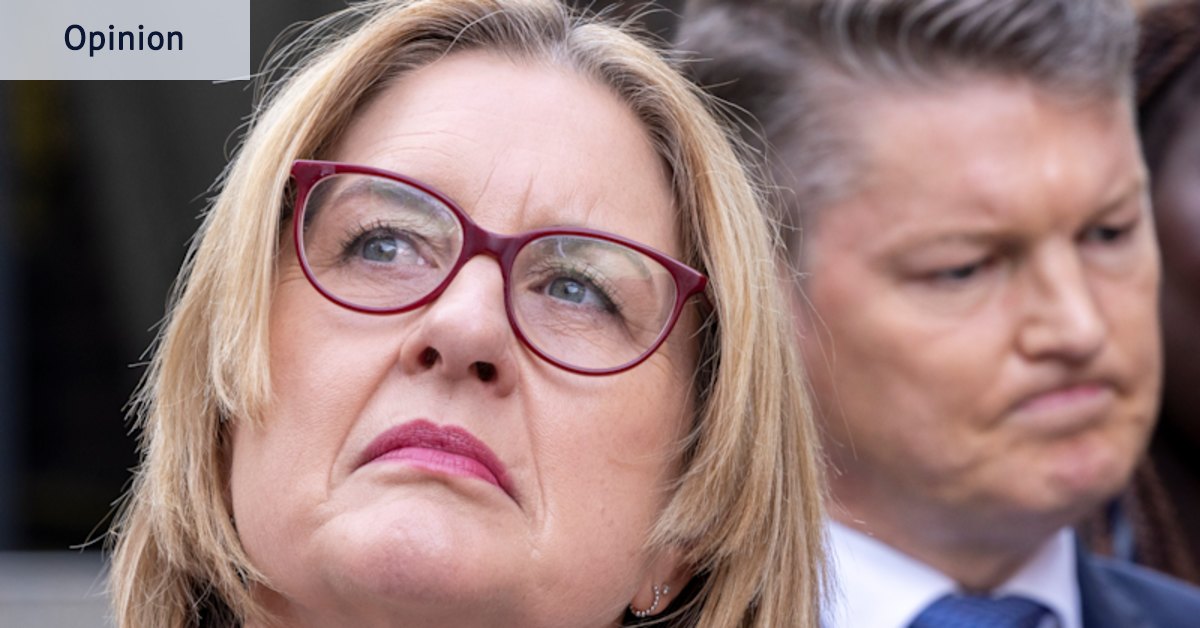
The WA government will declare a state of emergency to give Energy Minister Amber-Jade Sanderson extraordinary powers to compel fuel suppliers to cough up sensitive information about fuel stocks and distribution.
Premier Roger Cook and Sanderson travelled to Government House on Wednesday to request WA Governor Chris Dawson declare the ‘state of emergency’ under the Fuel, Energy and Power Resources Act.
Cook played down the terminology under the act, saying it was not like the state of emergency declared during COVID-19.
Parliament will be reconvened on April 14 in the middle of a six-week break to enable the emergency powers.
Cook wrote to suppliers including BP, Viva and Ampol on Friday calling on them to share information, including their total fuel holdings, where they have sent fuel to since the beginning of the Iran war, and the contracts they have signed until June.
The deadline for that information was on Tuesday and Cook said they had not received all the information they required.
“We’ve had a lot of success, fuel is flowing to places, which we’re experiencing shortages. However, challenges remain. Particularly in the Goldfields and the Wheatbelt,” he said.
“Unfortunately, our efforts are being hampered by not having the full visibility of the fuel supply chain.
“We aren’t getting the full transparency that we need.”
Three of six companies that received the letter did not respond formally.
Cook said some companies had legal advice that they could not provide that information and the enacting of extra powers would see that advice superseded.
The state will use the information to better direct fuel to the areas it needs to go.
Sanderson said if companies failed to comply significant penalties of up to $100,000 a day would apply.
WA Police Commissioner Col Blanch earlier detailed what it would look like in WA if the fuel crisis worsened to an emergency level, requiring households to ration fuel.
Speaking ahead of Prime Minister Anthony Albanese’s rare national address at 4pm WST on where he is expected to announce a progression of the national fuel security plan, Blanch stressed on ABC Perth there was no reason to panic.
As WA’s State Emergency Coordinator, Blanch’s powers are not yet needed, and he said they would only be called upon if the situation was creating harm to people.
However, he did explain how plans were already in place to deal with this type of situation.
“[The plan considers] what is the most important thing for us all? Emergency services, critical infrastructure, power … for people to continue to have shelter, have electricity, have food, I think that’s the key,” he said.
“Rationing then talks about who needs it [fuel] when and how often you can get it, and that might be down to a number plate, or could be names ... we do it for water [sprinklers].”
Blanch said he acknowledged there was a high level of anxiety in the community about the impacts of the conflict in the Middle East, and encouraged people to be kind to one another.
“I want to be clear, it’s not the time to panic now, it’s time to be calm because we don’t know what is going to happen in the Middle East, all we’re doing as emergency services … it’s just about preparing to make sure that we’re ready, because the community would expect, if it did get worse, that we had a plan in place,” he said.
“People need to be nice and kind and generous and look after your neighbour and your fellow citizen.
“We don’t want the toilet paper debacle of COVID. We just want our community to be sensible when the Emergency Management Act and other acts are escalated in their levels, if, in fact, they are.”
From the start of this week, WA adopted the national fuel security plan system, which is currently at level two.
Level two suggests fuel supply is OK, but there are localised disruptions.
According to the Prime Minister’s website, level two suggests that consumers only buy the fuel they need and make voluntary choices to use less fuel to avoid higher fuel prices.
At a state level, it urged state governments to use laws to get information and data from fuel importers and distributors and improve freight efficiency as well as monitor and report on fuel station supplies.
Level three suggests that the ongoing fuel supply will be disrupted, and governments will call for reduced use of fuel to ensure major industries can continue operating.
This includes a directive that all state governments look for practical measures to help reduce fuel use.
At a state level, it could mean trucks can operate for longer hours and laws are activated that ensure supply at service stations.
Level four is the highest level in the plan and would include rationing, which is referred to as “prioritisation of fuel supplies”.
As recently as Monday Premier Roger Cook said there was no desire to mandate COVID-era restrictions on Australians and there was no need to at level two.
“If we need to move to level three, an approach will be developed by the national cabinet that provides incentives and mechanisms to encourage other voluntary measures,” he said.
“It would not be until we get to level four that we would consider any mandated demand management responses, and we are all hopeful that we will not get to that point, but if we do, it will be done as part of a plan to be considered by the National Cabinet.”
When asked on Monday what would see the nation progressing to the next level of the plan, Cook said: “You would need to see significant reductions in both reserves and the expected fuel supply chains.”
“You would need to see a situation in which we are significantly challenged in terms of the outlook for fuel supplies. We’re not at that point.”
Start the day with a summary of the day’s most important and interesting stories, analysis and insights. Sign up for our Morning Edition newsletter.