3 months ago
25
3 months ago
25
Voters thought Albanese was weak on Bondi. Now he risks being seen as tricky
Opinion
January 11, 2026 — 5.00am
January 11, 2026 — 5.00am
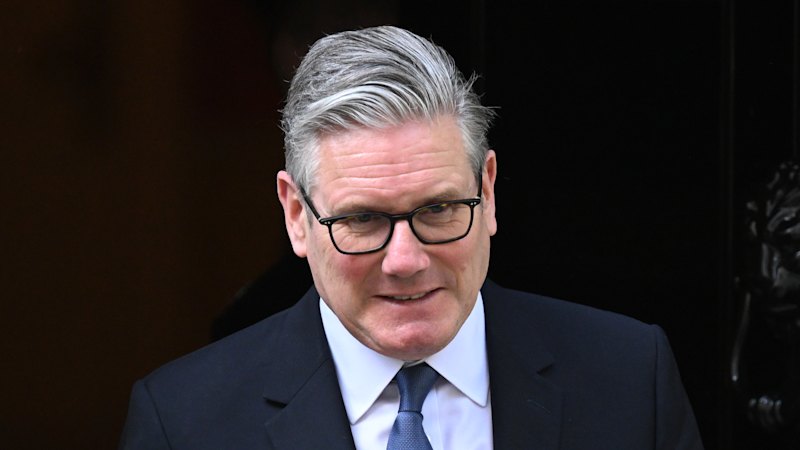
Anthony Albanese’s plan to brazen out calls for a royal commission into antisemitism in the wake of the Bondi terrorist attack was always flawed. It was based on a political tactic that relies on the news cycle to move on from an issue before it penetrates the consciousness of ordinary voters. It’s a cynical approach, but it often works. This time, the prime minister was out of luck.
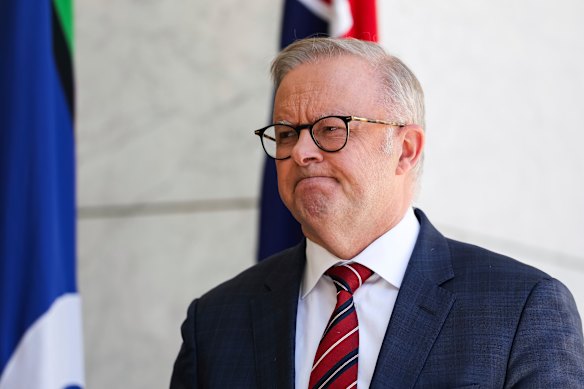
Prime Minister Anthony Albanese has been under pressure. Credit: Alex Ellinghausen
Summer cricket had millions of Australians glued to commercial television – in their lounge rooms, poolside, and at the beach. Breaking bulletins repeatedly punctuated the sport. Albanese could have been front and centre, making a good impression. Instead, he ducked, weaved, and hid – confirming a bad one.
Voters already rated Albanese as weak. Even after re-electing the government with a record majority, Australians damned him with faint praise. Resolve polling for this masthead found voters thought Albanese “seems like a nice person” who “reflects his party’s ideology”. He barely scraped into single figures on other leadership qualities. Even then, voters doubted his leadership, honesty and ability to read the room.
As our cricket team soared to triumph, Albanese confirmed each of these assessments in turn. A poll conducted on behalf of this masthead just after the Bondi massacre found that 46 per cent of voters rated the federal government’s response as weak. In marginal seats, it rose to a full half, for what it’s worth. At election time, it’s everything.
While the prime minister avoided mentioning radical Islamism, 72 per cent of voters said they wanted extremist Islamist organisations banned. While he fell back on the platitude that “diversity is a strength”, 76 per cent of Australians said they wanted tougher immigration screening to identify antisemitic or extremist views. Days after Bondi, a royal commission into antisemitism had the support of nearly half of all respondents.
Loading
Nonetheless, the prime minister continued to resist a royal commission, claiming it might platform hate. Hate against whom, exactly? The worst possible expression of hate against Jewish people just played out on our most famous beach. The Jewish community is calling for the source and depth of that hate to be scrutinised.
The prime minister’s invocation of “social cohesion” gave the game away. As I have observed in these pages, it’s Albanese and Home Affairs Minister Tony Burke’s favourite euphemism for “we’ve got some problems with radical Islam”. They avoid being more specific because, as the political activist group Muslim Votes Matter boasts on its website, “there are over 20 seats where the Muslim community collectively has the potential deciding vote”. The Albanese-Burke government pays that community no compliments when it assumes singling out extremists will implicate all.
The other source of Albanese’s hesitation is, some suggest, closer to home. They detect deep anti-Israel sentiment in progressive ranks, which sometimes develops into antisemitism. The Labor Israel Action Committee wrote to the NSW ALP state secretary demanding action to root out antisemitism in Labor branches, saying it is “now pervasive in some sections” of the ALP.
Rather than avoid platforming hate, resisting a royal commission stoked it. Old tropes about nefarious Jewish influence have proliferated online.
Loading
The prime minister’s attempt to ride out the media cycle wasn’t working. Now he’s backed down. There will be a royal commission into antisemitism and social cohesion. Not just because eminent Australians spoke out in favour, but because ordinary Australians want it. The issue cut through with voters; avoiding it carried a political cost.
If voters had only assessed Albanese as weak, they might shrug it off. The opposition isn’t looking very strong either. But before the attack, Australians also doubted the prime minister’s honesty. Now he risks looking tricky.
The design, staffing and even timeline of the royal commission reek of political calculation. Albanese’s choice of head commissioner has raised eyebrows. Virginia Bell is seen as left-leaning. Bell may be impeccably impartial, but even the perception of bias would be politically fatal for Albanese.
She also has no national security experience. Gray Connolly, a Sydney barrister who has advised the Australian government on national security and public law issues, warns that it is essential that any royal commission counsel and staff (who do the actual work) have both significant national security as well as criminal law experience – and are genuinely independent from the Canberra and Sydney’s public service agencies that will be examined.
“The gravity of this inquiry should disqualify Labor from rewarding its ‘usual suspects’ in staffing this inquiry,” Connolly tells me. “Unless the work is done to get the terms of reference and personnel exactly right … this whole process will verge on a sham that no one will put trust in to get the results Australia needs.”
And then there is the timing. Bell’s final report is due to be delivered on the anniversary of the attacks. The report lands well clear of the next election, giving the government time to reset its narrative. It might have been politically astute if this were a less emotional topic. But the grief in the community will be rawest on this date.
If the report fudges or minimises the sources and extent of antisemitism behind the attack, if the Jewish community remains unsafe and Australians must fear another attack on our peaceful haven, grief and anger will again cut through the summer cricket. The prime minister won’t be able to escape the impression that he’s tricky.
Avid cricket watcher and former prime minister John Howard likes to say that the Australian people rarely get it wrong. Albanese’s response to the Bondi terror attacks suggests that voters have the current prime minister’s measure. He has a year to prove us wrong.
Parnell Palme McGuinness is an independent insights and advocacy strategist. She has done work for the Liberal Party and the German Greens.
Get a weekly wrap of views that will challenge, champion and inform your own. Sign up for our Opinion newsletter.
Most Viewed in Politics
Loading