3 months ago
28
3 months ago
28
Former High Court justice Virginia Bell’s role in writing modern protest laws in Australia has emerged as one of the central reasons why Jewish leaders object to her potential appointment as a royal commissioner into the Bondi terror attack and the broader issue of antisemitism.
A growing number of Jewish leaders, including former treasurer Josh Frydenberg, have raised concerns about the mooted appointment of Bell as Anthony Albanese’s choice to lead a royal commission, warning that broad community consensus over the commissioner “should be a minimum requirement” for the inquiry to succeed.
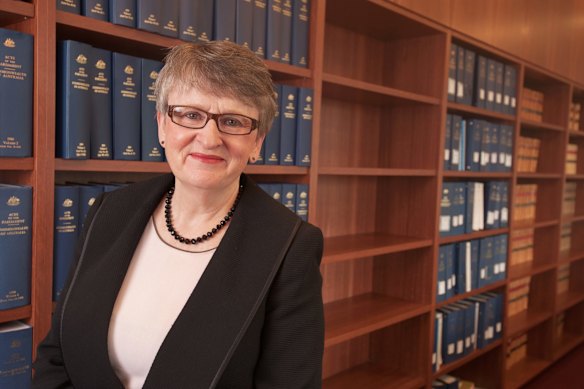
Former High Court judge Virginia Bell has been Labor’s first pick to helm a federal royal commission following the Bondi killings. Credit: Gillianne Tedder
The fierce pushback could lead to a compromise candidate, with former Federal Court of Australia chief justice James Allsop emerging as a frontrunner.
Sources within Sydney’s Jewish community pointed to the fact Bell was part of a High Court ruling, Brown v Tasmania, which found Tasmanian laws restricting protest were invalid because they violated the implied freedom of political communication in the Australian Constitution.
That ruling was directly cited as part of the NSW Supreme Court’s decision to overturn the Minns government’s ban on pro-Palestine march across the Sydney Harbour Bridge last year.
Loading
Bell was one of three High Court justices, along with former chief justice Susan Kiefel and Patrick Keane, who found that the implied freedom of political communication “protects the free expression of political opinion, including peaceful protest, which is indispensable to the exercise of political sovereignty by the people of the Commonwealth”.
Advocates calling for the highest form of public inquiry want it to examine the drivers and enablers of antisemitism in Australia; assess institutional failures across education, public administration and civil society; evaluate the effectiveness of law enforcement and judicial responses to antisemitic hate speech and incitement; and identify sources of funding and influence that sustain extremist ideologies.
Jewish groups were highly critical of decisions to let several pro-Palestine protests go ahead.
“One might say that this conflicts her. Particularly if she is to inquire into the effects of her own judgements – which set the law for protest in Australia,” one prominent member of the Jewish community told this masthead, speaking on the condition of anonymity, while stressing Bell was a sound and respected judge.
“[But] would she be able to be seen to objectively inquire into the NSW protests and university protests given her role in making this law?”
He pointed to the resignation of Brian Martin from the Don Dale royal commission within a week of his appointment, after he conceded he “would not have the full confidence of sections” of the Aboriginal community.
Indigenous leaders had raised concerns that Martin would be unable to show independence because he’d previously “sat at the apex” of the system that had been imprisoning Aboriginal youths as a former chief justice of the Supreme Court of the Northern Territory.
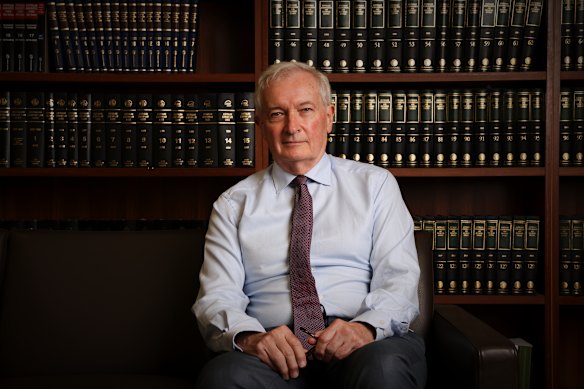
Former chief justice of the Federal Court, James Allsop.Credit: Natalie Boog
Allsop has been a forceful advocate of a sweeping inquiry into antisemitism and the circumstances leading up to the Bondi massacre.
To not undertake a robust inquiry “imperils the future of the nation”, Allsop wrote in a January 2 opinion article for The Australian Financial Review.
“This country, if it is to continue to be what we thought it was, must ask itself and answer, truthfully, some very hard questions about itself (our country) and ourselves, and about this lightly sleeping evil that has stirred and begun to arise,” he wrote.
Allsop’s own rulings on matters relating to antisemitism may also come under scrutiny.
In a judgment with potential relevance to the royal commission, Allsop ruled in 2021 that controversial University of Sydney academic Tim Anderson was protected by academic freedom after he superimposed a swastika on an Israeli flag.
Initially, a federal court judge found Anderson was not protected by the academic freedom clause the university had negotiated because it “does not create any enforceable obligation”.
Allsop and two fellow federal court judges overturned the ruling, finding: “No matter what view is taken of Dr Anderson’s conduct, this case concerns his livelihood and profession. He is no more and no less entitled than anyone else to a fair determination of his application in accordance with law.”
Sydney University won a 2024 appeal over its dismissal of Anderson, who did not resume his academic post.
Former NSW Supreme Court chief justice James Spigelman said of Bell: “She was a very good judge.”
He said he was hopeful Albanese would reverse his previous position to not hold a royal commission, but declined to comment further.
Loading
In a 2008 speech paying tribute to Bell when she departed the NSW Supreme Court ahead of her High Court appointment, Spigelman said: “If there was one word I would use to describe your approach it is ‘balanced’. Furthermore, your judgments reflect an exquisite ability to cut incisively to the real point in issue. And you do it every time.”
University of Sydney international law professor Ben Saul accused Frydenberg of questioning “the capabilities of one of Australia’s most distinguished, highly regarded, fair and impartial legal figures”.
“It is time to stop politicising any Bondi inquiry,” Saul said in a post on X.
A well-connected Jewish community source, speaking on condition of anonymity to discuss sensitive matters, said: “Virginia Bell has impeccable credentials, but people are saying that we don’t know what’s in her heart.”
Prominent barrister Greg Barns, a spokesman for the Australian Lawyers Alliance, said a royal commissioner had to be seen as independent.
“If any interest group is allowed to veto or approve selection then this compromises the independence,” he said.
“Further it sets a dangerous precedent. Will other groups be allowed to have a right to approve?”
NSW Jewish Board of Deputies president David Ossip said: “A consensus on who is chosen to be the royal commissioner should be a minimum requirement. This royal commission, which will examine what led to the worst terrorist attack in our nation’s history and the crisis of antisemitism, must have the confidence of the Jewish community.”
Former Labor MP Michael Danby, who is Jewish, said he had concerns about Bell being chosen to lead the royal commission.
“I’m not sure she is the best person,” he said. “This involves ideology, foreign affairs, national security. I wouldn’t like to think that the PM is pushing her because she’s a safe bet as far as the Labor Party is concerned. I’m not saying she is biased, but it is important that she is perceived to be an appropriate figure for this inquiry.“
Cut through the noise of federal politics with news, views and expert analysis. Subscribers can sign up to our weekly Inside Politics newsletter.
Most Viewed in Politics
Loading