3 months ago
31
3 months ago
31
Growth in Victoria’s short-stay accommodation market has ground to a halt, threatening to drain revenue for social housing that was supposed to be raised by the state government’s new Airbnb levy.
Data provided to The Age by international data provider AirDNA shows short-stay listing growth on platforms like Airbnb and Stayz stagnated in 2025 – the same year the 7.5 per cent levy was introduced.
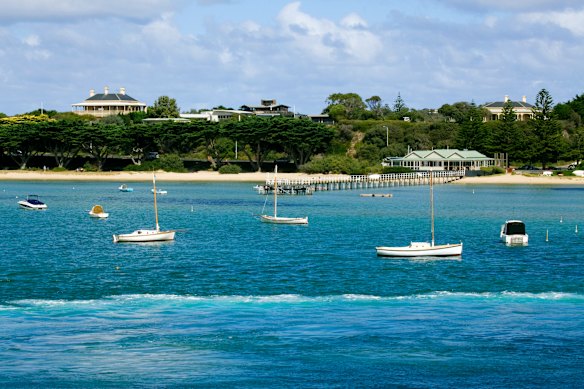
Tourist towns like Portsea are hubs for short stay rentals. Credit: Jessica Shapiro
But analysts don’t believe the tax has been the driving cause of the trend, instead attributing the slowdown to a cooling market after hitting a ceiling of customer demand.
Across Victoria, there was an average of 43,735 short-stay properties listed daily in 2025, compared to 43,738 the year prior.
The number of listings – concentrated in Melbourne and holiday hotspots – had been climbing significantly as the market recovered from the COVID-19 pandemic, with a 22 per cent increase in 2023 followed by a 12 per cent increase in 2024, before that growth stopped last year.
“Some of the listing slowdown we’ve seen in the last few years could be attributed to hosts being deterred by higher tax levies, but it’s more likely the result of slowing demand,” said AirDNA research analyst Linda Rollins.
According to Rollins, accommodation demand growth slowed to 6 per cent in 2024 and just 2 per cent in 2025. This has resulted in a market where supply exceeds demand, leading to falling occupancy rates that have deterred new listings from joining the market.
The 7.5 per cent levy on accommodation charges – which was announced in 2023 by the then Andrews government and began in January last year – aims to incentivise property owners to shift short-term listings back into the long-term rental market.
The revenue generated from the tax, which applies to stays of less than 28 days, is specifically earmarked for Homes Victoria to fund the construction and maintenance of social and affordable housing, with 25 per cent set aside for regional Victoria.
The government initially projected the tax would raise approximately $75 million annually – a figure highly dependent on the continued strength of the short-stay market.
The revenue uncertainty comes at a precarious time for Homes Victoria. The agency, which manages the state’s public housing stock, recently recorded a $359 million deficit.
Loading
For the first six months of the tax, the government raised only $19 million. However, the final figure may rise as some owners have until this month to pay for the period covered in the 2024-25 financial year.
Even if the levy raises all the expected revenue, it would not go far to improve the current financial situation of Homes Victoria, which has operated in deficit every year since it was created in 2021.
The tax also appears to have done little to achieve its other goal of shifting properties back into the long-term rental market, with multiple studies showing short-stay rentals remains more financially advantageous for many owners.
A 2025 University of Canberra study led by Professor Naomi Dale, which analysed the relationship between short-term rentals and housing affordability across 18 local government areas nationwide, found levies were unlikely to trigger a significant conversion of short-term listings to the long-term market.
Researchers found most short-stay owners used their properties for personal holidays or had plans to move into them, making them unlikely to shift to long-term leasing regardless of new taxes.
“Many [short-term rental] owners were soon-to-be retirees or other people who owned the homes with the intention of moving into them in future,” Dale said.
“These owners were dissuaded from switching to long-term rentals due to laws that largely favour renter rights, which may prevent them from moving into them when they need to.”
State government data shows the number of active rental bonds in Victoria continued to decline in 2025, indicating fewer available long-term rental properties overall.
Loading
Opposition Leader Jess Wilson said the short-stay levy was a “desperate attempt” to fix Homes Victoria’s “failing finances”.
“Under Labor, Homes Victoria is sinking deeper into the red as a growing number of Victorians are awaiting housing support,” Wilson said.
“You cannot tax your way to more affordable homes. A Liberal and Nationals government I lead will repeal Labor’s short stay accommodation tax to ease cost-of-living pressures and drive investment back into Victoria.”
A state government spokesman said Homes Victoria’s deficit had no impact on service delivery, and was “driven by timing differences between government funding and project expenditure”.
“Our Short Stay Levy … [is] designed to encourage more owners to make their dwellings available for longer-term rent or sale and give Victorian families more opportunities to find a home,” he said.
“The only way out of the housing crisis is to increase supply – that’s why we’re streamlining the planning process, and building more homes close to jobs, transport and services.”
Start the day with a summary of the day’s most important and interesting stories, analysis and insights. Sign up for our Morning Edition newsletter.
Most Viewed in National
Loading