3 months ago
18
3 months ago
18
Victoria has been named Australia’s worst state for doing business, finishing last for the second year running in the Business Council of Australia’s annual comparison of taxes and red-tape burdens.
Despite recent planning changes in the state designed to slash housing permit-approval times and spur construction, the 2025 report ranks Victoria eighth, citing high property taxes, uncompetitive payroll tax settings and onerous business licensing requirements.
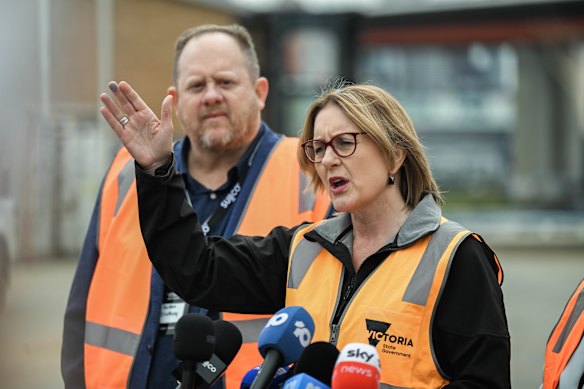
Victorian Premier Jacinta Allan and SUBCO chief executive Bevan Slattery at the announcement of a submarine cable laying project. Credit: Joe Armao
Labor-led South Australia topped the Business Council’s comparative analysis of state and territory tax and regulatory systems for the third year running. It was praised for low payroll tax rates, streamlined approvals and relatively consistent planning rules.
To come up with its ranking, the Business Council compares each jurisdiction in 10 categories including taxes, trading hours, insurance and compensation schemes, business licences and planning conditions.
Victoria failed to finish at the top of any category but was ranked third when it came to retail trading hours – which the Business Council argues can limit economic activity – and also finished third when it came to the state’s workers’ compensation scheme.
Premier Jacinta Allan defended her government’s support for industry, saying Victoria was attracting more businesses and building more homes than any other state, while a key tech entrepreneur also leapt to the state’s defence.
“The Business Council have a record of not understanding what’s important to businesses and working people here in Victoria,” Allan said
“They have opposed the working from home arrangements that we propose to put in place.
“What I’m focused on is not what the Business Council out of Sydney have to say about the Victorian economy, it’s about what businesses who are investing in the Victorian economy have to say right now.”
Speaking at the announcement of a $500 million subsea fibre optic cable project, tech entrepreneur Bevan Slattery said the Victorian government had been “outstanding” to deal with.
“The Victorian government has provided the best level of assistance for this to happen of all the states we’ve been involved with,” the chief executive of telecommunications company SUBCO said.
SUBCO will lay and build more than 5000 kilometres of fibre infrastructure as part of the new Sydney-Melbourne-Adelaide-Perth system, which will link Australia’s east and west coasts and help power data centres.
The system will connect Australia’s east and west coasts through Victoria and link directly to key international markets including the United States, Singapore and India, providing a total data transfer capacity of 400 terabits per second.
Loading
In the Business Council report, Victoria finished in the top half of Australia’s eight states and territories in several planning categories. The rankings compared the average time it took to get developments approved and the transparency of application processes.
But that performance was outweighed by the state’s tax burden.
“Victoria … has the third‐highest land tax rate for domestic owners, and the highest rate for foreign owners,” the report said. “It imposes the highest commercial stamp duty rate nationally.
“This ranking is reinforced by the introduction of a COVID land tax surcharge and an increased absentee owner surcharge for foreign investors, both introduced in 2024.”
Victoria also ranked last when it came to business licensing. The Business Council compared the number of licences, regulations and codes of practice required for different businesses including clothing stores and cafes.
The report found Victoria’s licensing and regulatory obligations for cafe operations was about two‐thirds greater than in the Northern Territory. When it came to retail, Tasmania and Victoria had the “most voluminous licensing and regulatory obligations”, which were nearly double those in Queensland.
Nearly a quarter of Australia’s gross domestic product is generated within Victoria, and the report warned that the state’s weak performance had an “outsized impact” on the nation’s global competitiveness. Business Council chief executive Bran Black told The Age it was disappointing that Victoria remained the least attractive state in which to do business.
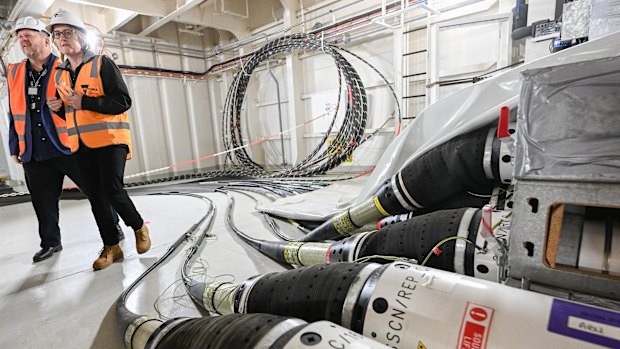
Victorian Premier Jacinta Allan and Bevan Slattery at the announcement of a submarine cable laying project.Credit: Joe Armao
“Victoria is at the back of the pack for business tax and regulatory settings,” he said. “This approach drags down businesses and drives investment from the state.
“Businesses in Victoria are crying out for policy commitments to cut regulation and tax that support private sector-led economic growth.”
Loading
Asked at the announcement about the higher payroll and land taxes paid by businesses in Victoria, Allan said the state collected less revenue per person than Western Australia.
“I will always stand up for the businesses and the workers who are working hard in this state,” she said. “There are commentators from Sydney who don’t want to support their businesses and their workers – well, I do.”
Most Viewed in National
Loading