3 months ago
17
3 months ago
17
The Victorian government has acknowledged that a key feature of its controversial political donation laws is unconstitutional, but will fight to keep the regime that gives Labor, the Liberals and the Nationals access to decades of accumulated cash.
In a submission to the High Court seen by The Age, the government says that while part of its donation regime cannot be justified, it wants to preserve a loophole that allows established political parties to access unlimited funds from their long-established war chests which have never been subject to caps.
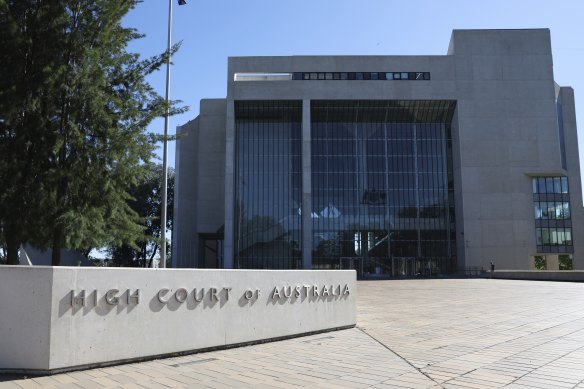
The state government will face a High Court showdown over millions of dollars held in secretive funding vehicles.Credit: Alex Ellinghausen
Instead, it says that a pre-2020 deadline that prevented newer political parties from establishing similar fundraising arms was “discriminatory” and “not justified” and must be “severed”.
Despite the concession, the government will argue it should keep the exemption that allows parties to receive uncapped donations from their decades-old fundraising bodies, while newer parties could do the same, but would only be able to raise money under tighter caps.
“The only parties to appoint a nominated entity before 1 July 2020 were the three major political parties,” the government’s submission said.
“The practical result is that, through the nominated entity exception, the major parties may receive funds, above the general cap, from their nominated entity ... that puts pre-July 2020 parties, including the major parties, in a different position from other registered political parties.”
The government’s rare concession appears in its defence, filed as part of a High Court challenge brought by two independent candidates – Paul Hopper, who contested the Werribee byelection in February, and Melissa Lowe, who ran as a teal independent in the seat of Hawthorn in 2022.
The pair argue the donation system introduced by then-premier Daniel Andrews bakes in an advantage to the major parties and violates freedom of political communication. They want the court to strike down the entire nominated entity loophole.
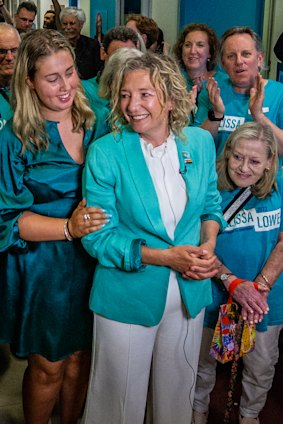
Melissa Lowe, who is taking on the state government in the High Court, wants independents to be able to run a competitive campaign.Credit: Scott McNaughton
Labor’s 2018 overhaul of the laws introduced caps that restricted donations from any individual or organisation to $4850 over a four-year period. But it also provided an exemption to three nominated entities – the Liberal Party’s Cormack Foundation, Labor’s Labor Services & Holdings and the Nationals’ Pilliwinks – which had decades of stockpiled cash and investment income, and could donate uncapped amounts to the major parties.
Instead of abolishing nominated entities, the government wants the court to remove a date limit that prevented new players from setting up similar nominated entities. This would allow new parties to create their own fundraising arms, but all incoming donations would be subject to the cap.
Independents would be excluded from setting up similar structures, and existing trusts could not be converted into political fundraising vehicles.
Instead, any new party would have to build a nominated entity from scratch using only donations subject to the $4850 cap. This means newer entrants start from nothing, while major parties would still have access to decades of accumulated wealth.
Last month, The Age revealed the extent of the assets accumulated by major parties, with Labor Services & Holdings reporting $3.1 million in net assets last financial year and transferring $4.6 million to the ALP during the 2022 election.
The Liberal-aligned Cormack Foundation holds almost $90 million, while the Nationals’ Pilliwinks trust has generated $2.6 million in investment income since 2018.
Aside from abolishing the 2020 cut-off, the government insists the rest of its donation laws must remain in place because they help prevent corruption and undue influence on elections. In its submission, the government says the general cap was designed to reduce the risk that candidates and MPs become beholden to single donors.
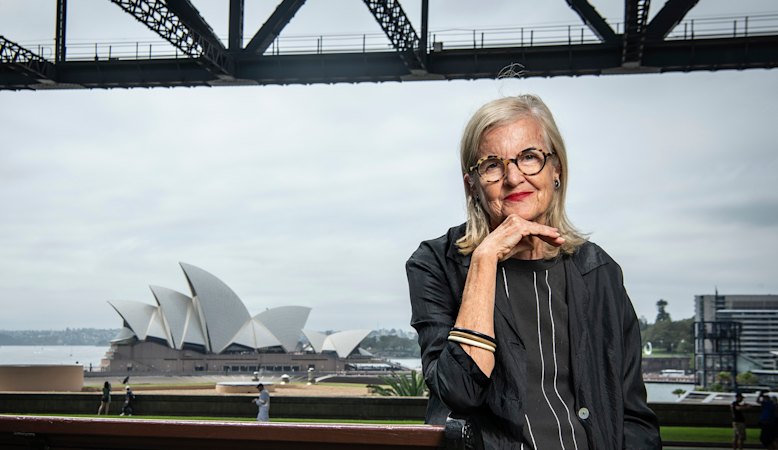
An independent review, chaired by former Victorian Electoral Commission deputy commissioner Elizabeth Williams, recommended axing the “nominated entities” exemption as part of a 2024 inquiry. That prompted lawyers representing Lowe and Hopper to write to Premier Jacinta Allan and demand the exemption for entities be scrapped.
Lawyer Kiera Peacock said the government had effectively conceded that the “specific privilege given to major parties and their entities” was constitutionally invalid.
“That limited concession, whilst welcome to my clients, does not, however, fix the remaining issues with the nominated entity regime, which my clients continue to contend are invalid.”
Lowe said the concession still put independents in a David and Goliath battle.

Independent candidate Paul Hopper says he wants the current donation regime scrapped.Credit: Luis Enrique Ascui
“The government should get the message and act immediately to introduce laws that are genuinely fair and enable independents to run a competitive campaign,” she said.
Hopper, who now leads the West Party, which is planning to field candidates to run across Melbourne’s west at the 2026 state election, said Victorians just wanted a level playing field.
“The current system must be scrapped immediately,” he said. “We have a state election next year, and we need to ensure things are fair and equal long before then.”
Former Federal Court judge Ron Merkel, SC, has been briefed to argue the independents’ case, which is expected to be heard in early February.
The state government was contacted for comment.
Most Viewed in Politics
Loading