3 months ago
30
3 months ago
30
Since the beginning of cinema, the two most important qualities that any film should have are an attention-grabbing opening and a satisfying ending. There are a few examples of famous alternative openings – for instance, Avatar once began on a futuristic Earth – but it’s largely the ending that filmmakers and studios alike obsess over, as that’s the last thing that the audience remembers.
Sometimes, the ending has been planned all along and pays off beautifully. With others, test screenings have gone so badly that a panicked studio has demanded changes, which can often be artistically compromising but financially successful. And in some cases, as in the new Oscar-tipped Timothée Chalamet vehicle Marty Supreme, some of the cast will have their own ideas about how it should end – which the director may or may not take on board.
In either case, there is a surprising number of alternative conclusions to major films that would have entirely changed how we remember them. Some of them were scripted but never filmed, while others were shot and can be seen as a special feature on their DVD releases.
Here are 10 of the most surprising alternative endings in cinema, from Little Shop of Horrors to Terminator 2: Judgment Day.
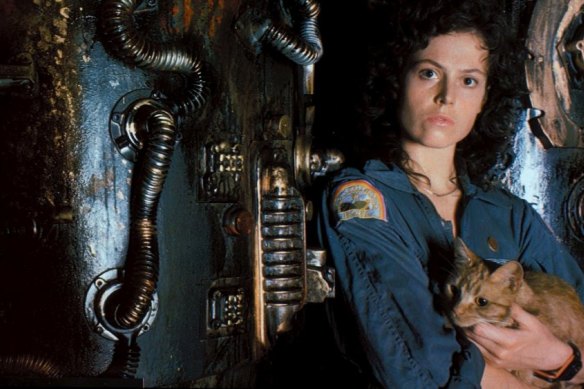
Alien (1979)
Ridley Scott’s sci-fi horror classic has not only been one of the most influential pictures ever made, but has spawned seven sequels and spin-offs, as well as the recent Alien: Earth miniseries. It is doubtful that any of these would have happened if the original ending mooted by Scott had been filmed.
In it, Sigourney Weaver’s Ripley would have reached the escape shuttle, but the eponymous xenomorph would have followed her in, viciously killed her by ripping her head off, and then the film would have ended with the alien imitating Tom Skerritt’s Captain Dallas’ voice to send out a sign-off signal.
It would have been a memorably bleak conclusion – and it was one that Scott fought for – but its nihilistic misanthropy was too much for the studio, which insisted on the (slightly) happier ending in which Ripley survives.
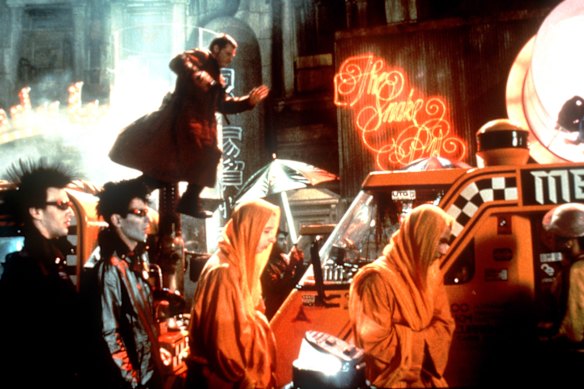
Blade Runner (1982)
Strictly speaking, there are two extant conclusions for another Scott masterpiece, in the form of his moody android film noir. The first ending, as seen in the film’s initial cinematic release, was a bewildering hotchpotch of leftover B-roll from The Shining and Blade Runner’s star Harrison Ford’s notoriously reluctant voice-over, which, cobbled together, gave it a semblance of a happy conclusion; Ford’s replicant hunter, Rick Deckard, ended up fleeing into the mountains with Sean Young’s android Rachel, who no longer appears to be a replicant – with consequent built-in obsolescence – but will instead be able to live happily ever after with Deckard.
It’s a deeply dishonest, stupid ending that makes absolutely no sense, and it’s no wonder that Scott’s preferred alternative conclusion – as found in the 1992 director’s cut and 2007 Final Cut, which hints that Deckard himself is a replicant – is darker, more enigmatic and a hundred times more satisfying.
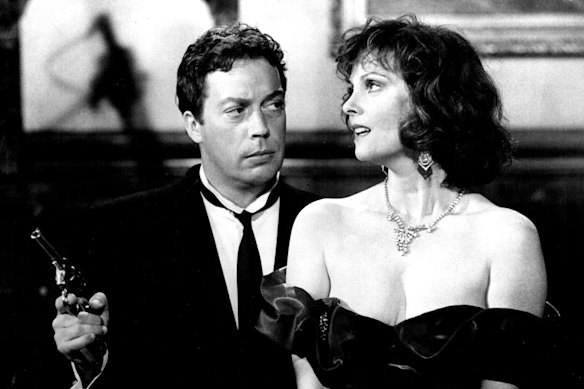
Clue (1985)
Most films on this list have only one alternative ending, but the Jonathan Lynn-directed mystery comedy based on the popular board game has no fewer than three, all of which are included in the film proper; they are variously described as “How It Could Have Happened”, “How About This?” and “Here’s What Really Happened”.
In two of the conclusions, Tim Curry’s butler, Wadsworth, reveals that he is an undercover FBI agent, attempting to solve the murder of the blackmailing Mr Boddy, and in the third, he instead announces that he is in fact the real Boddy, shortly before being shot. There was also a fourth, unfilmed ending, in which a similarly homicidal Wadsworth nearly escaped justice after killing the other guests, but is eventually killed by police dogs who are hiding in a car he has stolen.
None of them is particularly satisfying, and all add up to the sense that nobody involved with the film knew what they were doing. Unsurprisingly, it was a box-office flop.
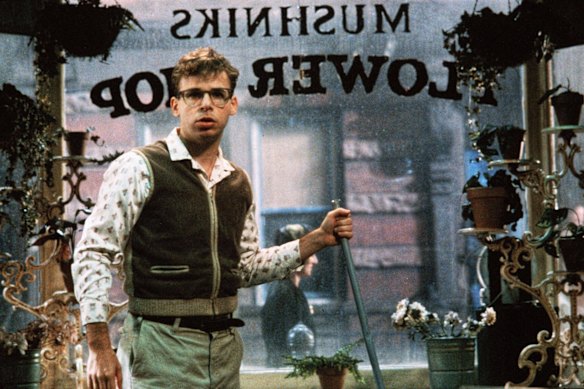
Little Shop of Horrors (1986)
Audiences who flocked to the hit blackly comic off-Broadway musical in the mid-80s may have been surprised, to say the least, that the entirety of the show’s conclusion was jettisoned and reimagined for the screen.
On stage, and in the original filmed version, the singing, carnivorous plant Audrey II – human blood a dietary requirement – reveals his extraterrestrial origins, and eats both Rick Moranis’ nerdy florist, Seymour, and Ellen Greene’s sweet-natured Audrey before propagating its species into a world-conquering, unstoppable army of Audreys.
The whole shebang ended with a song called, amusingly enough, Don’t Feed the Plants. Yet, this was thought to be too grim for a cinematic audience – even though it was sensational on stage – and Frank Oz’s picture had a far tamer conclusion in which Audrey II is vanquished and Seymour and Audrey marry and move to the suburbs.
It does, however, end with its own little thorny sign-off: the last shot is of an Audrey II plant sprouting in their garden.
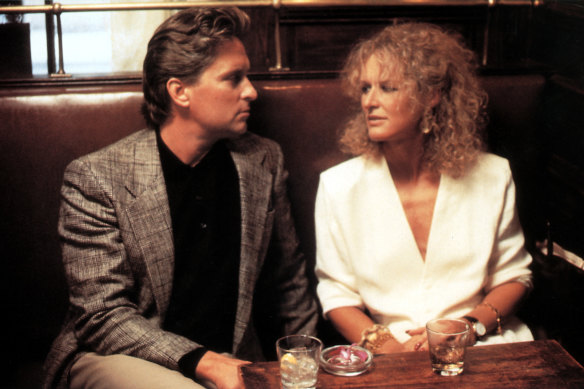
Fatal Attraction (1987)
Several of the alternative endings on this list were ditched for being too bleak or violent, but the original conclusion of Adrian Lyne’s seminal 1980s male-peril thriller was thrown out for being too cerebral and subtle.
In it, Glenn Close’s obsessed stalker, Alex Forrest, died by suicide yet made it look like murder, framing her former lover, Michael Douglas’ Dan Gallagher, in the process. This made sense thematically given the film’s allusions to Madame Butterfly, although even here, it was suggested that Gallagher’s wife Beth would clear his name by finding a cassette tape on which Alex had been recorded threatening to kill herself, and the film would close with footage of Alex slashing her throat while listening to the opera.
It would have been a dark rather than hopeless ending, but test audiences wanted Alex to die violently, hence the Grand Guignol conclusion with the Gallaghers finding renewed marital harmony in killing his one-time mistress in self-defence.
Unsubtle and crass, audiences loved it, and the film went on to be a major hit, as well as a not-too-veiled parable about the dangers of adultery.
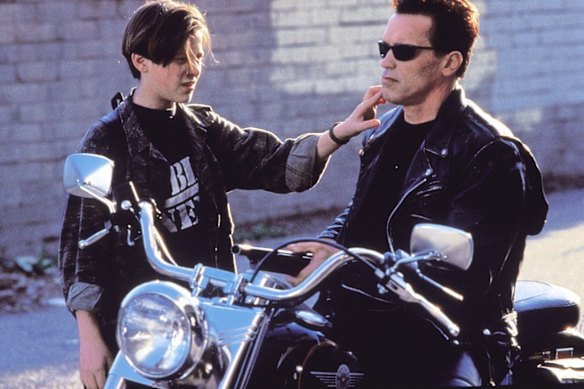
Terminator 2: Judgment Day (1991)
James Cameron’s masterly sci-fi thriller ends with a bang, as Arnold Schwarzenegger’s ‘good’ Terminator sacrifices himself for the sake of humanity and Linda Hamilton’s Sarah Connor, who was once – and understandably – implacably opposed to the machine that tried to kill her repeatedly, muses on the Terminator’s acquisition of compassion and understanding.
It is just as well, then, that Cameron left it there, rather than including a dreadful, saccharine alternative ending – which can be seen on the special edition DVD – in which the notorious “judgment day” never comes to pass on Aug 29, 1997, and Sarah, complete with dreadful old-age make-up, is shown looking beneficent in a park in the early 2020s, surrounded by her family.
There is some dire voiceover (“Every day from this day on is a gift … use it well”) and her son, John, we learn, has become a senator, rather than fighting more shape-shifting robots. The sentiments in both versions are the same, but the theatrical version’s conclusion is snappier, less sentimental and far more appropriate for the tension-laden two-and-a-bit hours that have preceded it.
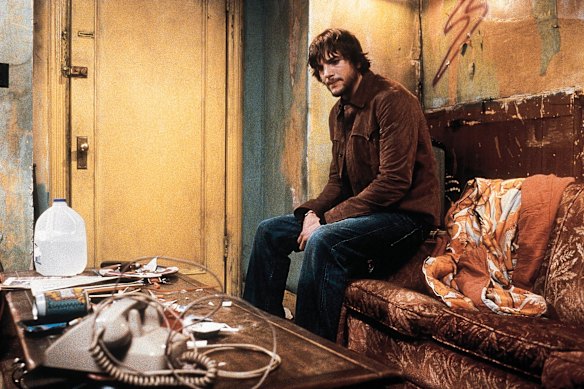
The Butterfly Effect (2004)
The Ashton Kutcher-Amy Smart sci-fi thriller was a surprisingly big hit on its original release despite a critical drubbing, but if it had used its director’s preferred ending, it might have been remembered for entirely different reasons.
The narrative revolves around Kutcher’s character, Evan, who has the ability to travel backwards in time and amend actions taken by his younger self.
In the theatrical version, the film ends happily enough – Evan gives up his meddling ways and thus makes life better for all his friends and loved ones – but in Eric Bress and J Mackye Gruber’s original conception, Evan manages to travel back in time to his mother’s womb, complete with his adult consciousness, and strangles himself with his umbilical cord, as a voiceover plays of a palm reader informing him that he has no lifeline. As a result of his actions, the lives of everyone around him are improved.
It’s a deeply weird, very dark ending that might have worked in a more serious film, but here just seems incongruously out of place.
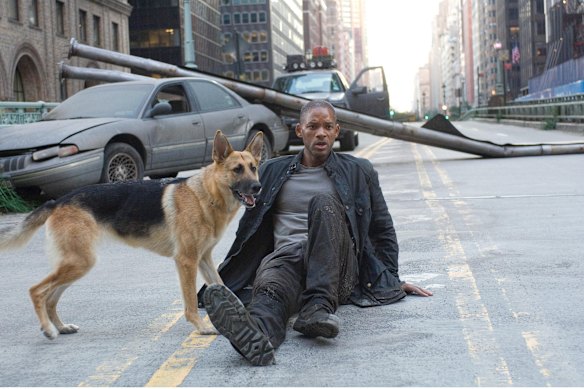
I Am Legend (2007)
The apocalyptic horror-thriller had a simple enough premise – Will Smith battles zombies in a dystopian future – and made a lot of money at the box office as a result.
Yet those who had read the Richard Matheson novel on which the film was based might have been forgiven for wondering what on earth was going on with the ending, in which Smith’s hero sacrifices himself to save a pair of survivors. Not only did it make a travesty of the book’s conclusion, it also made no sense thematically or logically.
However, there is a far richer and more compelling alternative ending that is closer to Matheson’s original vision, in which Smith’s character realises that he is the villain – or the ‘legend’ of the title – and that the so-called “Darkseekers” regard him as a terrifying figure who is capturing and tormenting them, causing him to leave the post-apocalyptic New York to them in shame. It was filmed, and it works far better, but, as usual, the studio wanted something more immediate with big bangs, and they got what they paid for.
The Bourne Ultimatum (2007)
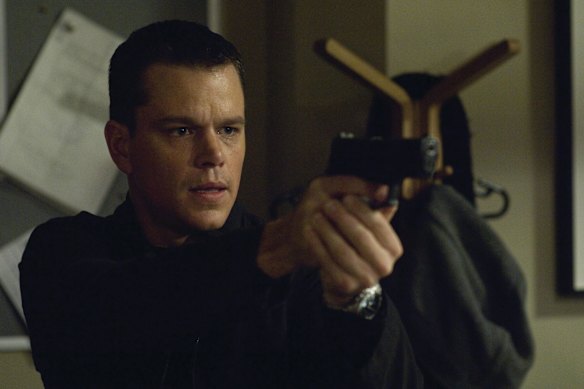
The masterly conclusion of the original Bourne series – we’ll ignore The Bourne Legacy and Jason Bourne for the time being – ends with Matt Damon’s Jason Bourne discovering that his real name is David Webb, and that, with the nefarious Operation Blackbriar initiative that trained him and others to be CIA special assets exposed, he is finally able to escape into a new life.
It’s a cathartic ending, but director Paul Greengrass recently revealed in The Greengrass Papers, his book of conversations with writer Tom Shone, that an unused Tom Stoppard script for the picture had ended with Bourne being killed by Edgar Ramirez’s other asset Paz, thereby giving him a measure of peace that he would never have had while he lived.
It’s an intriguing idea – and one that oddly echoes the conclusion to the Stoppard-co-scripted Brazil – but while Greengrass and producer Frank Marshall were both keen, the studio, fearing the end of a cash cow, nixed it, and Bourne survived.
Marty Supreme (2025)
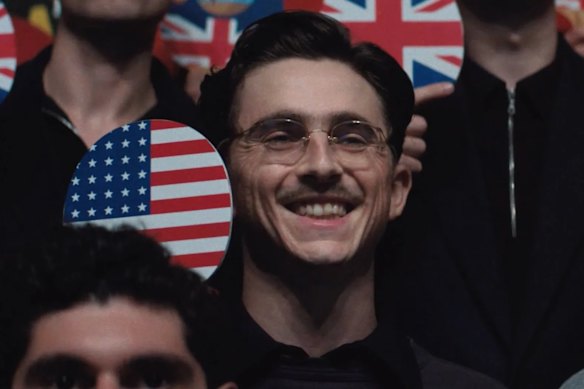
Timothée Chalamet’s intense ping-pong picture ends – spoiler alert! – with the protagonist Marty defying his evil Svengali, Kevin O’Leary’s Milton Rockwell, and refusing to throw a crucial exhibition match against the Japanese player Koto Endo, instead finding redemption as he finally sees his newborn son with tears streaming down his face.
It gives an otherwise unsympathetic character a measure of humanity, but O’Leary – the Canadian billionaire businessman and reality TV star who was hired when director Josh Safdie was looking for “a real asshole” – professed dissatisfaction with the ending.
He attempted to persuade Safdie firstly that Marty’s love interest, Rachel, (played by Odessa A’zion) should die in childhood – an idea that the director rejected for being “too sick” – but the director had a more outré idea. Safdie recently revealed that the original ending in his script would have been set in the 1980s, with Chalamet’s now-aged character taking his granddaughter to a rock concert, where Milton reveals that he is a literal vampire and bites Marty.
O’Leary was on board. The magnate commented to Variety, “I know that sounds nuts, but to me that would be the right punishment.” Those who loathe the Chalamet character might well agree with him. The studio, however, were horrified by the idea, hence the more conventional conclusion.
The Telegraph, London