3 months ago
17
3 months ago
17
These are tough times for many tertiary institutions as declining international student revenues lead to course closures, departmental amalgamations and headcount reductions.
The University of Technology Sydney suffered its own moment of truth in September, when, after recording a deficit of $78 million last year, it announced more than 10 per cent of academic jobs, about 400 positions, would go. Further, 167 courses and 1101 subjects would be discontinued by shutting the schools of education, international studies and public health.
UTS had been taking a lot of political heat and was targeted for industrial action due to its overzealous pruning, and, now, coupled with the possible realisation that causing potential student flight was a massive own goal, the administration has blinked.
The Herald’s new higher education reporter Sally Rawsthorne writes that vice chancellor Andrew Parfitt on Wednesday emailed staff to announce most of the proposed changes would not go ahead as the executive team had planned. “We listened and considered that feedback and have identified some preliminary outcomes that balance the need to ensure the university is financially sustainable with the desire to lay a strong foundation for long-term success and delivery of high-quality education and research for our communities,” he said.
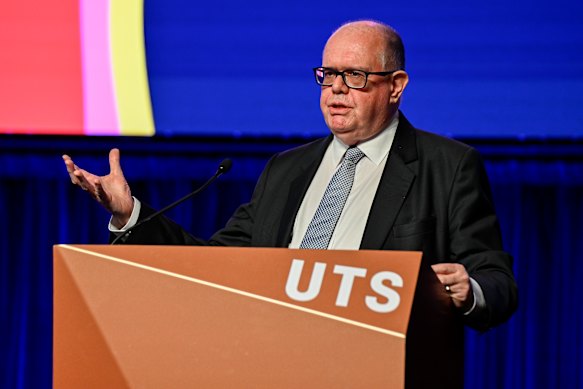
University of Technology Sydney vice chancellor Andrew Parfitt.Credit: Getty
Instead, the vast majority of academic redundancies will be voluntary and a proposed merger of the faculty of Law, the Business School and the Transdisciplinary School will not progress. Teaching degrees would be preserved, as will a redesigned international studies degree but public health degrees would no longer be offered.
It is easy to conclude Parfitt was essentially practising the same “smaller but better” philosophy favoured by former Australian National University vice chancellor Genevieve Bell until a controversial appearance before a Senate estimates committee incurred not only political displeasure but pressure from staff and students over her controversial plan to cut hundreds of jobs that eventually prompted her resignation.
Loading
Parfitt, too, fared less than well this month when he fronted a NSW Legislative Council inquiry into the university sector examining the corporatisation of universities’ governing bodies and management structures, and incurred the wrath of Labor MPs.
After he changed his mind this week, Sarah Kaine, who chairs the upper house inquiry, called on Parfitt to follow Bell’s example and resign. “This crisis narrative at UTS is just not true. This is purely a corporate decision by university management that was not justified to its staff,” she said. “There is not some fiscal cliff they were about to fall off. It was about how quickly they could amass a surplus.”
Parfitt’s backflip raises concerns about the way the UTS administration concluded it needed to cut so deeply. It also suggests a lack of transparency and proper consultation that has needlessly caused huge anguish and damaged the reputation of an esteemed institution.
There is also the impact on prospective students. The initial business model announced by Parfitt was to kill the customer. Given the lingering uncertainty, year 12 students could be forgiven for omitting UTS from their tertiary institution preferences.
Most Viewed in National
Loading